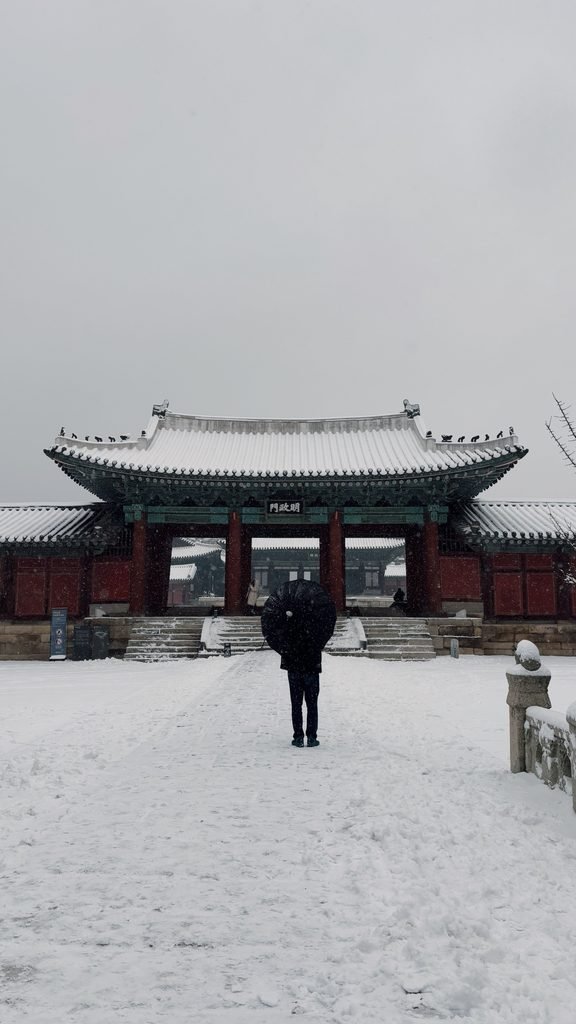
Seoul in December 2026: Weather, What to Wear, and How to Enjoy Slow Winter Days

Seoul in December

Last updated: October 15, 2026

The average December high in Seoul is about 39ยฐF. The average low is about 26ยฐF. On paper, that doesn’t look much worse than a New York winter. Then you step out of a subway exit near the Han River at 5:30 p.m., the sun is already gone, and a dry wind comes straight down the avenue. That’s when most of my friends from New York realize Seoul in December is its own kind of cold.

People ask me two things about a December trip: “How cold is it, really?” and “Is it worth going in winter?” My answer to the second one is yes, as long as you dress for the first one. December is when Seoul lights up its downtown for free, when street snacks you can’t get in summer come out, and when a slow pace makes the most sense, because the days are short and the warm places are where the city lives.

This guide covers the weather, what to wear in Seoul in December, what’s on, and how to plan days that don’t fight the cold.

Quick Answer: Seoul in December

  • It’s cold and dry. Average highs run around 39ยฐF and lows around 26ยฐF, based on Korea Meteorological Administration normals. Late December is colder than early December.
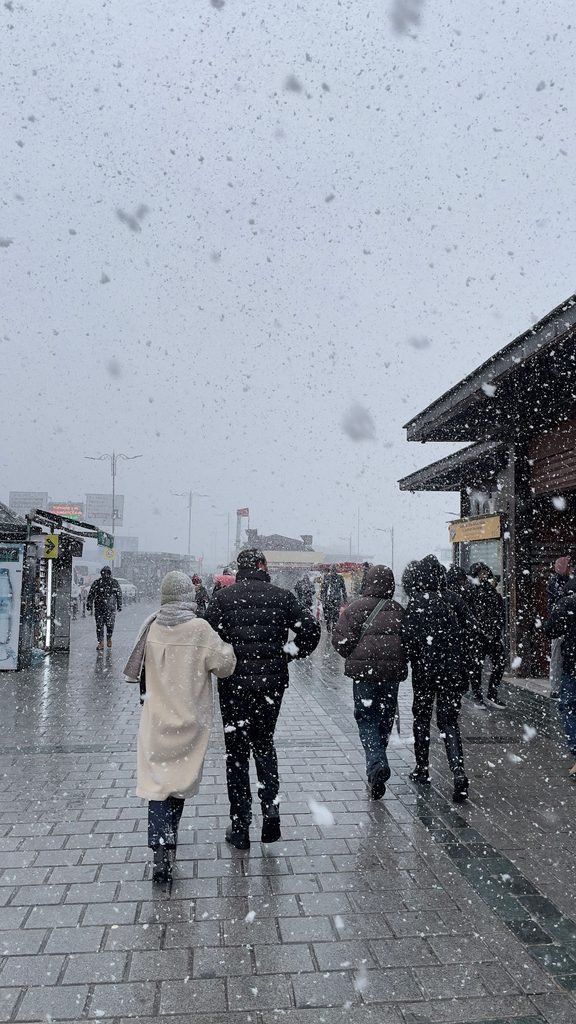
  • It rarely rains, and it snows only lightly. December averages less than an inch of precipitation. Snow falls on about six days, but it usually doesn’t stay on the ground in the city.
  • The wind is the real issue. Seoul feels colder than the thermometer says, especially along the river, on bridges, and between tall buildings.
  • The sun sets a little after 5 p.m. Plan outdoor sightseeing for the morning and early afternoon.
  • Pack for layers: a long insulated coat, thermal base layers, a hat, gloves, and moisturizer. Pick up heat packs at any convenience store.
  • The city is free and festive at night. In recent years, Seoul’s winter festival has run from mid-December into early January with lantern displays, a Christmas-style market, and a 1,000-won skating rink.
  • Check your entry rules. If you land on or after January 1, 2027, the K-ETA rules change. Details are in my K-ETA guide for US citizens.

Seoul December Weather: The Real Numbers

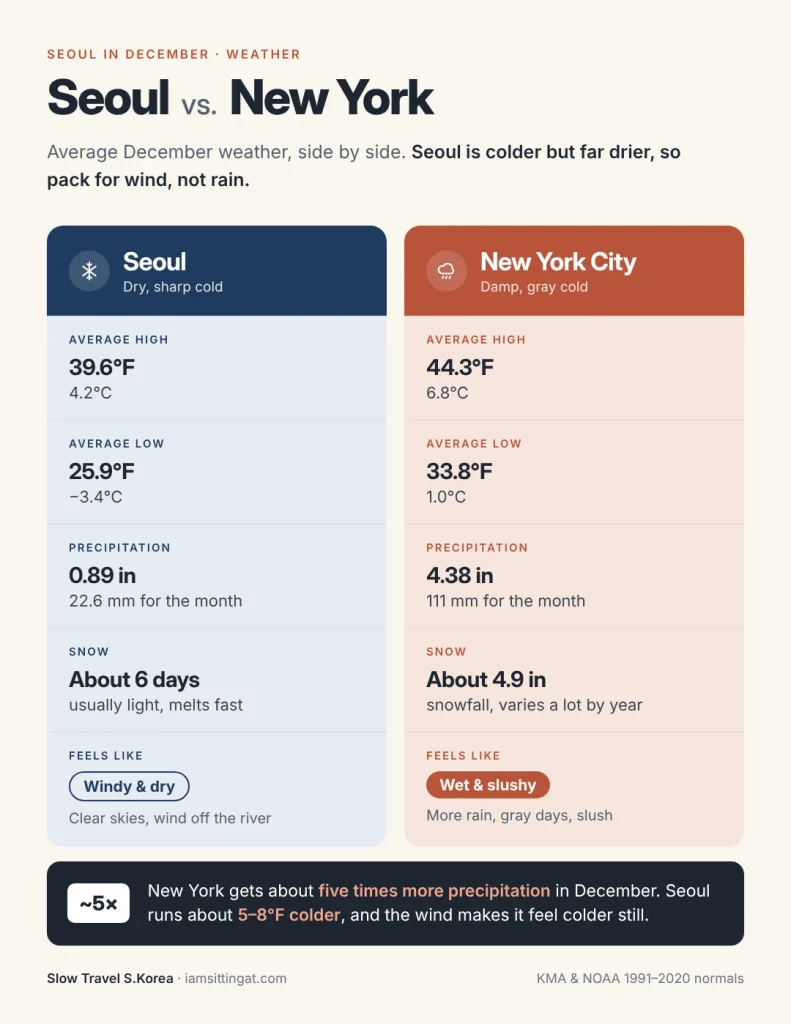
Here’s what the long-term averages look like. The Seoul figures are the Korea Meteorological Administration’s 1991โ€“2020 normals for central Seoul.

Chart comparing average December temperatures and precipitation in Seoul and New York City

Two things stand out when you compare the columns. Seoul is several degrees colder than New York in December, and it’s much drier. New York’s cold tends to come with rain, slush, and gray skies. Seoul’s cold usually comes with blue skies and a wind that goes right through a thin coat. Bright, freezing days are normal.

Early vs. late December

December in Seoul gets colder as the month goes on, and the swing from week to week can be big. A cold wave from the northwest can drop overnight lows to around 10ยฐF for a few days, and then a mild spell brings highs back into the 40s.

PeriodTypical highTypical lowWhat it feels like
Early DecemberLow 40sยฐFUpper 20sยฐFLate fall in New York, but windier
Mid-DecemberHigh 30sยฐFMid-20sยฐFProper winter; gloves every day
Christmas to New Year’s EveMid-30sยฐFLow 20sยฐFThe coldest stretch of the trip

These are rounded from historical daily records, so treat them as a guide, not a forecast. Check the forecast a few days before you fly.

Short days

The sun rises after 7:30 a.m. and sets a little after 5 p.m. through most of December. The winter solstice in Korea falls on December 22, 2026. That’s about the same daylight you get in New York, but it catches people off guard because everyone plans to “see the city” in the afternoon and finds it dark by the time they’re out of lunch.

Fine dust

Korea’s government runs a seasonal fine-dust management program every year from December through March, because that’s when air quality tends to get worse. December is usually not the worst month (spring is), but you’ll likely see a few hazy days. I’ll come back to this in the Reality Check section.

What to Wear in Seoul in December

If you remember one thing about what to wear in Seoul in December, make it this: dress for wind, not just temperature. A coat that’s fine for a still 35ยฐF day in Manhattan can feel thin on a windy 35ยฐF day in Seoul.

What to wear in Seoul in December long padded coat, thermal layers, gloves, and heat packs

The coat

Look around any Seoul subway car in December and you’ll see the city’s winter uniform: the long padded coat that falls to the knee or below. Koreans call it a long padding. It’s not a fashion statement as much as a practical one. Covering your thighs makes a bigger difference than an extra sweater.

You don’t need to buy one. A warm, windproof parka that covers your hips will do. If your coat is short, plan on warmer pants.

Layers that come off easily

This is the part that surprises visitors. Korean buildings are heated, and often heated hard. Subway cars, cafes, department stores, and restaurants can feel warm enough to sweat in a winter coat. Many Korean restaurants also heat the floor itself, an old system called ondol, and some still have you sit on it.

So the goal isn’t to wear the thickest possible outfit. It’s to wear layers you can peel off in 30 seconds:

  • Base layer: thin thermal top and leggings. You can buy them cheaply in Seoul if you forget.
  • Middle layer: a sweater or fleece you don’t mind taking off and carrying.
  • Outer layer: the windproof coat.

Shoes

  • Warm, closed shoes with decent grip. Sidewalks and the steps at subway exits can ice over after a snow.
  • Shoes that are easy to take off. Some restaurants with floor seating, guesthouses, and hanok stays ask you to remove your shoes. Laced boots get tiresome fast.
  • Warm socks, and a spare pair if you’ll be walking all day.

Small things that matter more than you’d think

  • Hat, gloves, and a scarf or neck warmer. Touchscreen gloves help, since you’ll be checking maps all day.
  • Heat packs. Convenience stores sell disposable hand warmers called hotpack. Koreans use them constantly.
  • Lip balm and a rich moisturizer. The combination of dry air outside and strong heating inside is hard on skin. Korean drugstores are a good place to stock up.
  • A mask for hazy days. Korean pharmacies and convenience stores sell KF94 masks, the Korean equivalent of an N95-type filter mask.

Seoul in December: What to Pack (Checklist)

  • Long, windproof insulated coat
  • Thermal base layers (top and bottom)
  • Sweater or fleece that’s easy to carry
  • Hat, gloves, scarf or neck warmer
  • Warm shoes with grip that slip on and off easily
  • Wool socks
  • Lip balm, moisturizer, hand cream
  • A few masks for fine-dust days
  • Phone data sorted before you land, since cold drains batteries and you’ll lean on maps:
  • A small portable battery
  • Card and a little cash for street food:
  • Travel insurance, since slips on ice and winter colds happen:

What’s On in Seoul in December

The biggest shift in recent years is how much the city itself puts on in winter, and most of it is free.
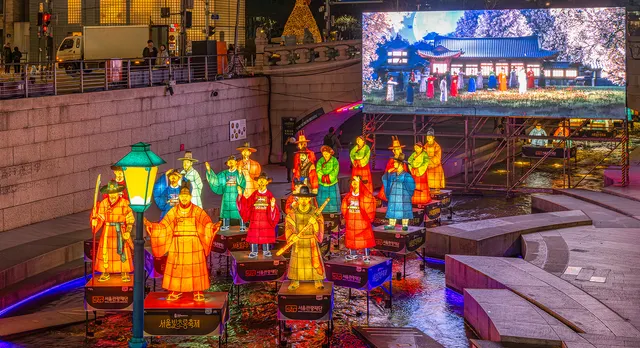
Lantern displays along Cheonggyecheon Stream during the Seoul Lantern Festival in December
The Seoul Lantern Festival – https://www.stolantern.com
EventWhereRecent dates (2025 edition)Cost
Seoul Winter FestaSix downtown sites, from Gwanghwamun Square to Cheonggyecheon, Seoul Plaza, DDP, Bosingak, and UicheonDec. 12, 2025 โ€“ Jan. 4, 2026Mostly free
Seoul Lantern FestivalAlong Cheonggyecheon StreamDec. 12, 2025 โ€“ Jan. 18, 2026 (extended), 6โ€“11 p.m.Free
Gwanghwamun MarketGwanghwamun SquareDec. 12โ€“31, 2025Free entry
Seoul Light DDP (media facade)Dongdaemun Design PlazaDec. 18โ€“31, 2025Free
Seoul Plaza Skating RinkIn front of Seoul City HallDec. 19, 2025 โ€“ Feb. 8, 20261,000 won per session
New Year’s Eve bell ringingBosingak, JongnoDec. 31Free

The 2026 dates hadn’t been announced when I wrote this. The pattern for the past few years has been a mid-December start, and I’ll update this table once Seoul publishes the schedule.

Seoul Winter Festa ties the downtown events together. The 2024 edition drew about 5.4 million visitors, according to the city, so expect crowds on weekend evenings.

The Seoul Lantern Festival is my favorite thing to recommend to first-timers in December. You walk along Cheonggyecheon, the stream that runs through downtown below street level, and the lantern displays sit right on the water. It’s free, it’s flat, and the stream sits a little lower than the street, so it’s somewhat sheltered from the wind. The 2025 festival was so busy that the city extended it two weeks and kept it open until 11 p.m. Weeknights are calmer than weekends.
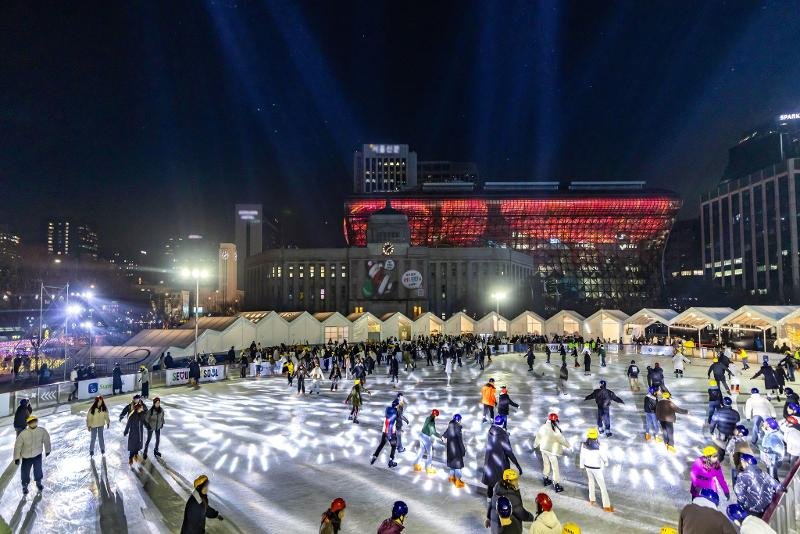
Seoul Plaza ice skating rink in front of Seoul City Hall in winter
Source: Seoul Metropolitan Government

The Seoul Plaza skating rink has charged 1,000 won (well under $1) per session since it first opened in 2004. You can rent skates there, and helmets and knee pads are lent for free. Holders of the Discover Seoul Pass, a tourist pass for foreign visitors, have been able to skate for free.

New Year’s Eve at Bosingak is Seoul’s version of the Times Square ball drop: the old bronze bell in Jongno is struck 33 times at midnight. Like Times Square, it means hours in the cold with a huge crowd. I’d watch it on TV from somewhere warm, unless being there is the point of your trip.

Christmas in Seoul is a couples’ holiday

If you’re coming for Christmas, adjust your expectations. December 25 is a national holiday in Korea, and in 2026 it falls on a Friday, so you get a long weekend. But Christmas here isn’t mainly a family holiday the way it is in the US. For many young Koreans, Christmas Eve is a date night, closer to Valentine’s Day.

In practice, that means nice restaurants book up on December 24 and 25, popular cafes and photo spots get crowded, and couples fill the light displays. Department stores in central Seoul decorate their facades, and people line up to photograph them. If you want a quiet Christmas dinner, reserve well ahead or plan a simple meal and a late walk.

Dongji: the longest night

On December 22, 2026, Korea marks dongji (๋™์ง€), the winter solstice. The tradition is to eat patjuk, a warm red bean porridge, sometimes with small rice cake balls. Many traditional porridge shops and some rice-cake shops sell it around this date. It’s a small, quiet way to see an old Korean custom that has nothing to do with tourism.

How to Plan Slow Winter Days in Seoul

The best December days in Seoul follow the light and the heat. Go out while the sun is up, warm up indoors in the afternoon, and come back out after dark when the lights are on.

Time of dayWhat works in DecemberWhy
Morning (9 a.m. to noon)Palaces, neighborhood walks, marketsBest light, fewer crowds, sun on your back
Afternoon (noon to 4 p.m.)Museums, cafes, bookstores, a long lunchWarmest part of the day, but best spent partly indoors
Late afternoon (4 to 6 p.m.)A bathhouse, a rest at your hotelIt gets dark and cold fast after 5 p.m.
Evening (6 p.m. on)Lantern festival, light displays, a warm dinnerThe city is at its best lit up

Palaces in the morning

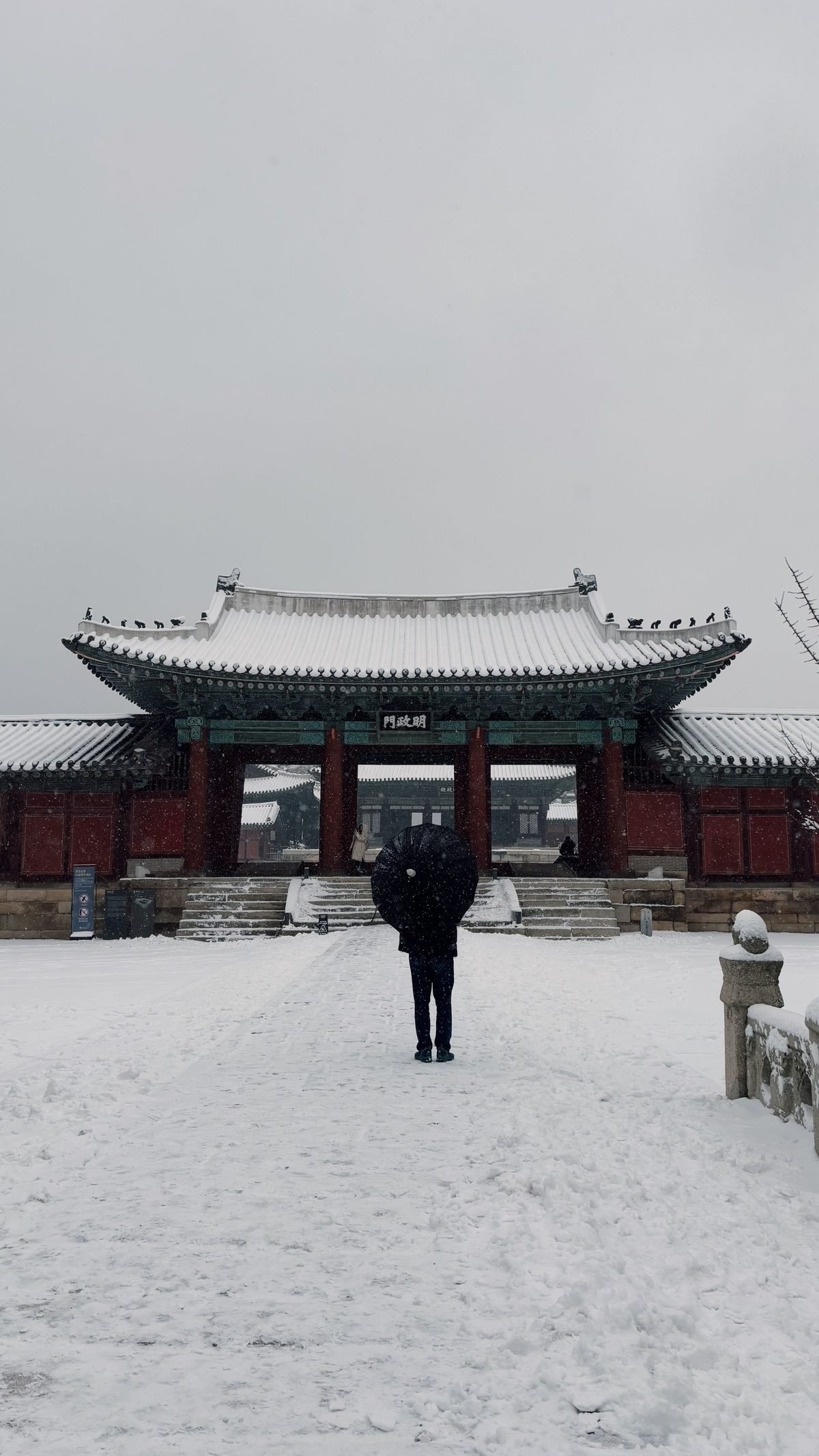
Seoul’s palaces are open year-round, and a sunny winter morning, especially after a light snow, is one of the best times to see them. Check winter hours before you go:

  • Gyeongbokgung: 9 a.m. to 5 p.m. from November through February, last entry at 4 p.m. Closed on Tuesdays.
  • Changdeokgung: 9 a.m. to 5:30 p.m. from November through January, last entry at 4:30 p.m. Closed on Mondays.

Go early. By 3 p.m. in December, the light is already low and the wind picks up.

Warm afternoons indoors

This is where slow travel in Seoul in December gets easy. The city has more places to sit somewhere warm than almost anywhere I know.

  • Cafes. A two-hour cafe stop is normal in Seoul, and nobody will rush you. If you’re working or reading, my Seoul Cafe Etiquette guide covers the kiosks, Wi-Fi, and unwritten rules.
  • Museums. The National Museum of Korea in Yongsan is large, warm, and has free admission to its permanent galleries. You can spend a whole cold afternoon there.
  • A Korean bathhouse. A jjimjilbang is a public bathhouse with hot pools, heated rooms, and space to lie down. In winter, it’s how many Koreans spend a lazy Saturday. Read up on the etiquette before you go, since the baths are gender-separated and nude.

Neighborhood walks, timed right

The quieter old neighborhoods near the palaces, like Seochon to the west of Gyeongbokgung, are good for a slow winter walk. Bukchon Hanok Village is still home to residents, and parts of it now limit tourist visits to daytime hours to protect the people who live there, so plan Bukchon for midday. I’ll cover these neighborhoods in more depth in a separate guide.

Winter street food

Some of Seoul’s best snacks only really show up when it’s cold. Look for:
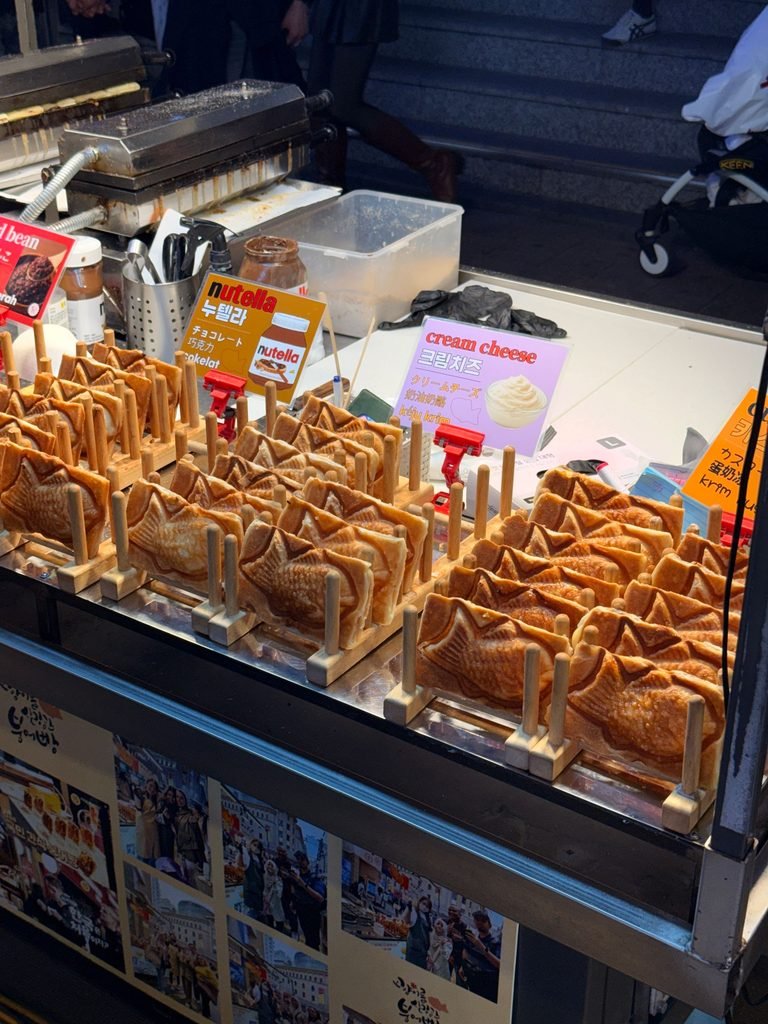
Bungeoppang fish-shaped pastries at a winter street food stall in Seoul
  • Bungeoppang: fish-shaped pastries filled with sweet red bean, sold from small street stalls.
  • Hotteok: a pan-fried pancake with melted brown sugar and nuts inside. Let it cool for a minute; the filling is very hot.
  • Eomuk: fish cake on skewers in a hot broth. At many stalls, you can sip the broth while you eat.
  • Roasted sweet potatoes and chestnuts from carts on busy corners.

Many of these stalls are cash only, so keep some small bills on you.

Traditional markets like Gwangjang Market are also good on a cold evening, since you sit at a counter and eat something hot while the cook works in front of you.

Reality Check: The Downsides of Seoul in December

December is a good time to visit, but it isn’t for everyone. Here’s what to expect.

  • The cold limits your day. Realistically, you’ll spend two or three hours less outdoors than you would in spring or fall. If your dream trip is long hikes and picnics by the Han River, come in October or May instead.
  • The wind on the river is serious. Han River parks and bridges are beautiful at sunset, and miserable in a December wind. Keep those visits short.
  • Fine dust happens. Air quality varies from day to day. On hazy days, wear a mask outside and save indoor plans for those days. A Korean weather app or the air-quality section of Naver will show the daily level. Korea Travel Apps for Foreigners: The Best Apps for Your South Korea Trip in 2026
  • Holidays bring crowds and higher prices. The week between Christmas and New Year’s is busy, especially downtown and in Myeongdong. Hotel rates tend to rise around both holidays, so book early: [AFFILIATE: hotel booking for Seoul]
  • Festival dates change every year. The city announces the winter festival schedule only a few weeks ahead. Don’t plan an entire trip around one event until the dates are official.
  • Late-December trips run into the K-ETA deadline. Korea’s temporary K-ETA exemption for Americans ends on December 31, 2026, Korea time. If you fly out of New York on December 31, you’ll land on January 1. Check the details in my [K-ETA guide].
  • Overheated indoors, frozen outdoors. The constant switch between the two is tiring, and it’s when people catch colds. Hydrate, moisturize, and take the layers off when you go inside.

FAQ

Is December a good time to visit Seoul?

Yes, if you’re fine with cold weather and short days. You get clear skies, little rain, free winter light festivals, and winter street food. If you want long days outdoors, spring or fall is easier.

How cold is Seoul in December?

The average high is about 39ยฐF (4ยฐC) and the average low is about 26ยฐF (-3ยฐC). Late December is colder, and cold snaps can push overnight lows down to around 10ยฐF. The wind makes it feel colder than the number.

What should I wear in Seoul in December?

A long, windproof insulated coat, thermal base layers, a sweater you can take off indoors, a hat, gloves, and warm shoes that slip on and off easily. Buildings are well heated, so dress in layers rather than one heavy outfit.

Does it snow in Seoul in December?

Sometimes. December averages about six days with snow, but it’s usually light and melts quickly in the city. A white Christmas is possible but not something to count on.

What is there to do in Seoul at Christmas?

Seoul usually runs its winter festival from mid-December, with the lantern festival along Cheonggyecheon, a Christmas-style market at Gwanghwamun Square, light displays, and the Seoul Plaza skating rink. Christmas is a public holiday and a popular date night, so reserve restaurants ahead.

The Bottom Line

Seoul in December rewards people who go a little slower. Dress for the wind, go out in the morning, spend the afternoon somewhere warm, and come back out after dark when the city lights up its stream and squares for free. It’s colder than New York, but drier and brighter, and the warm places in between are some of the best parts of the trip. Pack the long coat, keep some cash for a fish-shaped pastry, and check your arrival date if you’re flying in around New Year’s.
Best Credit Card to Use in South Korea (2026): What Works for Americans, What Doesn’t, and How to Skip the Fees

The best credit card to use in South Korea is a Visa or Mastercard with no foreign transaction fee, plus a backup. Here’s where US cards work, where they still don’t, and how to avoid paying extra.

best credit card to use in South Korea

Last updated: October 14, 2026

On March 17, 2026, the Seoul subway finally let visitors buy transit tickets with a foreign credit card. In the first month, an average of about 9,000 people a day did exactly that, and Visa was the most-used card. That number tells you two things. Plenty of travelers now arrive in Korea planning to pay with plastic, and until this spring, one of the most basic purchases in Seoul still required cash.

So what’s the best credit card to use in South Korea? The short answer: a Visa or Mastercard with no foreign transaction fee, plus a backup card from a different bank. The longer answer is about where US cards still hit walls, and those walls aren’t always where you’d expect.

Koreans pay for almost everything by card or phone, so friends here assume Korea will feel like a city where you tap and go. Mostly, it does. But Korea’s payment system was built around Korean-issued cards and Korean phone numbers, and a visitor’s card lives slightly outside that system. This guide is about that gap.

Quick Answer: The Best Credit Card to Use in South Korea

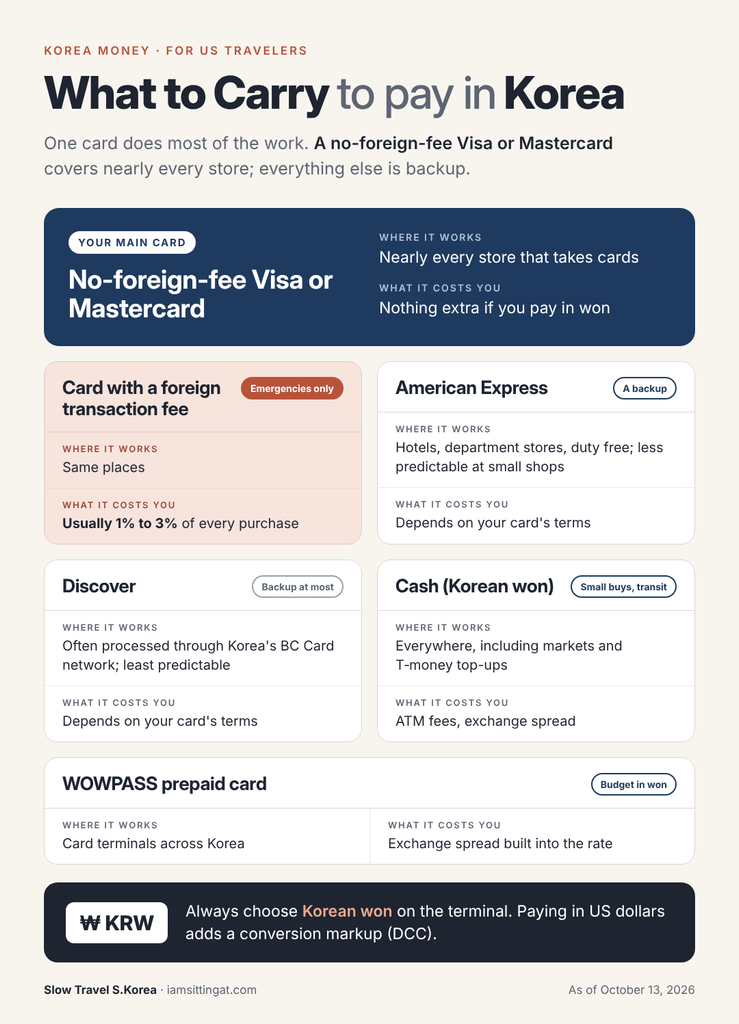
  • Bring a Visa or Mastercard with no foreign transaction fee. That’s your main card for almost everything: convenience stores, cafes, restaurants, department stores, hotels, and taxis.
  • Bring a second card from a different bank, ideally on a different network. If one gets flagged for fraud, you’re not stuck.
  • American Express and Discover can work, but don’t make either your only card.
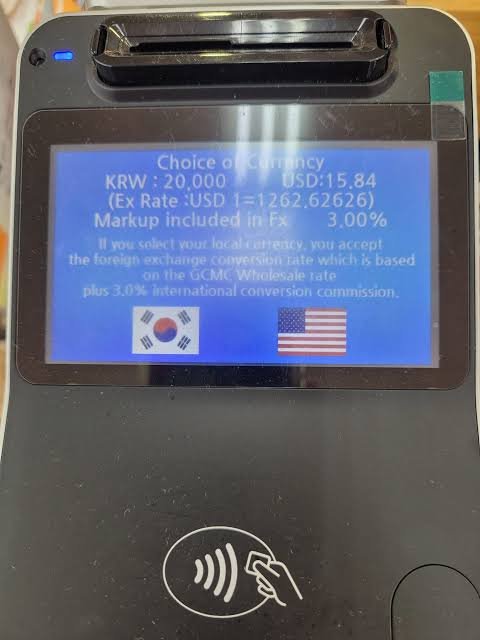
  • Always pay in Korean won, never US dollars. Choosing dollars triggers a conversion markup.
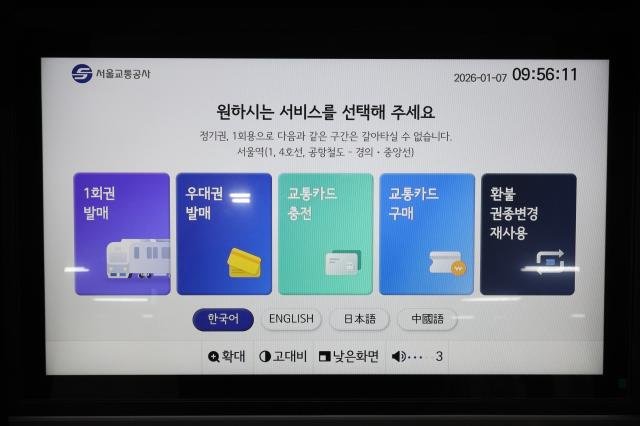
  • Your card won’t open the subway gates yet. You still need a transit card. New kiosks on Seoul subway Lines 1 to 8 sell tickets and short-term passes to foreign cards, with a service fee.
  • Carry a little cash for traditional markets, street food, and topping up a T-money card.
Infographic comparing payment options for US travelers in South Korea: no-foreign-fee Visa or Mastercard, Amex, Discover, cash, and WOWPASS

Why Using a US Credit Card in Korea Is Mostly Easy

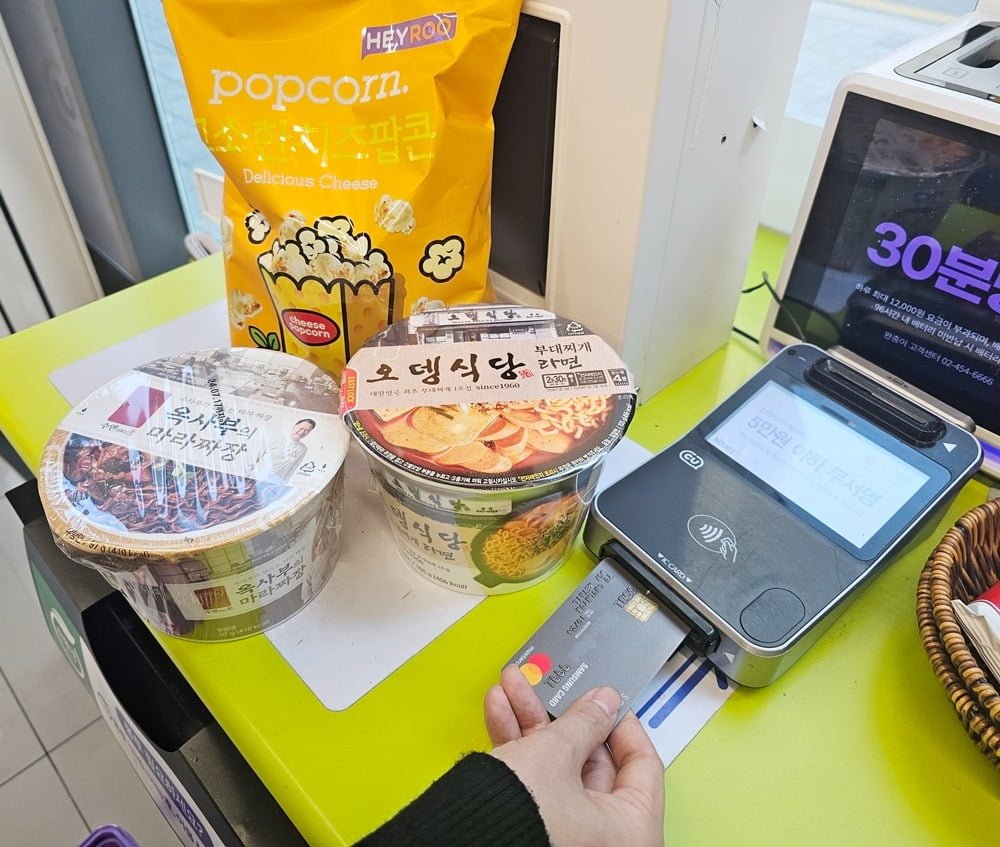
Walk into a convenience store in Seoul, hand over your Visa, and it will almost certainly go through. Card terminals at Korean stores are designed to handle international cards, and the people behind the counter process foreign cards all day, especially in areas like Myeongdong, Hongdae, and Gangnam.

Where things get harder is anything built as a closed Korean system:

  • Transit cards and subway gates. Korea’s transit network runs on its own card standard, not the tap-to-pay system you use on OMNY in New York.
  • Korean apps and websites. Many ask for Korean phone verification before you even get to the payment screen, and some only accept Korean-issued cards.
  • Some self-order kiosks and table tablets. Many take foreign cards; some older ones don’t. Staff can usually ring you up at the counter instead.

Think of it this way: using a US credit card in Korea is easy face to face and harder through a screen. If you remember that, most surprises stop being surprises.

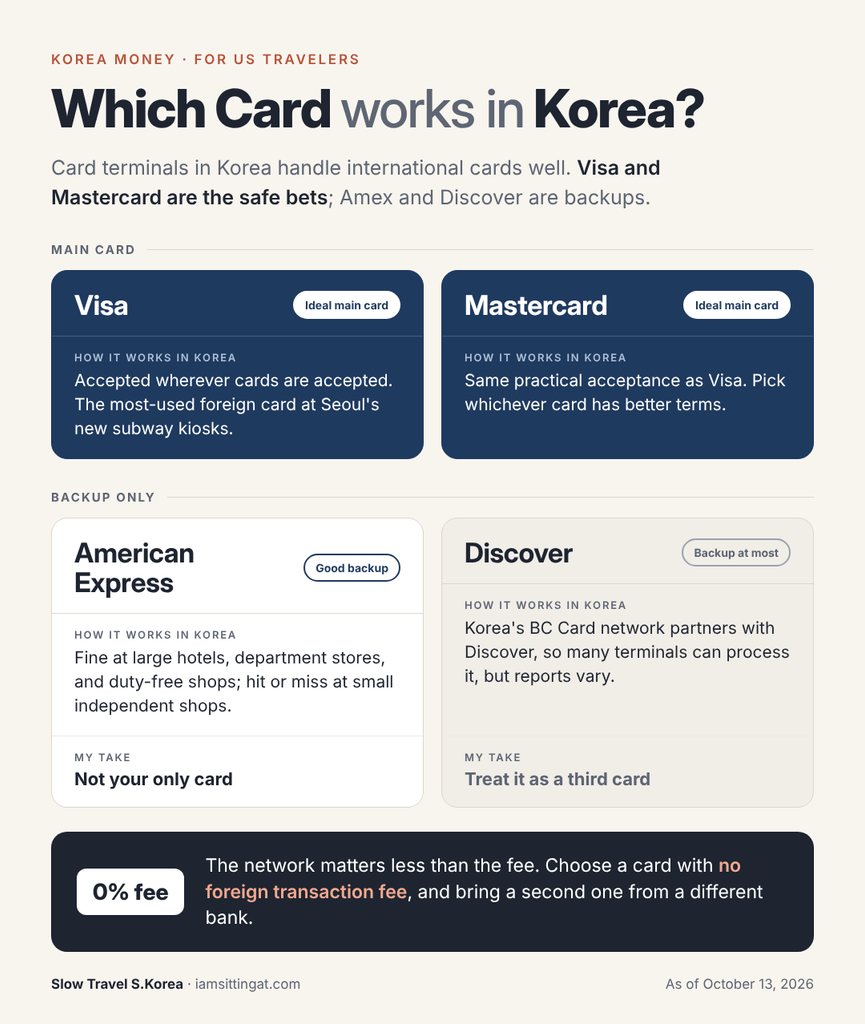
Visa, Mastercard, Amex, or Discover?

Infographic comparing Visa, Mastercard, American Express, and Discover acceptance in South Korea for US travelers

Visa vs. Mastercard: For a trip to Korea, there’s no meaningful difference. Pick whichever of your cards has the better terms.

American Express: Amex has a real presence in Korea. Several Korean card companies issue Amex-branded cards, and in 2026 Amex is running tourist offers at Korean hotels, restaurants, and duty-free shops for its cardholders. That said, I wouldn’t land with only an Amex. Small restaurants and shops are where it’s most likely to be refused.

Discover: Discover’s acceptance in Korea runs through its partnership with BC Card, one of the country’s largest domestic card networks. In practice, it’s the least predictable of the four. Treat it as a third card, not a first.

What to Look For in a Card for Korea

1. No foreign transaction fee

This matters more than rewards. Many US cards add a fee of roughly 1% to 3% to every purchase made outside the US. On a $3,000 trip, a 3% fee costs you $90 for nothing. Check your card’s “Rates and Fees” page or cardholder agreement before you go.

2. A Visa or Mastercard logo

See the table above. Your main card should be on one of these two networks.

3. Chip and contactless, plus a PIN you actually know

You’ll insert your card most of the time in Korea. Contactless works at more places than it used to, but don’t count on tapping everywhere. You’ll need a PIN for ATM withdrawals with a debit card, so confirm yours before you leave.

4. Rewards that match how you’ll spend

A slow trip to Korea is mostly meals, coffee, small shops, and the occasional taxi. A card that earns more on dining and travel usually beats a flat-rate card for this kind of trip, but either is fine as long as there’s no foreign fee.

5. A real backup

Bring a second card from a different bank. If your main card gets frozen by a fraud alert at 11 p.m. Korea time, it’s the middle of the morning in New York, and you may spend a while on hold.

Examples of US cards with no foreign transaction fee

These are examples to check against your own spending, not personal recommendations. Fees and benefits change, so confirm the current terms on the issuer’s site.

  • Capital One: Capital One says none of its US-issued credit cards charge foreign transaction fees. That includes no-annual-fee cards like Quicksilver and travel cards like Venture X.
  • Chase Sapphire Preferred: A Visa card with a $95 annual fee and no foreign transaction fees. [AFFILIATE: Chase Sapphire Preferred]
  • Other travel cards from most major issuers also waive the fee. If you’re comparing, I wrote about this from the New York side.

Where Your US Card Works in Korea (and Where It Doesn’t)

WhereDoes a US card work?What to know
Convenience stores (CU, GS25, 7-Eleven)YesThe easiest place to test your card on day one
Cafes and restaurants with kiosksUsuallySome kiosks reject foreign cards; pay at the counter instead
Department stores, duty free, hotelsYesWatch for the “pay in dollars?” prompt here
TaxisUsually, with your physical cardIn-app payment through Korean taxi apps is less reliable
Subway ticket kiosks (Lines 1โ€“8, new machines)YesSingle-journey tickets and Climate Card short-term passes; about 3.7% service fee
Subway gates and busesNo, not yet in SeoulYou need a transit card for now
Traditional markets and street foodOften cash onlyKeep 30,000 to 50,000 won in small bills
Delivery appsSometimesBaemin accepts Apple Pay with foreign-issued cards since June 2026
Korean websites and ticketingHit or missMany require Korean phone verification first

A few notes on the tricky rows.

Cafes and kiosks. I covered kiosk ordering in detail in my Seoul Cafe Etiquette guide. The short version: if the kiosk won’t take your card, walk up to the counter. Nobody will think twice.

Taxis. Hailing a cab on the street and paying with your physical card at the in-car terminal is usually smooth. Registering a foreign card inside a Korean taxi app is where people run into trouble.

Korean apps. Booking sites, ticketing platforms, and some shopping apps often want a Korean phone number before they’ll show you a payment screen.

Can You Use Your Credit Card on the Seoul Subway?

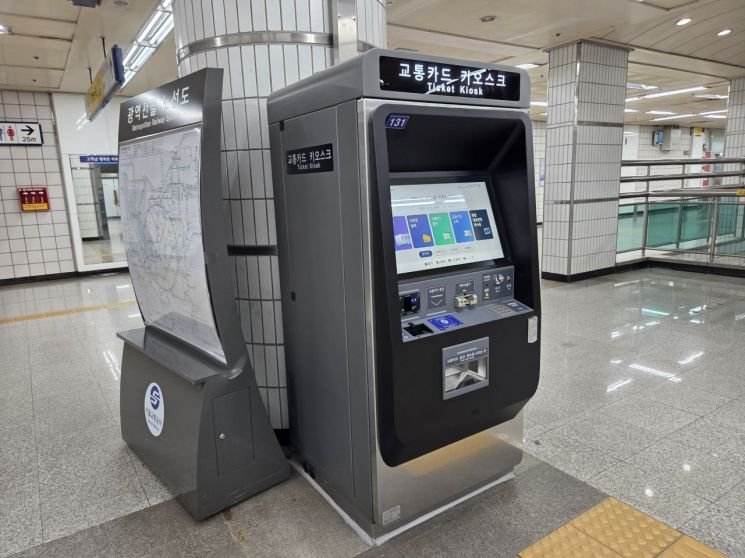
New ticket kiosk at a Seoul subway station that accepts foreign credit cards

Not at the gates, at least not yet. This is the biggest difference from New York, where you can tap a contactless card at any OMNY reader.

Here’s where things stand as of October 2026:

  • New subway kiosks accept foreign cards. Since March 17, 2026, the new ticket kiosks on Seoul subway Lines 1 to 8 take foreign-issued credit and debit cards. You can buy single-journey tickets and buy or recharge Climate Card short-term passes (1, 2, 3, 5, and 7 days).
  • There’s a service fee. The fare itself doesn’t change, but foreign card payments at these kiosks carry a service fee that averages about 3.7%. On a short-term pass, that’s small but worth knowing.
  • Not every machine is new. Older ticket machines are still in some stations. Look for the newer touchscreen kiosk.
  • T-money top-ups: As far as I can confirm, buying a regular T-money card with a foreign card at the kiosk isn’t supported, and convenience-store top-ups are generally cash.
New ticket kiosk at a Seoul subway station that accepts foreign credit cards

What’s coming in 2027. In September 2026, T-money signed an agreement with Visa, Mastercard, UnionPay, JCB, and Hana Card to build tap-to-pay with regular bank cards, often called “open-loop” payment. The plan is to finish testing by the end of 2026, start with Seoul city buses in 2027, and then expand to Incheon buses and airport buses. No date has been set for the Seoul subway. Jeju’s city buses already accept tap-to-pay with international cards.

Until that arrives, your choices are a T-money card, a Climate Card short-term pass, or a prepaid card with a transit function.

Apple Pay and Google Pay in Korea

Apple Pay launched in Korea in 2023, but only for Korean cards from one issuer, and many Korean stores still don’t have the NFC terminals it needs. For visitors, the picture is getting better slowly:

  • In apps: Baemin, Korea’s biggest food delivery app, started accepting Apple Pay with foreign-issued Visa, Mastercard, JCB, and Amex cards on June 2, 2026.
  • In stores: Some chain stores and cafes have NFC terminals, but whether a foreign card in your phone’s wallet goes through varies by terminal.

My advice: treat your phone wallet as a bonus, not a plan. Keep the physical card in your pocket.

Always Pay in Won: How to Avoid the DCC Markup

Card terminal screen asking to pay in US dollars or Korean won

At duty-free shops, department stores, hotels, and some ATMs, the terminal may offer to charge you in US dollars instead of Korean won. It sounds helpful, because you see a familiar number. It isn’t.

This is called dynamic currency conversion, or DCC. The merchant’s payment provider sets the exchange rate, and the markup is built into it. KB Kookmin Card, one of Korea’s largest card companies, warns its own customers that DCC can add roughly 3% to 8% when they shop abroad. The same mechanism works against you in Korea.

What to do:

  1. When the screen asks, choose KRW (won).
  2. If a cashier asks, say “won, please,” or in Korean, “wonhwa-ro hae-juseyo“.
  3. Check the receipt. If it shows a USD amount, ask them to cancel and run it again in won. Do it on the spot. It’s much harder to fix later.
  4. At ATMs, decline the conversion offer and let your own bank handle the exchange.

Cash, ATMs, and Prepaid Cards as Backups

You don’t need much cash in Korea, but you do need some.

  • ATMs: Look for machines labeled “Global” or “Foreign Card,” usually in bank branches, subway stations, airports, and some convenience stores. Expect a per-withdrawal operator fee, commonly reported at around 3,000 to 6,000 won, on top of whatever your US bank charges.
  • Debit card tip: A US debit card that reimburses ATM fees makes withdrawals much cheaper. [AFFILIATE: no-ATM-fee debit card]
  • Prepaid travel cards: WOWPASS and similar cards let you load money in won and pay like a local card. They’re handy if you want a fixed budget, but compare their exchange rate with your no-fee credit card before loading a lot.
  • How much cash to bring: That depends on how much time you’ll spend at markets and small restaurants.

Reality Check: Fees, Declines, and Gaps

Korea is one of the easier countries to travel with a card, but here’s what can still go wrong.

  • Your bank may flag your first purchase. A charge in Seoul at 9 a.m. Korea time looks unusual from New York. Turn on app notifications so you can approve or unlock the card quickly. Many issuers no longer require a travel notice, but check your issuer’s app either way.
  • Small fees add up. The subway kiosk service fee, ATM operator fees, and any DCC markup are each small. Together, on a two-week trip, they can cost more than the price of a nice dinner.
  • Kiosks and tablets aren’t always foreign-card friendly. When a screen refuses your card, go to a person.
  • Korean apps are the hardest part. Food delivery, taxi apps, and ticketing are where foreign cards fail most often, usually because of Korean phone verification, not the card itself.
  • Refunds take time and can come back at a different exchange rate. If you return something, the refund may arrive days later and won’t always match what you paid in dollars.
  • Markets and small eateries may be cash only. That’s less common every year, but it still happens.
  • Mobile pay apps aren’t for tourists yet. Kakao Pay and Naver Pay are everywhere in Korea, but registering a card in them generally requires a Korean card.

My Wallet Setup for a Korea Trip

If you want a simple template, this is what I’d suggest to a first-time visitor from the US:

  • Main card: a no-foreign-fee Visa or Mastercard
  • Backup card: from a different bank, ideally a different network
  • Debit card for ATM withdrawals, with a PIN you’ve confirmed
  • Cash: enough for a day of markets and a T-money top-up
  • Transit: a Climate Card short-term pass from a new subway kiosk, or a T-money card
  • Phone data sorted before you land, since card alerts and maps both need it
  • Entry paperwork done
  • Apps downloaded: Korea Travel Apps for Foreigners

FAQ

Can I use my US credit card in South Korea?

Yes. Visa and Mastercard work at almost every store, cafe, restaurant, and hotel that takes cards. The main exceptions are subway gates and buses in Seoul, some self-order kiosks, traditional markets, and Korean apps that require local phone verification.

What is the best credit card to use in South Korea?

A Visa or Mastercard with no foreign transaction fee. Bring a second card from a different bank as a backup, and pay in Korean won every time.

Does American Express work in South Korea?

Often, at larger places. Hotels, department stores, and duty-free shops generally take Amex, but small shops and restaurants are less predictable. Don’t make Amex your only card.

Can I use my credit card on the Seoul subway?

You can use it to buy tickets and Climate Card short-term passes at the new kiosks on Lines 1 to 8, with a service fee of about 3.7%. You can’t tap it at the gates yet. Tap-to-pay with regular cards is planned for Seoul city buses first, starting in 2027.

Should I pay in dollars or won in Korea?

Won. Paying in dollars triggers dynamic currency conversion, which builds a markup into the exchange rate. Choose KRW on the screen, and if a receipt shows dollars, ask the cashier to redo it in won.

The Bottom Line

The best credit card to use in South Korea is a boring one: a no-foreign-fee Visa or Mastercard that you’ll use for coffee, dinner, and taxis without thinking about it. Add a backup card, a little cash, and a transit card, and pay in won every time. The places your card won’t work are shrinking each year, and by 2027 you may be able to tap it on a Seoul bus. Until then, a little preparation keeps the money side of the trip quiet, which is exactly how it should be.

Related posts you might enjoy:

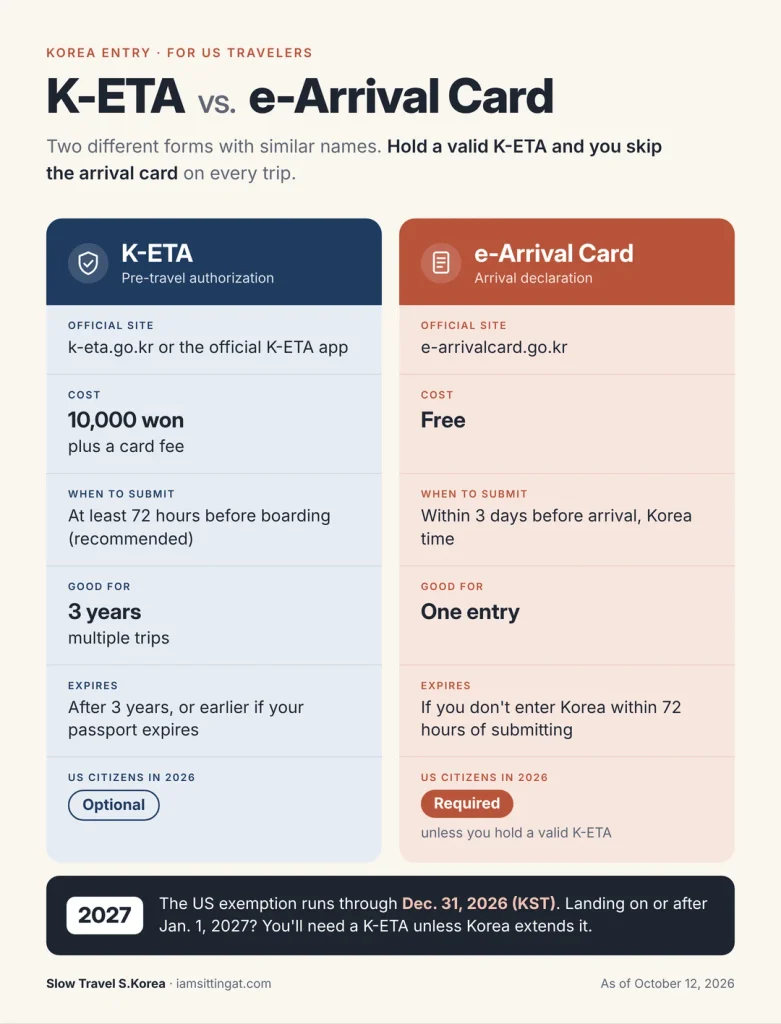
K-ETA for US Citizens in 2026: The e-Arrival Card, the Dec. 31 Deadline, and What Changes in 2027

K-ETA for US citizens is optional until December 31, 2026, Korea time, but you still need to file the free Korea e-Arrival Card. Here’s what to do now and how to plan a trip that lands in 2027.

K-ETA for US citizens

A nonstop flight from JFK to Incheon takes around 15 hours, and somewhere over the Pacific you lose a full calendar day. On most trips, that’s just jet lag trivia. This year it matters, because the rules on K-ETA for US citizens come down to a single date: December 31, 2026, Korea time.

Until then, Americans don’t need a K-ETA. You do need something else, though, and that’s the part that trips people up.

When friends here ask me about Korean entry rules, the question is almost always some version of “Wait, do I need that K-ETA thing or not?” The honest answer this year is “No, but.” The “but” is the Korea e-Arrival Card.

This guide covers what you need right now, how the two systems differ, and how to plan if your trip runs into January 2027.

Quick Answer: K-ETA for US Citizens in 2026

  • Arriving in Korea by December 31, 2026 (KST): You don’t need a K-ETA. You do need to file an arrival card, and the free Korea e-Arrival Card is the easy way to do it.
  • Arriving on or after January 1, 2027: You’ll need an approved K-ETA unless Korea extends the exemption again. As of October 12, 2026, no extension has been announced.
  • A K-ETA replaces the arrival card. If you hold a valid K-ETA, you skip the arrival card on every trip for three years.
  • You still don’t need a visa for a tourist trip of up to 90 days.
  • Use only the official sites: k-eta.go.kr and e-arrivalcard.go.kr. Anything else is a third-party service you don’t need.
Arriving by Dec. 31, 2026Arriving on or after Jan. 1, 2027
Visa for tourism (up to 90 days)Not neededNot needed
K-ETAOptionalRequired, unless the exemption is extended
Arrival cardRequired, unless you hold a valid K-ETANot needed with a valid K-ETA
What it costs youe-Arrival Card is freeK-ETA fee: 10,000 won (about $7) plus a card fee

The US is one of 22 countries and territories covered by Korea’s temporary K-ETA exemption. Korea’s Ministry of Justice extended it through December 31, 2026, Korea Standard Time, and the Korean Consulate General in New York published the same notice. I’ll update this post as soon as Korea says anything about 2027.

K-ETA vs. the Korea e-Arrival Card: Two Different Things

Comparison chart of K-ETA and Korea e-Arrival Card for US travelers

Most of the confusion comes from the fact that these are two separate systems with similar-sounding names.

K-ETA (Korea Electronic Travel Authorization) is a pre-travel approval for people who can enter Korea without a visa. You apply online, pay a fee, and get a decision before you fly. It’s valid for three years and covers multiple trips. Airlines check it at check-in, so if you need one and don’t have it, you may not get a boarding pass.

If that sounds familiar, it’s because the US has its own version. Europeans and others flying to America under the Visa Waiver Program need an ESTA. K-ETA is Korea’s equivalent, and it exists for the same reason: screening travelers before they board, not at the immigration desk.

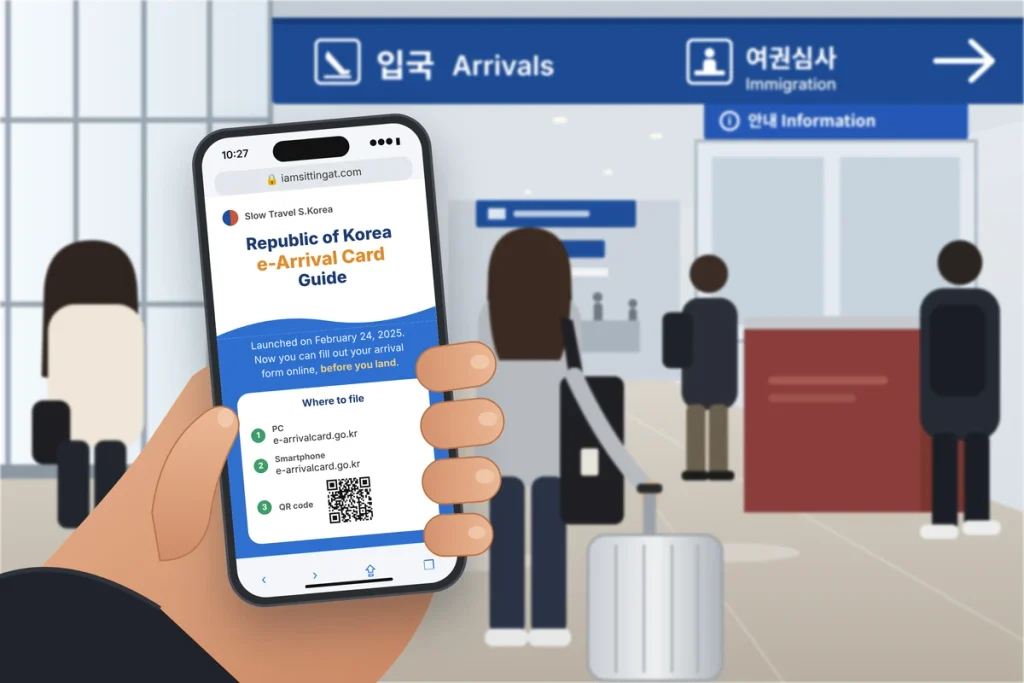
The Korea e-Arrival Card is the online version of the paper arrival form people used to fill out on the plane. It’s a one-trip declaration: who you are, which flight you’re on, where you’re staying. It’s free, and you submit it within three days before you land.

The connection between them is simple. If you hold a valid K-ETA, you don’t file an arrival card. That’s why a K-ETA still has some value in 2026, even though Americans don’t need one.

K-ETAKorea e-Arrival Card
What it isPre-travel authorizationArrival declaration
Official sitek-eta.go.kr or the official K-ETA appe-arrivalcard.go.kr
Cost10,000 won plus a card feeFree
When to submitAt least 72 hours before boarding (recommended)Within 3 days before arrival, Korea time
Good for3 years, multiple tripsOne entry
ExpiresAfter 3 years, or earlier if your passport expiresIf you don’t enter Korea within 72 hours of submitting
Required for Americans in 2026?NoYes, unless you hold a valid K-ETA

Korea launched the e-Arrival Card in February 2025 and ran it alongside the paper form through the end of that year. The plan was to go online-only in 2026, but according to reports citing the Ministry of Justice, paper cards are still being accepted in parallel until an official end date is announced. Either way, I’d file online. It takes a few minutes at home instead of balancing a pen and a form on a tray table.

Your Two Options If You Land in Korea in 2026

Because K-ETA is optional for Americans right now, you get to choose.

Option 1: File the free e-Arrival Card

This is what most travelers on a single trip should do. It costs nothing, takes a few minutes, and you do it once per trip.

Option 2: Pay for a K-ETA and skip the arrival card

A K-ETA approval covers you for three years, and you won’t file an arrival card on any of those trips. It makes sense if:

  • Your trip crosses into 2027. This is the big one. More on it below.
  • You expect to visit Korea again in the next three years. One application covers every visit, and you’re already set if the exemption ends.
  • You’d rather handle paperwork weeks ahead than inside a 72-hour window before landing.

Travelers 17 and under or 65 and over are excluded from the K-ETA requirement even when it’s in force. They can still apply voluntarily to skip the arrival card, and the fee applies.

What Happens on January 1, 2027

Unless Korea announces another extension, the rules on K-ETA for US citizens flip on January 1, 2027: from that date, you’ll need an approved K-ETA to enter Korea.

Has Korea extended it before? Yes, twice. The exemption started on April 1, 2023, for the 2023โ€“2024 Visit Korea Year. It was extended through 2025, then again through 2026, with the second extension announced in December 2025, just weeks before the deadline. So a late announcement this year wouldn’t be unusual. That pattern isn’t a promise, though, and I wouldn’t plan around it.

The New York time-zone trap

This is the detail I’d flag for anyone flying from the East Coast. The exemption runs on Korea Standard Time, and what counts is when you arrive in Korea.

In late December, Seoul is 14 hours ahead of New York. Add a flight of roughly 15 hours, and you land more than a full day “later” on the calendar than when you left. Here’s how that plays out with a typical afternoon departure (times are illustrative, so check your own itinerary):

Leave JFK (New York time)Land at Incheon (Korea time)K-ETA needed?
Dec. 29, 1:00 p.m.Dec. 30, around 6:00 p.m.No
Dec. 30, 1:00 p.m.Dec. 31, around 6:00 p.m.No
Dec. 31, 1:00 p.m.Jan. 1, around 6:00 p.m.Yes, unless extended

So if you’re planning a New Year’s trip to Seoul, look at your arrival date in Korea, not your departure date in New York. If it’s January 1, 2027, or later and no extension has been announced, apply for a K-ETA.

My practical advice

  • Landing by December 31, 2026: File the free e-Arrival Card. No K-ETA needed.
  • Landing on or after January 1, 2027: Apply for a K-ETA once your dates are set, unless an extension has been announced. Don’t wait until the week before Christmas to see what Korea decides.
  • Trip that starts in December and ends in January: Entry is what counts, so landing by December 31 keeps you under the exemption. If you leave Korea mid-trip and come back (say, a side trip to Japan), your re-entry date is the one that matters.

How to Apply for a K-ETA as a US Citizen

Use only the official site

Apply at k-eta.go.kr or through the official K-ETA app. Search results are full of look-alike sites that charge far more than the official fee for “processing.” The government fee is 10,000 won per person. If a site is asking for much more, close the tab.

What you’ll need

  • Your passport
  • A recent color photo of your face
  • An email address
  • Your address in Korea (hotel or rental)
  • A credit or debit card

Step by step

  1. Go to k-eta.go.kr or open the K-ETA app.
  2. Scan or enter your passport information page.
  3. Upload your photo.
  4. Fill in your trip details: purpose of visit, address in Korea, contact information.
  5. Pay the fee: 10,000 won, plus a small card processing fee on top.
  6. Check your result under the “Check Results” menu. The official processing window is up to 72 hours.

Apply at least 72 hours before you board, which is what the Ministry of Justice recommends. One person can submit applications for a group, like a family traveling together.

If your hotel changes after approval, update your stay address on the K-ETA site. You don’t need to reapply for that.

How to Fill Out the Korea e-Arrival Card

When

You can submit starting three days before your arrival date, counted in Korea time. For a flight from New York, that usually means filing a day or two before you leave home, since you lose a day in the air.

If you submit and then don’t enter Korea within 72 hours, the card becomes invalid and you’ll need to file a new one. Keep that in mind if your flight is canceled or pushed back a day.

Where

e-arrivalcard.go.kr, on your phone or laptop. It’s free. Same rule as with K-ETA: ignore any site that charges a fee.

What you’ll need

  • Passport
  • Flight number
  • Your address in Korea
  • An email address (your confirmation goes there)

Worth knowing

  • Every traveler needs their own card, kids included. You can fill them out on someone else’s behalf.
  • You don’t need to print anything. The immigration officer can see your submission in the system. I’d still screenshot the confirmation email.
  • Your Korean address: Copy it straight from your booking confirmation. Korea has two address systems, the newer road-name addresses and the older lot-number addresses, and you’ll often see both for the same building. Either works.

At Incheon: What Happens When You Land

Korea e-Arrival Card form on a smartphone screen

Once your arrival card is filed (or you hold a K-ETA), arrival is straightforward.

  1. Immigration. Follow the signs for foreign passport holders and hand over your passport. The officer can see your e-Arrival Card or K-ETA on screen.
  2. Baggage claim.
  3. Customs. If you have nothing to declare, you don’t fill out a customs form. Walk through the “Nothing to Declare” lane. You do need to declare goods worth more than $800 in total, cash over $10,000, and food, plants, or animal products that need inspection.

From there, your next decision is how to get into Seoul.

Reality Check: Costs, Limits, and Things That Go Wrong

Korea’s entry process is one of the smoother ones I know of, but it has a few sharp edges.

  • The K-ETA fee isn’t refundable. If you apply now and Korea extends the exemption in December, you don’t get the 10,000 won back. It’s a small amount, but it’s gone either way.
  • A K-ETA isn’t a guarantee of entry. It gets you on the plane. The immigration officer at Incheon still makes the final call, the same way an ESTA works in the US.
  • The 72-hour windows are tight. K-ETA can take up to 72 hours to process, and the e-Arrival Card can only be filed within three days of landing. A last-minute trip during the holiday rush is where people get caught.
  • Your K-ETA is tied to your passport. If your passport expires within three years, the K-ETA ends with it. If you renew your passport, plan on applying again.
  • Copycat sites are the real cost risk. The official fees are 10,000 won for K-ETA and zero for the arrival card. Paying a middleman doesn’t speed anything up.
  • Dual citizens have different rules. If you’re Korean American and also hold Korean nationality, how you enter and leave Korea may be different. Check with the Korean Consulate General in New York before you book.

Other Entry Basics for Americans

  • Visa-free stay: US citizens can visit Korea for tourism or short business trips for up to 90 days per entry without a visa.
  • Passport validity: Your passport needs to cover your whole stay, and some airlines apply stricter rules at check-in. If your passport expires within six months of your trip, check with your airline.
  • Transit only: If you’re connecting through Incheon without going through immigration, you need neither a K-ETA nor an e-Arrival Card.

My Pre-Flight Checklist for Korea

  • Check your arrival date in Korea time, not New York time
  • Landing by Dec. 31, 2026: file the e-Arrival Card within 3 days before arrival
  • Landing in 2027: apply for a K-ETA at least 72 hours before boarding, unless an extension has been announced
  • Screenshot your confirmation email
  • Make sure your passport covers your whole trip
  • Sort out phone data before you land: [AFFILIATE: Korea eSIM]
  • Consider travel insurance, since many US health plans offer limited coverage abroad: [AFFILIATE: travel insurance for Korea]
  • Download the essential apps before you fly: Korea Travel Apps for Foreigners

FAQ

Do US citizens need a K-ETA for South Korea in 2026?

No. Americans are covered by Korea’s temporary K-ETA exemption through December 31, 2026, Korea Standard Time. You do need to file an arrival card instead, and the free Korea e-Arrival Card is the simplest way, unless you choose to get a K-ETA.

Will Americans need a K-ETA in 2027?

Yes, unless Korea extends the exemption again. As of October 12, 2026, nothing has been announced. The last extension came in December, so check k-eta.go.kr before you fly. If you land in 2027, applying now is the safe choice.

Is the Korea e-Arrival Card free?

Yes. The official site, e-arrivalcard.go.kr, charges nothing. Any site that asks for a fee is a third-party service you don’t need.

If I have a K-ETA, do I still need the e-Arrival Card?

No. A valid K-ETA exempts you from the arrival card, paper or online.

How long does K-ETA approval take?

The official processing time is up to 72 hours, and the Ministry of Justice recommends applying at least 72 hours before you board. It’s often faster, but don’t count on that around the holidays.

The Bottom Line

The confusion this year is all about timing. Check your arrival date in Korea first. If it’s on or before December 31, 2026, file the free e-Arrival Card and you’re done. If it’s in 2027, get a K-ETA unless Korea says otherwise. Either way, use the official sites, keep a screenshot, and the rest of the arrival takes care of itself.

Related posts you might enjoy:

Seoul Cafe Etiquette 2026: How to Use a Korean Cafe Kiosk, Unlock Wi-Fi, and Work Like a Local

Ordering coffee in Seoul can feel surprisingly high-tech. This guide to Seoul cafe etiquette explains how to use a Korean cafe kiosk, pay with foreign cards, find the Wi-Fi and restroom codes on your receipt, and follow the laptop rules so you can sit and work like a local.

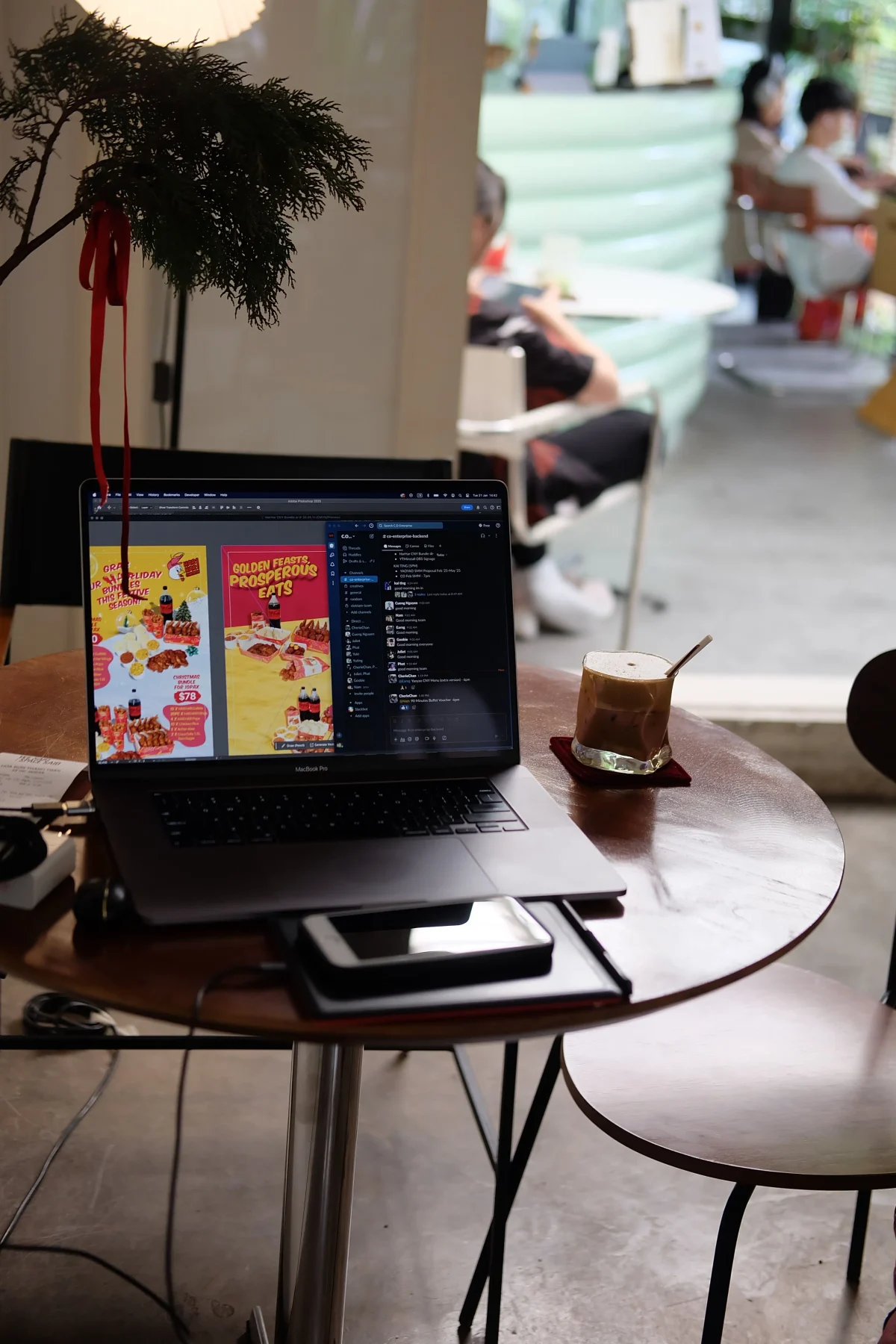
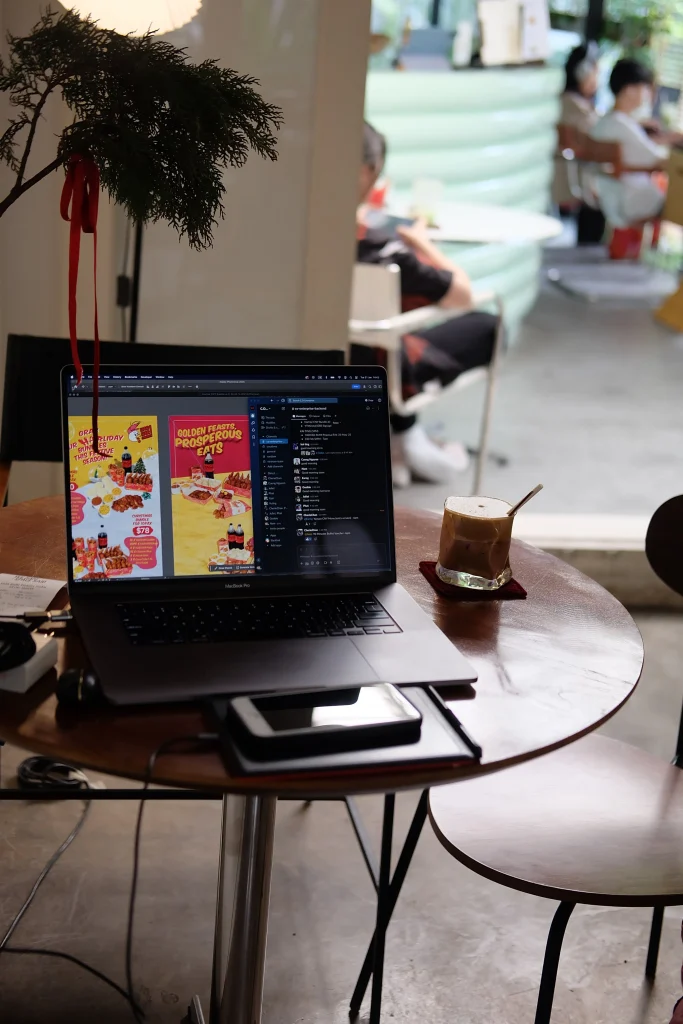
    Iced Americano and laptop on a window table inside a modern Seoul cafe

    Seoul is one of the best coffee cities on the planet. You’ll find minimalist industrial cafes in Seongsu-dong, quiet hanok tea houses in Ikseon-dong, and multi-floor dessert cafes in Gangnam, often on the same street. But the first time you walk into one, you’ll notice the rules are a little different. You’ll often order at a touchscreen. You’ll find the Wi-Fi password on your receipt. And somebody’s MacBook will be sitting at an empty table while its owner is out.

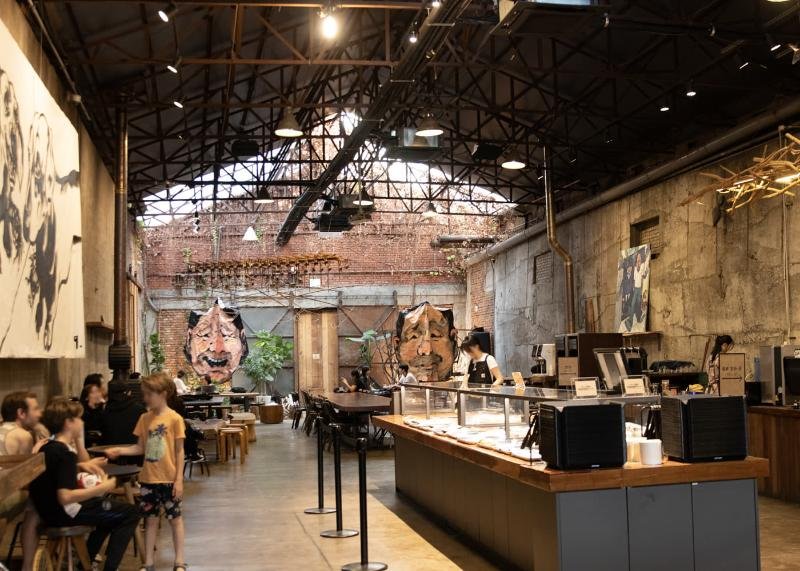
    Converted warehouse cafe in Seongsu-dong, Seoul
    daelimchanggo_gallery

    This guide covers Seoul cafe etiquette from the moment you walk in to the moment you leave. It includes a step-by-step walkthrough of the Korean cafe kiosk, how foreign cards work, where to find the Wi-Fi and restroom codes, and the unwritten rules for laptop users. By the end, you’ll be able to say, “I’m sitting at my favorite cafe in Seoul” and mean it.


    Why Seoul Cafe Etiquette Matters: Korea’s Coffee Obsession by the Numbers

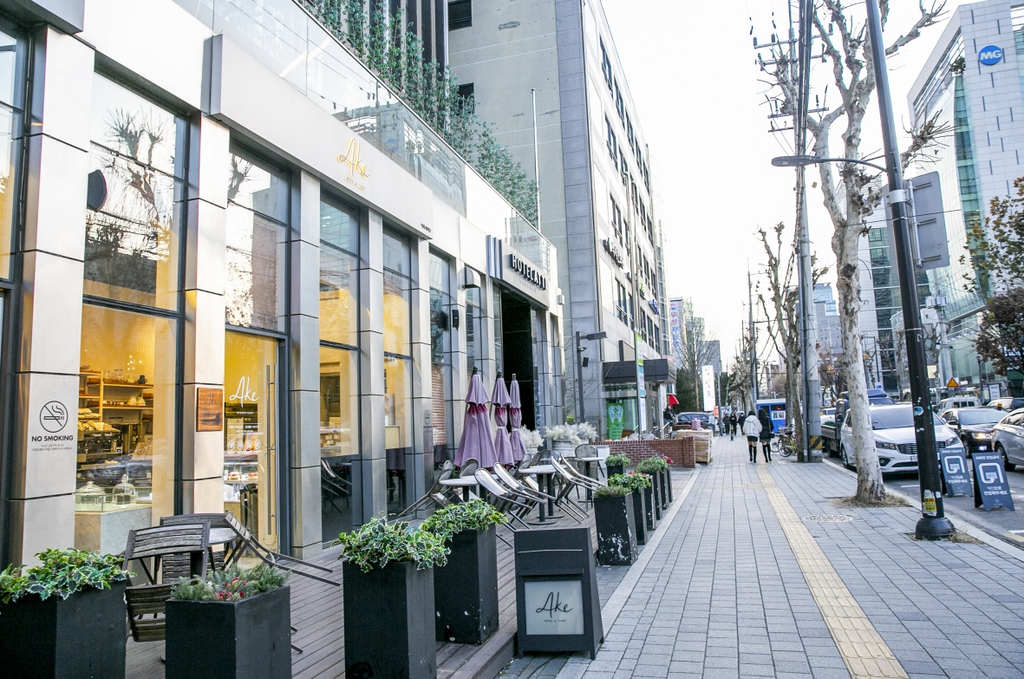
    Seoul street lined with coffee shops showing Korea's cafe density

    Cafes aren’t a side attraction in Korea. They’re part of everyday life. Euromonitor puts South Korea’s per capita coffee consumption at 416 cups a year in 2024, about 2.7 times the global average. According to a government analysis, the number of coffee shops grew 5.7% to 106,452, meaning roughly one in seven foodservice businesses in Korea is a coffee shop.

    Starbucks shows the scale too. Starbucks had 2,009 Korean stores by the end of 2024, more than Japan and behind only the US and China. Budget chains have grown even faster. Mega MGC Coffee led all franchises in 2025 with 3,889 stores, and an iced Americano ranged from โ‚ฉ1,000 at convenience stores to โ‚ฉ5,500 at Starbucks.

    With so many cafes competing for space and customers, locals follow a shared set of habits. Knowing them makes your visit much smoother.


    How to Use a Korean Cafe Kiosk: Step by Step

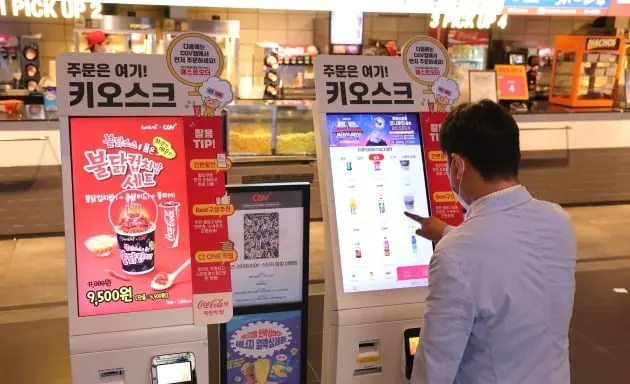
    Customer ordering coffee on a Korean cafe kiosk with English language option
    @ย hankyung.com

    At large chains like Mega MGC Coffee, Compose Coffee, Paik’s Coffee, and A Twosome Place, and at many trendy indie spots, a self-service touchscreen is the main way to order. Here’s how a typical Korean cafe kiosk order goes.

    Step 1: Switch the Language

    Look in a top or bottom corner of the screen for a globe icon or language buttons (ENG / ไธญ / ๆ—ฅ). If there’s no English option, don’t worry. Most menus have clear photos, and you can point your phone’s camera at the screen with Papago or Google Lens to translate it live.

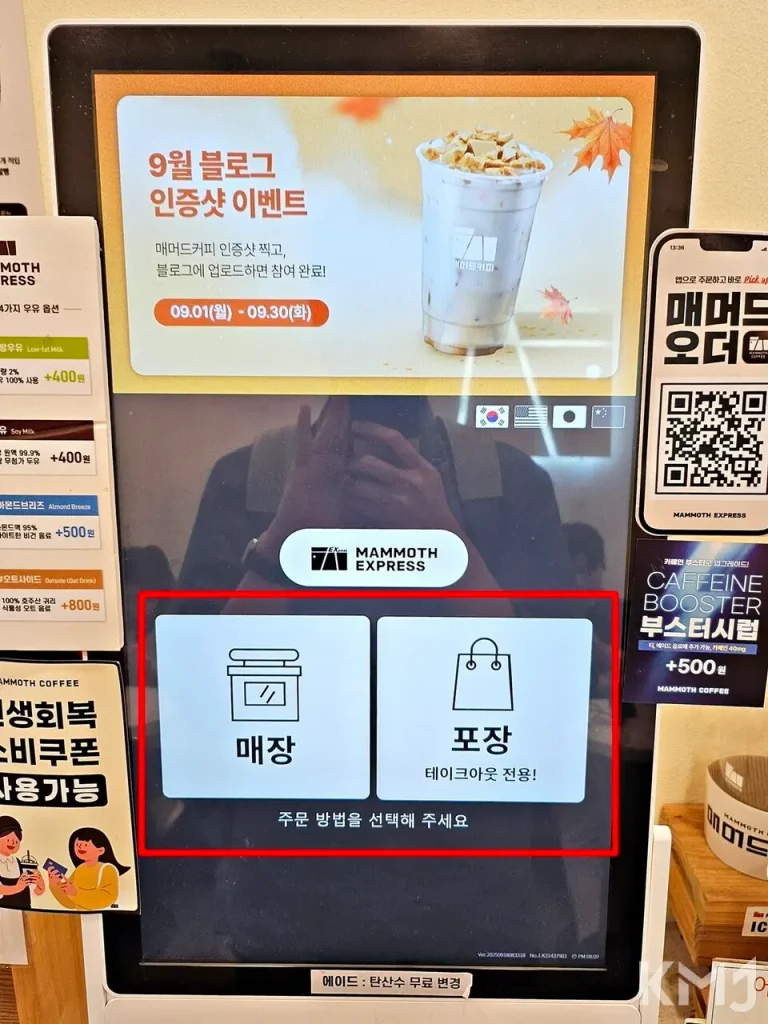
    Step 2: Choose “For Here” or “To-Go”

    This is usually the first question the kiosk asks:

    Korean cafe kiosk screen showing for here and to-go options
    • ๋งค์žฅ (maejang) โ€” For Here: Pick this if you’re staying.
    • ํฌ์žฅ (pojang) โ€” To-Go / Take-out: Pick this if you’re leaving right away.

    This choice matters more in Korea than in most countries. Korea became one of the first countries in 2018 to ban plastic cups for dine-in customers at coffee shops, and that rule is still in effect. The rules are also getting stricter. Under a new voluntary agreement, participating chains started switching to reusable cups for dine-in orders in September 2026 and offering discounts to customers who bring their own tumbler. The same agreement bans “double-cupping” and says straws are given out only if you ask for one at the kiosk or counter.

    Tip: If you order “to-go/take-out” and then sit down, staff may politely ask you to move your drink into a mug. Just pick ‘to-here’ if there’s any chance you’ll stay.

    Step 3: Customize Your Drink

    Common options include:

    • Ice level: less ice or extra ice
    • Sweetness: e.g., Sugar 50%
    • Milk: oat milk is increasingly common in central neighborhoods
    • Extra shot:
    • Size: many budget chains sell giant cups at great prices, so check the size before you order

    Step 4: Pay and Wait for Your Number or Buzzer

    Vibrating pickup buzzer on a cafe table in Seoul

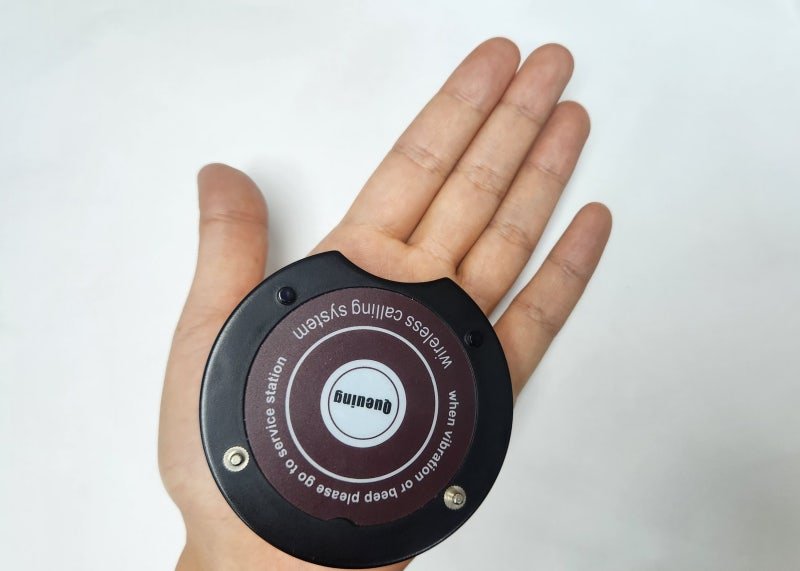
    At kiosk chains, your order number appears on a screen above the pickup counter. At indie cafes with counter service, you’ll often get a small vibrating buzzer. When it flashes, go to the pickup counter (“pickup”) to collect your drink.


    Paying in Seoul Cafes: Foreign Cards, Apple Pay, and Cash

    Physical Credit Cards

    Visa and Mastercard work at nearly every kiosk. American Express is widely accepted but less consistently. Insert your chip card into the slot (usually at the bottom of the kiosk) and leave it in until the payment finishes.

    Apple Pay and Mobile Wallets

    Apple Pay arrived in Korea fairly late. It launched with Hyundai Card as its local partner, and it works only at terminals that support NFC. In practice, that means large franchises and newer card readers. Apple Pay in Korea supports Mastercard and Visa along with Hyundai Card. Many smaller indie cafes still use older readers, so always carry a physical card as a backup.

    A popular travel option is a prepaid card like WOWPASS, which you can top up in Korean won. It helps avoid foreign transaction fees and declined payments.

    Cash

    Most kiosks accept only cards. If you only have Korean won, skip the kiosk and order at the counter. Some cashless cafes won’t take cash at all, so carrying a card is the safest bet.


    The Receipt Is Your Key: Finding Wi-Fi and Restroom Codes

    Korean cafe receipt showing Wi-Fi password and restroom door code

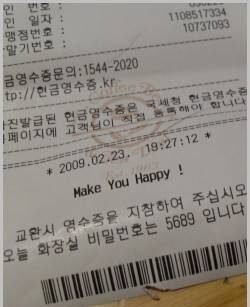
    Here’s one of the most useful parts of Seoul cafe etiquette: don’t throw away your receipt. In many Korean cafes, it’s how you get into the cafe’s amenities.

    Wi-Fi Passwords

    Many Korean cafes print the Wi-Fi details right on the receipt instead of writing them on a chalkboard. Look for:

    • Wi-Fi
    • ID / SSID (the network name)
    • PW / PIN (the password)

    No receipt? Check the pickup counter, the side of the espresso machine, the menu board, or the back of your buzzer for a small label. Korea’s mobile data is also very fast, so a local eSIM is a reliable backup.

    Restroom Door Codes

    In busy areas like Hongdae, Gangnam, and Euljiro, many cafes share a restroom with the rest of the building, usually in a hallway or stairwell outside the cafe.

    • Door codes: Look on your receipt for (Restroom/Toilet) followed by a code, often with a * or # (e.g., 1234*).
    • Key on a block: Smaller or older cafes may keep a physical key attached to a large wooden block near the entrance.
    • Toilet paper: Some building restrooms have a shared tissue dispenser at the entrance instead of inside each stall. Grab some on your way in.

    Korean Cafe Kiosk Done, Now What? Laptop Culture and kagong-jok Etiquette

    Once you’ve ordered at the Korean cafe kiosk and found a seat, you’ll probably be surrounded by people studying and working. Koreans call them (kagong-jok / cagongjok), a combination of the words for “cafe,” “study,” and “tribe.” Cafes generally welcome laptop users, but recent events have made the unwritten rules more visible.

    What Starbucks Korea’s Policy Tells You

    In 2025, the country’s largest cafe chain set limits. Starbucks Korea banned desktop computers, printers, power strips, and large partitions from its cafes and put up notices in every branch. The notices also ask customers to take their belongings with them if they leave for a long time, and to let others share tables meant for more than one person. A company representative also said the policy does not limit how long customers can stay, and laptops and small devices are still welcome. (You can read more in The Korea Herald’s coverage.)

    The takeaway is simple: a laptop is fine; a full office setup is not.

    Power Outlets and Plug Adapters

    • Most modern cafes have outlets along the walls and at large communal tables. Some also have USB ports.
    • Korea uses Type C / Type F plugs (220V, 60Hz) with two round pins. Bring a universal travel adapter. Most laptop and phone chargers handle 220V, but check the label on any hair tools or other appliances.
    • Don’t plug in power strips to take over several outlets. That’s exactly the kind of behavior chains are now restricting.

    How Long Can You Stay?

    There’s a good reason cafes care about this. A 2019 estimate from the Korea Foodservice Industry Research Institute found that a $3 coffee covers only about 1 hour and 42 minutes of seat time before the customer stops being profitable. Good habits to follow:

    • Order again every 2โ€“3 hours. Buy a second drink or a dessert if you’re staying a long time.
    • Don’t take a big table alone during peak hours, especially weekend afternoons.
    • Look for signs. Small, photogenic dessert cafes and pop-ups in Seongsu-dong or Ikseon-dong may post “No Laptops” or a time limit such as “2-Hour Seating Limit”, especially on weekends.
    • Choose the right cafe. Large chains like Starbucks, Hollys, and A Twosome Place, and dedicated “study cafes” , are built for long work sessions. Aesthetic dessert cafes usually aren’t.

    Leaving Your Things Unattended

    You’ll see locals leave laptops, phones, and even wallets on tables while they go to the restroom. South Korea is very safe, but keep your passport and main wallet with you. Note that Starbucks Korea now asks customers not to leave belongings unattended for long periods.


    Finding Great Cafes: Practical Tools


    Seoul Cafe Etiquette Quick Reference

    SituationWhat to Do
    OrderingUse the Korean cafe kiosk; switch to ENG in a corner of the screen
    Eating In vs. To-GoFirst screen: For Here or To-Go
    CupsDine-in drinks come in mugs or reusable cups; plastic is for take-out
    StrawsAsk for one if you need it
    PaymentChip card is safest; Apple Pay only at NFC terminals; cash at the counter
    Wi-Fi PasswordOn your receipt (PW)
    Restroom CodeOn your receipt or a key near the exit
    Plug TypeType C/F, 220V; bring an adapter, no power strips
    Long Work SessionsLaptop is fine; reorder every 2โ€“3 hours; watch for time-limit signs

    Final Thoughts

    Learning a few habits of Seoul cafe etiquette is one of the quickest ways to feel at home in the city. Once you know how to use a Korean cafe kiosk, check your receipt for the Wi-Fi and restroom codes, and follow the laptop rules, you can explore Seoul’s coffee scene from a โ‚ฉ1,500 iced Americano in a quiet neighborhood to a designer latte in Seongsu.

    Related posts you might enjoy:

      Korea Travel Apps for Foreigners: The Best Apps for Your South Korea Trip in 2026

      Google Maps won’t save you in Seoul. Here are the Korea travel apps for foreigners that actually work โ€” from Naver Map to Kakao T โ€” plus the best apps for a South Korea trip in 2026, updated with the latest Climate Card and Google Maps news.

      Planning your dream trip to South Korea? While packing your bags is exciting, preparing your smartphone is just as important. If you’re looking for the right Korea travel apps for foreigners, you’re already ahead of most first-time visitors โ€” because the apps you already have on your phone won’t get you very far in Seoul.

      Tourist using Korea travel apps for foreigners while exploring Seoul

      Many travelers arrive expecting their usual go-to apps to work seamlessly, only to discover that Google Maps gives them almost nothing useful, and generic translation tools miss crucial local nuance. Below is an updated, practical rundown of the best apps for a South Korea trip in 2026 โ€” what to download, why you need it, and how to set it up before you even board the plane.

      Why Your Usual Apps Don’t Work in Korea

      Korean street signage in Seoul that confuses Google Maps

      For nearly two decades, South Korea has restricted the export of detailed map data on national security grounds tied to the unresolved armistice with North Korea, which is why Google Maps has historically been unable to offer walking directions, driving routes, or live transit data inside the country.

      That’s actually changing. In February 2026, South Korea’s government approved Google’s request to export 1:5,000-scale map data overseas under strict security conditions, a decision reported by the Korea Herald as the end of a 19-year dispute. However, implementation has been slow: as of a couple of months later, negotiations between Google and the Korean government had stalled, with the two sides still divided on how the exported data will be stored and processed. In short โ€” a fully functional Google Maps for Korea is coming, but it isn’t reliable yet, so it’s still worth setting up the local alternatives below before your flight.

      1. Navigation: Naver Map and KakaoMap

      Seoul subway exit signs used by Naver Map for foreigners

      Until Google Maps catches up, the two homegrown apps โ€” Naver Map and KakaoMap โ€” remain the most important Korea travel apps for foreigners, and for now they’re still the tools locals themselves use every day.

      Why Naver Map Is a Must-Have

      • Precise transit and walking routes โ€” real-time bus and subway arrivals, exact subway exit numbers, and turn-by-turn walking directions that Google Maps simply can’t match in Korea.
      • Full English interface โ€” also available in Simplified Chinese and Japanese.
      • Save and organize โ€” bookmark cafes, restaurants, and sights into custom lists for your itinerary.

      Setup tip: Download Naver Map before your trip and switch the language to English (Settings > Language > English). When searching, try the English name first; if a niche restaurant doesn’t come up, paste the Korean name or address from Instagram directly into the search bar.

      Alternative: KakaoMap is just as capable and is favored by many long-term expats, though Naver Map tends to return slightly better English results for tourist-facing spots.

      2. Translation: Papago

      Korean market menu translated using Papago app

      While Google Translate has closed the gap in recent years, Papago, developed by Naver, is still widely considered the strongest tool for Korean-English translation because it handles honorifics, slang, and context more naturally.

      • Camera translation โ€” point your phone at menus, street signs, or kiosk screens for instant overlay translation.
      • Voice translation โ€” hold a real-time bilingual conversation with a taxi driver or shopkeeper.
      • Honorific toggle โ€” switch between formal and casual phrasing depending on who you’re talking to.

      If you’re comparing dedicated translation tools against a general-purpose app when picking your Korea travel apps for foreigners, Papago is worth the extra download purely for how it handles Korean menus and signage.

      3. Getting Around: T-Money, the Climate Card, and Taxi Apps

      T-money card tap for Seoul subway and bus

      Korea’s public transit is excellent, but getting the payment method right matters โ€” and this is one area that has genuinely changed for 2026.

      T-Money vs. the Climate Card

      • T-Money Card โ€” the classic reloadable transit card, accepted on buses, subways, and at convenience stores nationwide (GS25, CU, 7-Eleven), and also available at the airport.
      • Climate Card (Seoul only) โ€” if you’re spending 3โ€“5 days mostly around Seoul, the short-term Climate Card Tourist Pass is usually the better deal. As of 2026, tourist passes run from one to seven days, covering Seoul’s subways and buses, though the card cannot be used to board the AREX line at Incheon Airport and several regional transit services are excluded. Prices have stayed unchanged since launch at roughly 5,000 to 15,000 KRW for one to five days, and one useful update for 2026 travelers is that short-term passes can now be purchased directly with an international credit card, which wasn’t always the case at launch.

      One detail worth planning around: physical Climate Cards are typically loaded at subway station kiosks rather than convenience stores, so budget a few extra minutes on arrival day.

      Taxis: Kakao T and k.ride

      Kakao T taxi on the street in Seoul

      Hailing a taxi on the street can be difficult for visitors, especially late at night in busy areas like Hongdae or Gangnam, which makes a ride-hailing app one of the more essential best apps for a South Korea trip.

      • Kakao T is the app almost every driver in Korea uses, giving it by far the largest pool of available cars. Payment used to be the sticking point for tourists, but that’s improved: Kakao T now offers a dedicated Non-Korean Credit Card option in payment settings, and if your card doesn’t go through, the reliable fallback is still Pay Driver Direct, where you book through the app and simply pay the driver in cash or by card on arrival.
      • k.ride is Kakao Mobility’s newer app built specifically for international visitors โ€” it runs in English, Japanese, and Chinese, lets you sign up with a Google or Apple account instead of requiring KakaoTalk, and accepts foreign-issued Visa, Mastercard, JCB, and UnionPay cards for in-app payment.

      4. Staying Connected: eSIM and Pocket Wi-Fi

      Incheon Airport arrival where eSIM activation matters

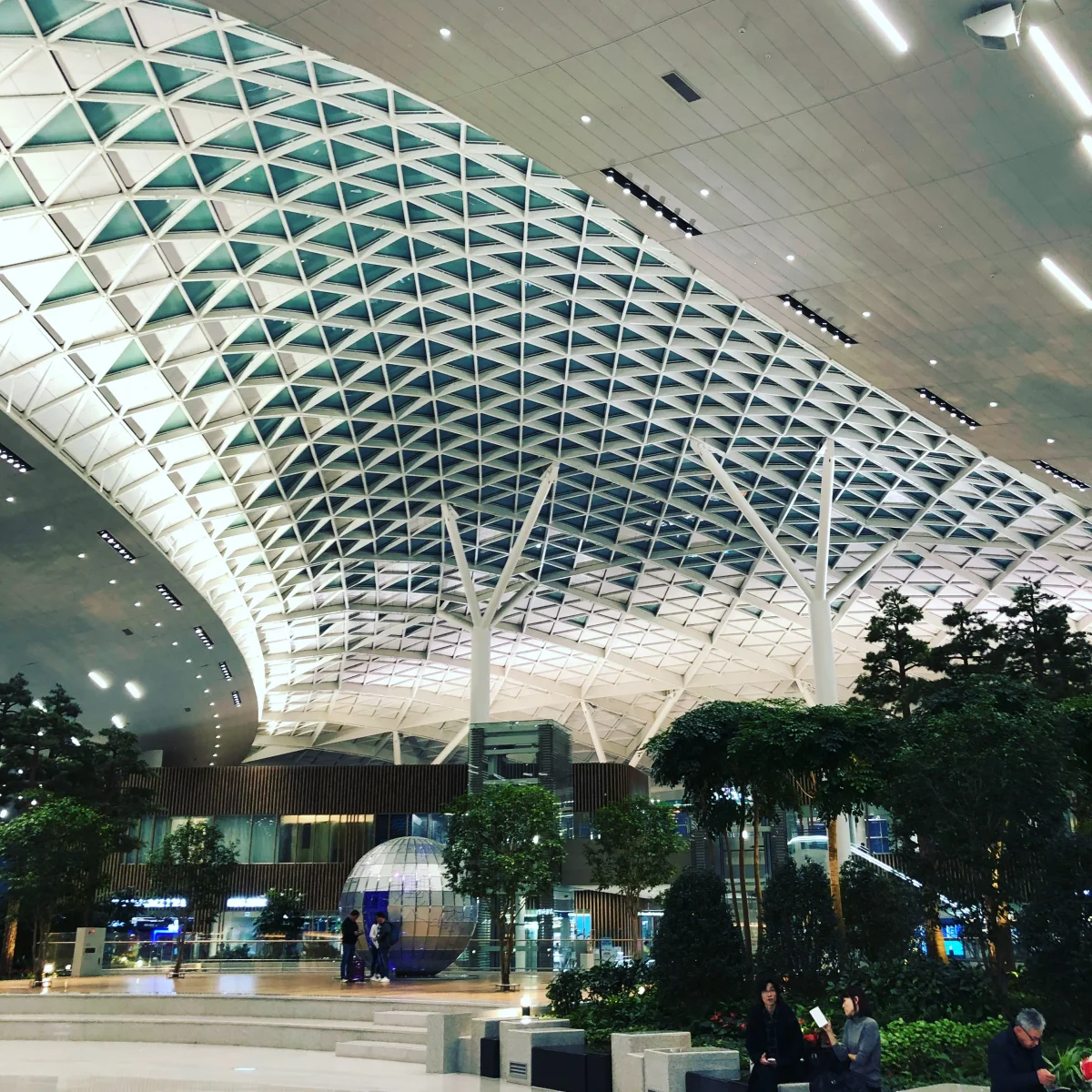
      Having active data the moment you land at Incheon International Airport (ICN) matters for pulling up hotel bookings, loading Naver Map, and checking transit routes.

      • eSIM (recommended) โ€” buy your plan online before departure, scan the QR code, and activate it on arrival with no physical SIM swap.
      • Pocket Wi-Fi โ€” a good option for groups sharing one connection, though you’ll need to carry a power bank and return the device before your flight home.

      Note on phone numbers: most prepaid eSIM plans are data-only. If you plan to make restaurant reservations through waitlist apps or want food delivery, look for a plan that also includes a local +82 number for incoming SMS, since several apps (including the Kakao ecosystem) rely on SMS verification.

      5. Dining: CatchTable

      Popular restaurants in Seoul, especially in neighborhoods like Seongsu or Itaewon, fill up fast, and many no longer take walk-ins. CatchTable (the global version) handles waitlists and reservations for a large share of these restaurants, and it’s worth having installed before you even land so you can book ahead for your first night.

      Quick Reference: Best Apps for a South Korea Trip

      CategoryAppPurpose
      NavigationNaver Map / KakaoMapTurn-by-turn directions, subway exits, place search
      TranslationPapagoMenu scanning, real-time voice translation
      TransitT-Money / Climate CardSubway and bus payment
      TaxiKakao T / k.rideBooking rides with international card support
      ConnectivityeSIMInstant mobile data on arrival
      DiningCatchTableRestaurant waitlists and reservations

      Final Thoughts

      The single biggest mistake foreign travelers make is assuming their home-country apps will just work in Korea. They mostly won’t โ€” at least not yet, while Google’s expanded map access is still being implemented. Downloading the right Korea travel apps for foreigners before you fly, and spending ten minutes setting each one to English, will remove most of the friction that trips up first-time visitors to Seoul and beyond.

      Related posts you might enjoy: