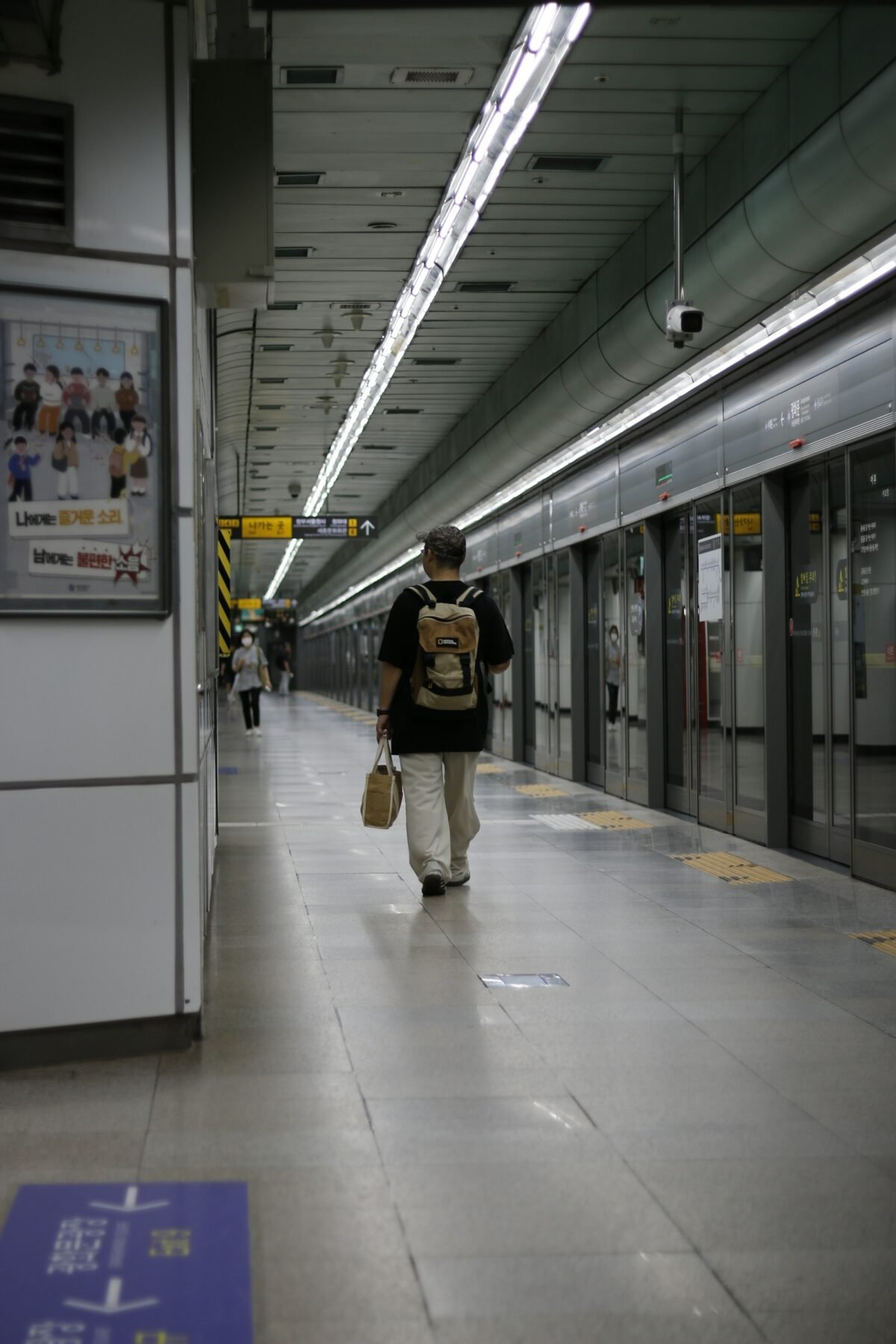
Last updated: November 6, 2026
Ask a friend in Seoul where to meet, and you’ll rarely get a street address. You’ll get a station and a number: “Exit 3, Anguk.” That number tells you which of several staircases to climb, which side of a wide road you’ll come up on, and whether you’ll be standing in the right spot or walking five minutes around a block to find them.
That’s the part most of the “how to ride” articles skip, and it’s why I wrote this Seoul subway guide for tourists the way I’d explain it to a friend flying in from New York. The trains themselves are easy. They’re clean, frequent, and labeled in English. What trips visitors up is everything around the ride: paying when your Visa won’t open the gate, knowing which direction to stand, finding the right exit, and the quiet rules about seats that locals never say out loud.
Quick Answer: A Seoul Subway Guide for Tourists in 60 Seconds
- A ride costs ₩1,550 with a transit card for the first 10 km, plus ₩100 for every extra 5 km. A single-journey ticket costs ₩1,650, plus a ₩500 deposit you get back.
- Your US credit card won’t open the gates yet. Use a T-money card or a Climate Card pass. Seoul is replacing its gate readers, with credit card tapping targeted for December 2027.
- Find your direction by the last stop on the line, not by “uptown” or “downtown.” Line 2 is a loop, so it uses “inner” and “outer” circle instead.
- Tap in and tap out. Transfers between subway lines are free inside the gates, and transfers to buses are free within 30 minutes when you tap out.
- Plan your exit before you arrive. Every exit has a number, and Seoul subway exit numbers are how locals give directions.
- Trains run from about 5:30 a.m. to around 1 a.m. on weekdays, earlier on weekends.
- Leave the priority seats and the pink seats empty. Even when the train is packed.
How the Seoul Subway Is Organized
Seoul’s subway isn’t one system so much as several operators sharing one fare and one map. Seoul Metro runs Lines 1 through 8. Korail, the national railroad, runs the outer parts of Lines 1, 3, and 4, plus lines like Gyeongui-Jungang and Suin-Bundang. Line 9, the Shinbundang Line, and the airport railroad have their own operators. For you, this mostly doesn’t matter, since one transit card works across all of them. It matters in two cases: some private lines, like Shinbundang, charge extra fare, and labor disputes at one operator can slow some lines while others run normally (more on that in the Reality Check).
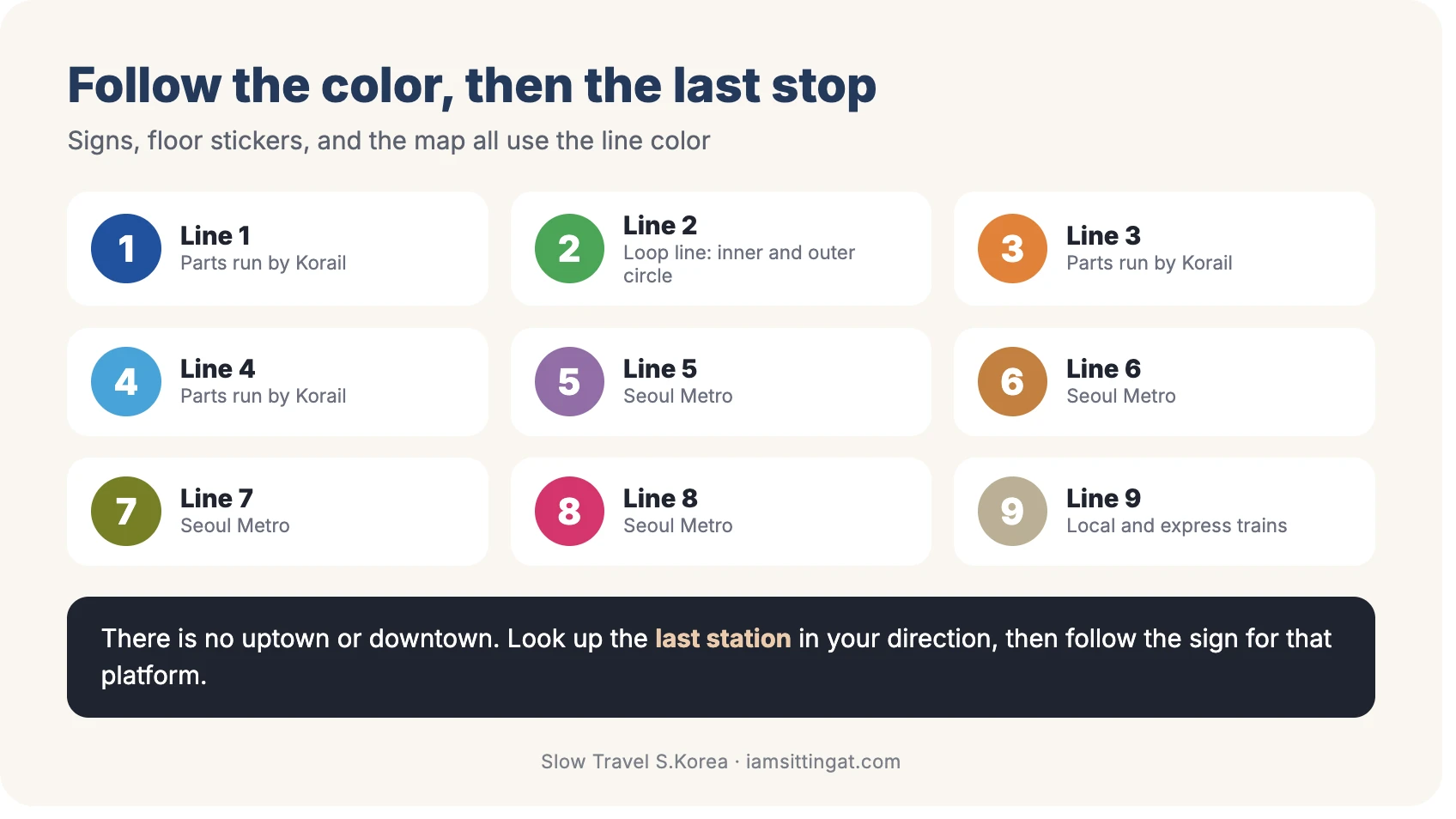
Here’s what to know about reading the map:
- Lines have numbers and colors. Line 2 is green, Line 3 is orange, Line 4 is sky blue. Signs, floor stickers, and the map all use the same color, so you can follow color alone through a big transfer station.
- Stations have numbers too. Each station has a three-digit code tied to its line, such as 222 for Gangnam on Line 2. The codes help when a station name is long or when you can’t remember the romanization.
- Big stations serve several lines. Seoul Station, Jongno 3-ga, and Express Bus Terminal each connect three or more lines, and a transfer can mean a long walk. Follow the colored signs that say “Transfer” (환승).
Coming from New York, the biggest mental shift is direction. There’s no uptown or downtown, and no express track on most lines. Each platform is labeled with the next station and the line’s final stop. Look up the last station in the direction you’re going, then follow the sign for that platform. If you board the wrong way, get off at the next stop and cross over. Many stations let you switch sides without leaving the gates, but some smaller ones don’t, and you’d have to tap out and back in.
How to Pay: T-money, Climate Card, or a Single Ticket
You have three ways in, and none of them is your American credit card. Seoul’s gates still use a Korean transit card standard. Seoul Metro has started a roughly ₩70 billion project to replace the readers at 276 stations, adding tagless gates and credit card tapping, with service targeted for December 2027. Until then, here’s how it works:
T-money card. A prepaid card you buy at a convenience store or station machine and load with cash. It works on subways, buses, and most taxis nationwide, and it’s what I’d get on day one. I covered where to buy it, how to charge it, and how to get a refund in my T-money card guide.
Climate Card short-term pass. Seoul’s unlimited-ride pass, sold for one to seven days, from ₩5,000 to ₩20,000. It covers Seoul’s subway and Seoul-licensed buses, and it pays off if you’ll ride a lot inside the city. It doesn’t cover stations outside Seoul or the Shinbundang Line.
Single-journey ticket. A reusable plastic card from the station machine. You pick your destination, pay the fare plus a ₩500 deposit, and get the deposit back at a refund machine after you exit. It works for a ride or two, but you’ll lose free transfers to buses.
Since March 2026, about 440 new ticket machines in 273 stations on Lines 1 to 8 accept foreign Visa and Mastercard cards for single tickets and Climate Card passes, with a service fee of about 3.7% on average. If you’ll lean on those machines, bring a card that doesn’t add a foreign transaction fee on top. Related: Best Credit Card to Use in South Korea. [AFFILIATE: no-foreign-transaction-fee credit card]
Seoul Subway Fares in 2026
Fares last went up on June 28, 2025, and they’re the same across Seoul, Gyeonggi Province, and Incheon.
| Rider | Transit card (first 10 km) | Single-journey ticket | Early-bird (before 6:30 a.m.) |
|---|---|---|---|
| Adult (19+) | ₩1,550 | ₩1,650 + ₩500 deposit | ₩1,240 |
| Youth (13–18) | ₩900 | ₩1,650 + ₩500 deposit | ₩720 |
| Child (6–12) | ₩550 | ₩550 + ₩500 deposit | ₩440 |
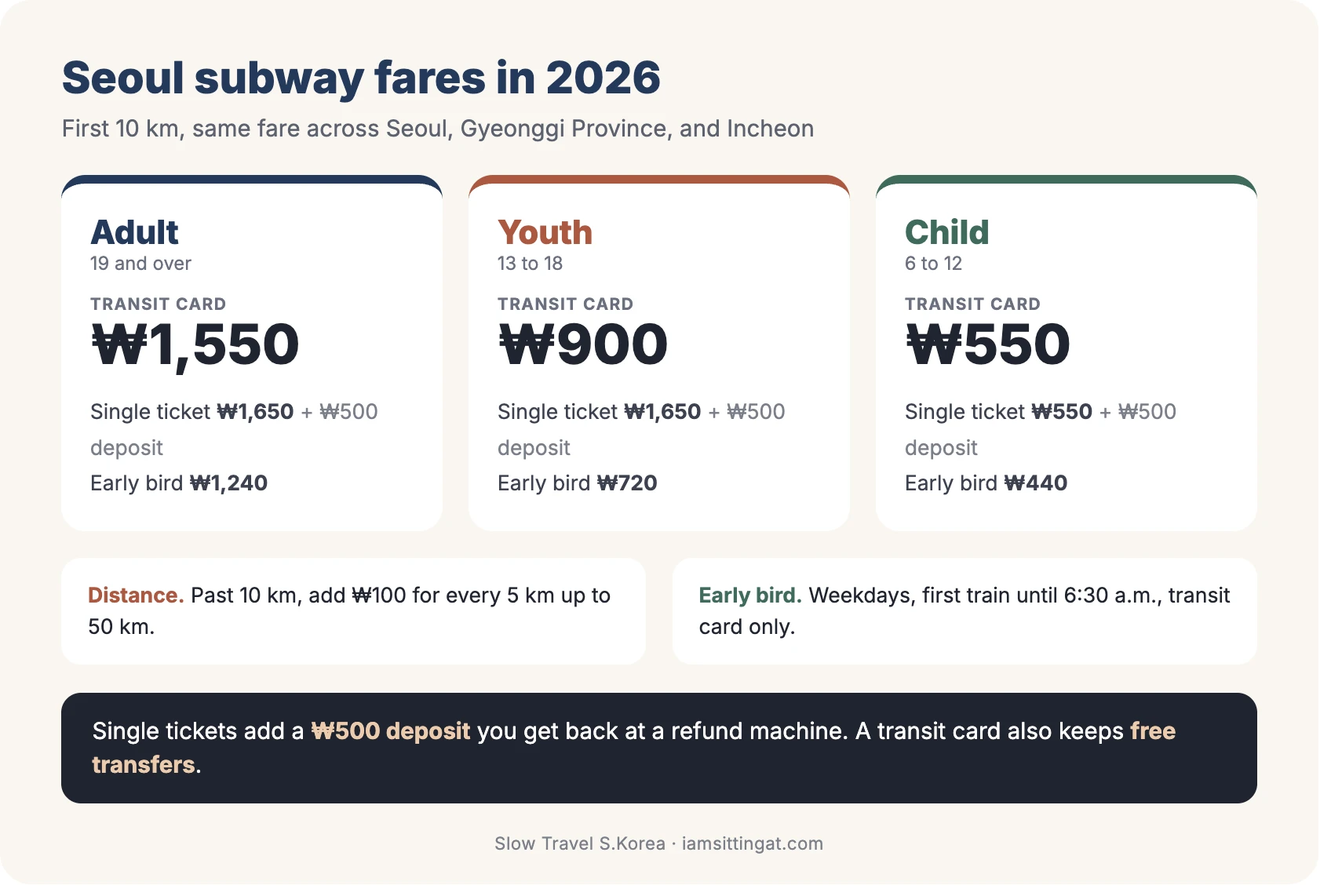
Distance adds up. Past 10 km, you pay ₩100 more for every 5 km up to 50 km, then ₩100 for every 8 km after that. Most rides between central neighborhoods stay at the base fare or close to it. A long trip, such as Hongdae to Jamsil, might add a few hundred won.
The early-bird discount applies on weekdays from the first train until 6:30 a.m., with a transit card. It doesn’t apply if you transfer from a bus. Jet-lagged travelers from the East Coast who wake up at 4 a.m., this one’s for you.
Transfers are where a transit card earns its keep. Changing subway lines inside the gates costs nothing extra beyond distance. Tap out, then tap onto a bus within 30 minutes (60 minutes between 9 p.m. and 7 a.m.), and the bus counts as part of the same trip. You can chain up to four transfers.
Tapping out matters. The final fare comes off when you tap out, so the exit gate won’t open if your balance is short. Use the fare adjustment machine near the gates to add money.
Riding Step by Step
- Look up the route in Naver Map or the Seoul Subway app (apps below). Note the line, the direction’s last stop, and the exit you want.
- Tap your card on the reader at the gate. You’ll see the balance on a small screen.
- Follow the line color to the platform for your direction. Overhead screens show how many minutes until the next two trains.
- Wait at the marked spots. Almost every platform has screen doors with painted lines on each side. Stand to the side, not in front of the door.
- Let people off first, then board. On crowded trains, slide your backpack to your front or set it at your feet.
- Listen for the chime. Announcements come in Korean and English, often with Chinese and Japanese, and transfer stations play a short jingle before the announcement.
- Tap out at the gate, then look for your exit number on the yellow signs.
Seoul Subway Exit Numbers: The Part Nobody Explains
In New York, you think in street corners. “Northeast corner of 34th and Seventh” tells you where you’ll come up. Seoul’s streets don’t work that way. Many are wide boulevards with few crosswalks, addresses don’t run in neat order, and coming up the wrong staircase can put you across eight lanes of traffic from where you meant to be. So Koreans solved it with numbers. Every station’s exits are numbered, often in a circle around the main intersection, and the number becomes the address.
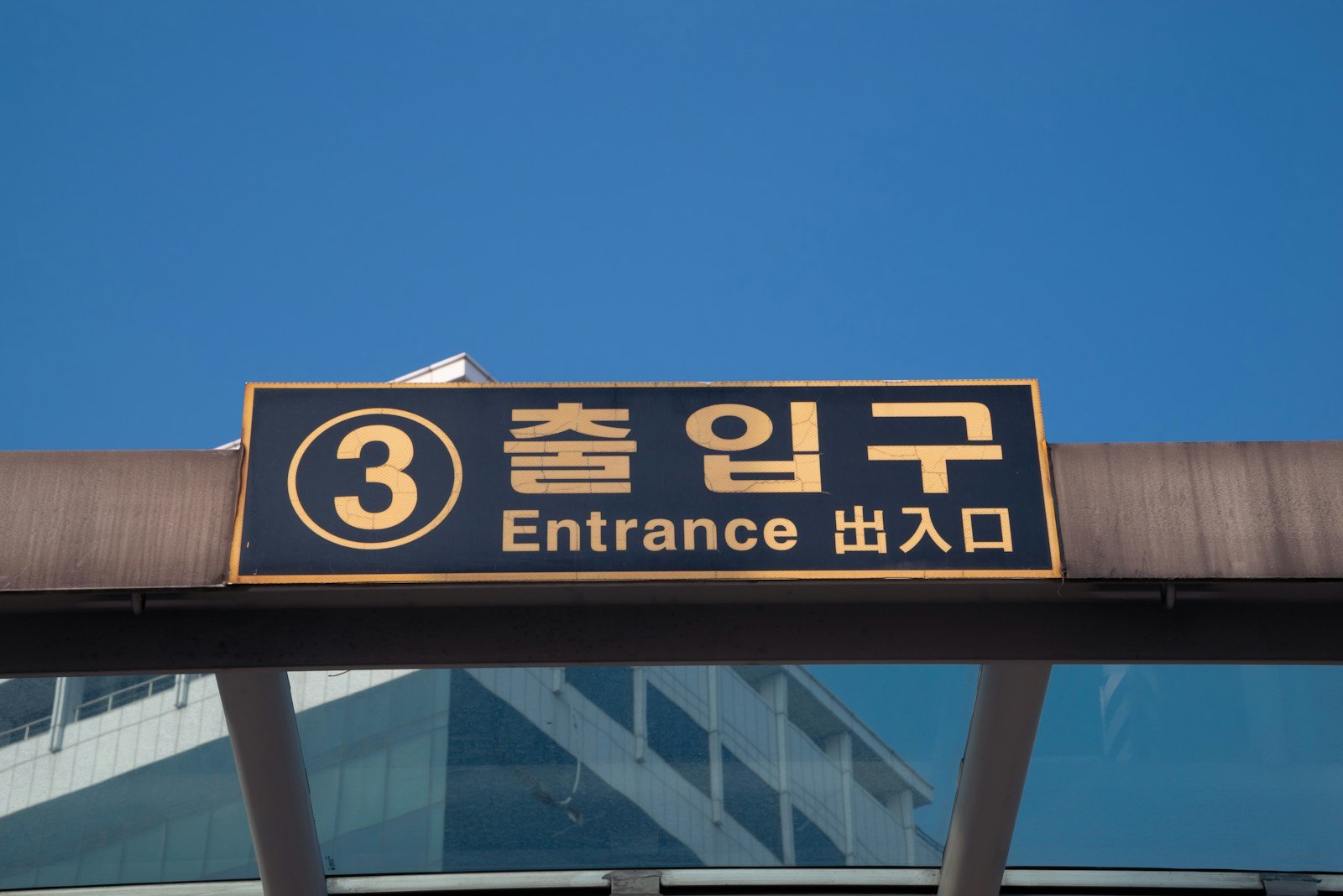
That’s why Seoul subway exit numbers show up everywhere:
- Directions. Restaurant websites, hotel booking pages, and K-drama filming spot lists will say “Exit 2, 300 m.”
- Meeting up. Friends meet “in front of Exit 7.” If you’re vague, they’ll ask which exit before anything else.
- Station signs. After the gates, yellow signs list each exit number with nearby landmarks. Near the gates, a neighborhood map shows where each exit comes out.
A few tips that save time:
- Pick the exit before you arrive. Naver Map and Kakao Map show which exit to use for your destination. Write it down or screenshot it, especially if you’ll lose signal underground. [AFFILIATE: Korea eSIM] Related: Best eSIM for Korea.
- Check for an elevator or escalator. Not every exit has one. Station maps mark them, and the apps do too. If you have a suitcase, choose the exit with an elevator even if it’s a little farther.
- Use the “fastest door” info. Some apps tell you which car and door to stand at so you come out closest to your exit or transfer. Kakao’s own example: at Gangnam Station, Exit 11 is closest to doors 7-2 or 4-3, depending on direction. Locals use this every day.
- Big stations have a dozen or more exits. If you come up and nothing looks right, go back down and find another number. It’s faster than walking around a wide block.
The Apps Worth Downloading
You’ll want at least one map app and, if you’ll ride a lot, the official subway app. Google Maps still isn’t reliable for walking and transit directions in Korea, so don’t count on it. My full list is in Korea Travel Apps for Foreigners.
| App | Best for | English | Notes |
|---|---|---|---|
| Naver Map | Door-to-door routes, exit numbers | Yes | My first choice for planning. See my Naver Map guide |
| Kakao Map | Routes, live train positions on the map | Partial | Added real-time train locations on 23 lines in 2025 |
| Seoul Subway (또타지하철) | Car-by-car crowding, delay alerts | Yes, plus Chinese and Japanese | Official Seoul Metro app, redesigned for foreign riders in May 2026 |
The official Seoul Subway app is the one most visitors don’t know about. Seoul Metro rebuilt it this year with four languages, real-time delay alerts translated by AI, and a feature that plays the train’s announcements on your phone. Its car-by-car crowding view is handy at rush hour, when one end of a train can be packed and the other half empty.
Hours, Last Trains, and Line 9 Express
Hours. Trains start around 5:30 a.m. On weekdays, the last trains are scheduled to reach the end of the line around 1 a.m. On weekends and public holidays, service ends about an hour earlier, around midnight. That means the actual last train from your station can leave well before 1 a.m., especially if you’re far from the end of the line. Check the last-train time in the app before a late dinner.
Holidays and big events. During Lunar New Year and Chuseok, Seoul extends last trains to reach the end of the line by 1 a.m. on the busiest return days. The city sometimes extends service for New Year’s Eve too. Check announcements before you go.
Line 9 has express trains. It’s the one line in Seoul with both local and express trains on the same platform. Express trains stop only at major stations, such as Gimpo Airport, Yeouido, Express Bus Terminal, and Sinnonhyeon, and they’re much faster across the city. Check the sign on the train or the platform screen before you board: express is marked in red. If you need a small station, take the local. Starting November 16, 2026, Seoul is running more express trains during the morning rush, in a pattern of two express trains to every local.
Rush hour is real. Expect packed trains from roughly 7 to 9 a.m. and 6 to 7:30 p.m., especially on Lines 2 and 9. Line 9’s morning express trains have run near 190% of capacity at peak. If you can, start sightseeing at 10 a.m.
The Unwritten Rules
None of these will get you fined. All of them will get you noticed.
- Priority seats are for older riders, pregnant women, and people with disabilities. They’re the seats at each end of the car, usually a different color. Younger Koreans leave them empty even on a crowded train. If you sit there, expect a look.
- The pink seat in the middle of the car is for pregnant women. It’s marked with a pink sticker and often a small sign. Most riders leave it empty so someone who needs it doesn’t have to ask.
- Line up beside the doors. The painted lines on the platform show where to stand. People exit through the middle first.
- Keep it quiet. Short, low phone calls are fine. Loud conversations and speakerphone are not. Use headphones for video.
- Don’t eat on the train. A bottle of water is fine. A full snack or anything with a smell isn’t.
- On escalators, people stand on the right and walk on the left in busy stations, though signs ask everyone to stand still for safety. Follow the crowd.
- Offering your seat to an older rider is common and appreciated. A small gesture toward the seat is enough.
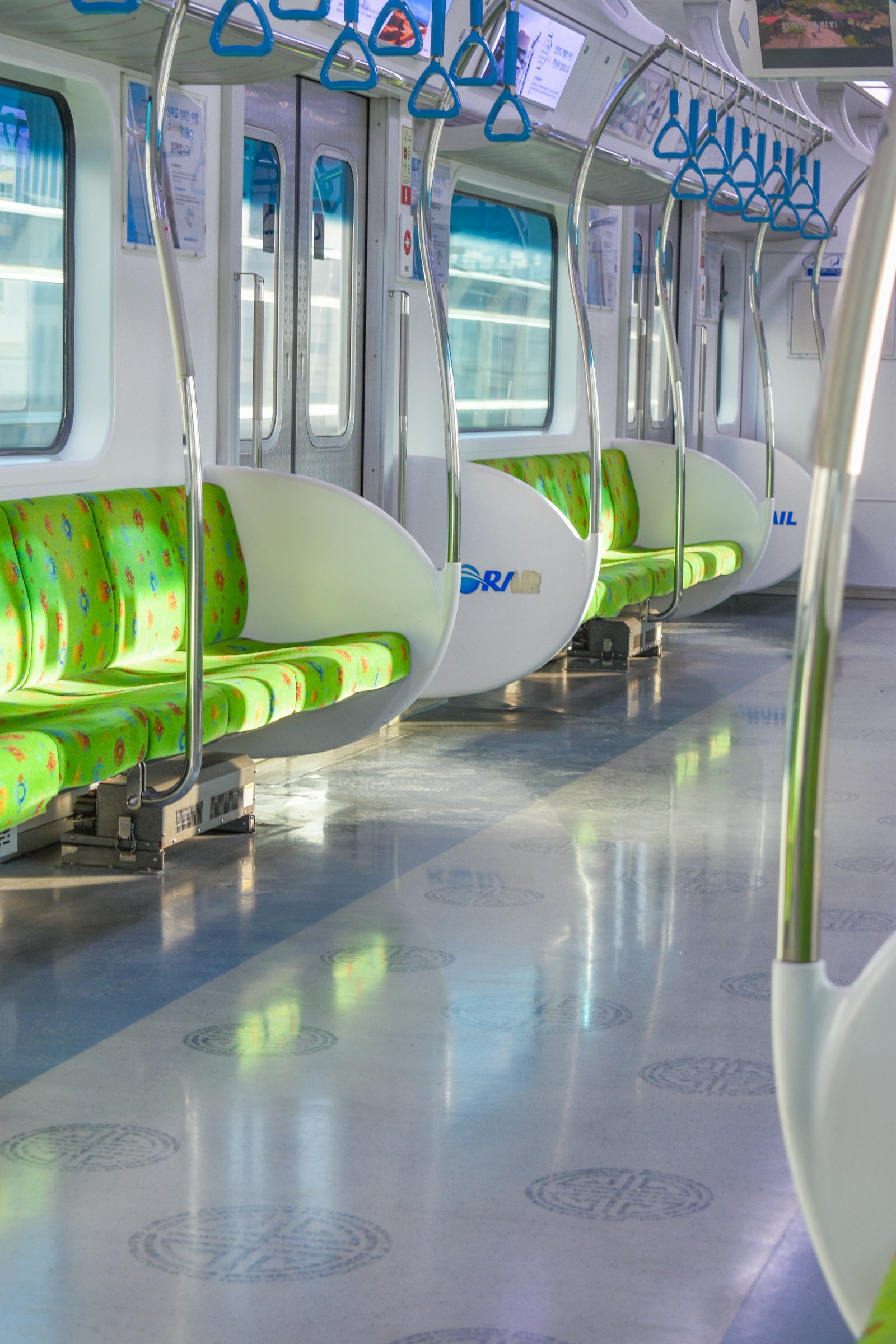
Why so many seat rules? Korea is aging fast, and riders 65 and older ride the subway free, so trains carry a lot of older passengers all day. Much of the etiquette comes from respect for elders, which runs deeper in daily life here than in the US. I go deeper on this in Korean Etiquette for American Tourists.
Seoul Subway vs. NYC Subway, at a Glance
If you ride the subway at home, here’s a quick comparison. I’ll write a longer one soon.
| Seoul subway | NYC subway | |
|---|---|---|
| Fare | ₩1,550 base, rises with distance | Flat fare, any distance |
| Pay at the gate | T-money or Climate Card (credit cards targeted for late 2027) | OMNY contactless card or phone |
| Hours | About 5:30 a.m. to around 1 a.m. | 24 hours |
| Platform screen doors | Almost every station | Very few |
| Finding your way out | Numbered exits | Street corners |
| Express service | Line 9 only | Many lines |
| Bus transfers | Free within 30 minutes with a transit card | Free with OMNY within 2 hours |
More on this in Seoul Subway vs. NYC Subway.
Lost Something?
Tell station staff right away, with the time, direction, and car number if you know it. Car numbers are printed above the doors. Seoul Metro registers everything found on Lines 1 to 8 on lost112, the Korean police’s lost-and-found site, and then sends it to a lost-and-found center for that line. Items not picked up within about a week go to the police. If your phone drops into the gap between the train and the platform, staff can only get it after service ends for the night.
Reality Check: What Can Go Wrong
- A strike may hit in late November 2026. All three Seoul Metro unions approved labor action in a vote that ended November 5. The largest union plans a work-to-rule action, which usually means slower trains, starting November 20, and union leaders have said a strike could follow at the end of the month if talks fail. The airport railroad union plans a warning strike on November 13. During past strikes, the city kept trains running with backup staff, but with longer gaps between trains. Check the Seoul Subway app’s alerts around your dates.
- You still need a transit card. Credit card tapping at the gates is more than a year away. Cash is still the simplest way to load T-money. Related: Where to Exchange Money in Seoul.
- Transfers can be long. Changing lines at some big stations means several minutes of walking and stairs. Route apps include that time, but it adds up with luggage.
- Not every exit has an elevator. Check before you choose an exit, especially with a stroller or a suitcase.
- Outer lines run less often. Korail sections and lines into Gyeonggi Province can run every 10 to 20 minutes off-peak, not every few minutes.
- Last trains leave earlier than you think. “Around 1 a.m.” is when trains reach the end of the line, not when they leave your station. A taxi home after a missed train can cost several times the fare. Related: Kakao T for Foreigners.
- Underground signal is good, but you need data. Most stations and trains have strong signal, which only helps if your phone has a data plan. [AFFILIATE: Korea eSIM]
My First-Day Subway Checklist
- ☐ Download Naver Map and the Seoul Subway app, and set the language to English
- ☐ Buy a T-money card (or a Climate Card pass) and load ₩20,000 to start
- ☐ Look up your hotel’s nearest station and the best exit number
- ☐ Check which exits have elevators if you have luggage
- ☐ Note the last-train time from your hotel’s station
- ☐ Tap in and tap out every time
- ☐ Leave the priority and pink seats free
- ☐ Check for strike or delay alerts if you’re visiting in late November or December 2026
FAQ
Is the Seoul subway easy for tourists to use?
Yes. Station names, signs, maps, and announcements are in English, and trains come every few minutes on most central lines. The harder parts are paying, since US credit cards don’t work at the gates yet, and finding the right exit, which is why it helps to look up your exit number before you arrive.
How much does the Seoul subway cost in 2026?
The base fare is ₩1,550 with a transit card for the first 10 km, plus ₩100 for every extra 5 km. A single-journey ticket costs ₩1,650, plus a ₩500 deposit you get back after your ride. Youth and children pay less.
Can I use my credit card on the Seoul subway?
Not at the gates yet. Seoul plans to add credit card tapping, with service targeted for December 2027. For now, you can use a foreign Visa or Mastercard at about 440 newer ticket machines to buy single tickets or a Climate Card pass, with a fee of about 3.7%.
What time does the Seoul subway close?
Trains start around 5:30 a.m. On weekdays, the last trains reach the end of the line around 1 a.m., and on weekends and holidays service ends about an hour earlier. The last train from your station may leave much earlier, so check the time in the app.
How do Seoul subway exit numbers work?
Each station’s exits are numbered, and the number points to a specific corner or side of the street. Locals give directions by station and exit number. Look up the exit in Naver Map or Kakao Map before you go, then follow the yellow exit signs after the gates.
The Bottom Line
A good Seoul subway guide for tourists comes down to a few habits: get a transit card on day one, find your direction by the last stop, tap out every time, and look up your exit number before you arrive. Leave the priority and pink seats for the people they’re meant for, and save sightseeing for after the morning rush. Do that, and the subway stops being something you have to figure out and becomes the easiest part of your day in Seoul.