Last updated: October 21, 2026
A subway ride in Seoul costs ₩1,550 with a transit card. Buy a single-journey ticket from the machine instead, and you pay ₩1,650 plus a ₩500 deposit you have to remember to get back. Do that twice a day for a week and the small stuff adds up, along with the time you spend at the machines.
That’s why the first thing I tell friends from New York is where to buy a T-money card, usually before they’ve even left Incheon Airport. It’s a plastic card that costs a few dollars, and it covers subways, buses, and most taxis across the country. The catch is that Korea’s transit system still runs on its own card network, so your tap-to-pay Visa from home won’t open a Seoul subway gate. This guide covers where to buy one, how to load it when you don’t carry won, how to get your money back before your flight, and when a Climate Card is the better buy.
Quick Answer: T-money in 60 Seconds
- Where to buy a T-money card: any convenience store with the T-money logo (CU, GS25, 7-Eleven, Emart24), subway station ticket machines, and the convenience stores at Incheon Airport. Basic cards cost about ₩2,500 to ₩4,000.
- The card comes empty. You pay for the card, then load money onto it separately.
- Loading it is still mostly cash. Hand won to a convenience store cashier or use a station machine. Station machines that take foreign cards only sell Climate Cards and single tickets, not regular T-money top-ups.
- iPhone users have a cashless option: the Mobile T-money app added foreign credit card top-ups in March 2026, though Visa wasn’t supported at launch.
- Tap in and tap out, on the subway and on buses. Tapping out of a bus is what gets you free transfers.
- T-money card refund: small balances come back as cash at convenience stores for a ₩500 fee. The price of the card itself isn’t refunded.
- Riding a lot within Seoul? A Climate Card short-term pass (₩5,000 for one day, up to ₩20,000 for seven) may cost less.
What a T-money Card Is, and Why You Still Need One
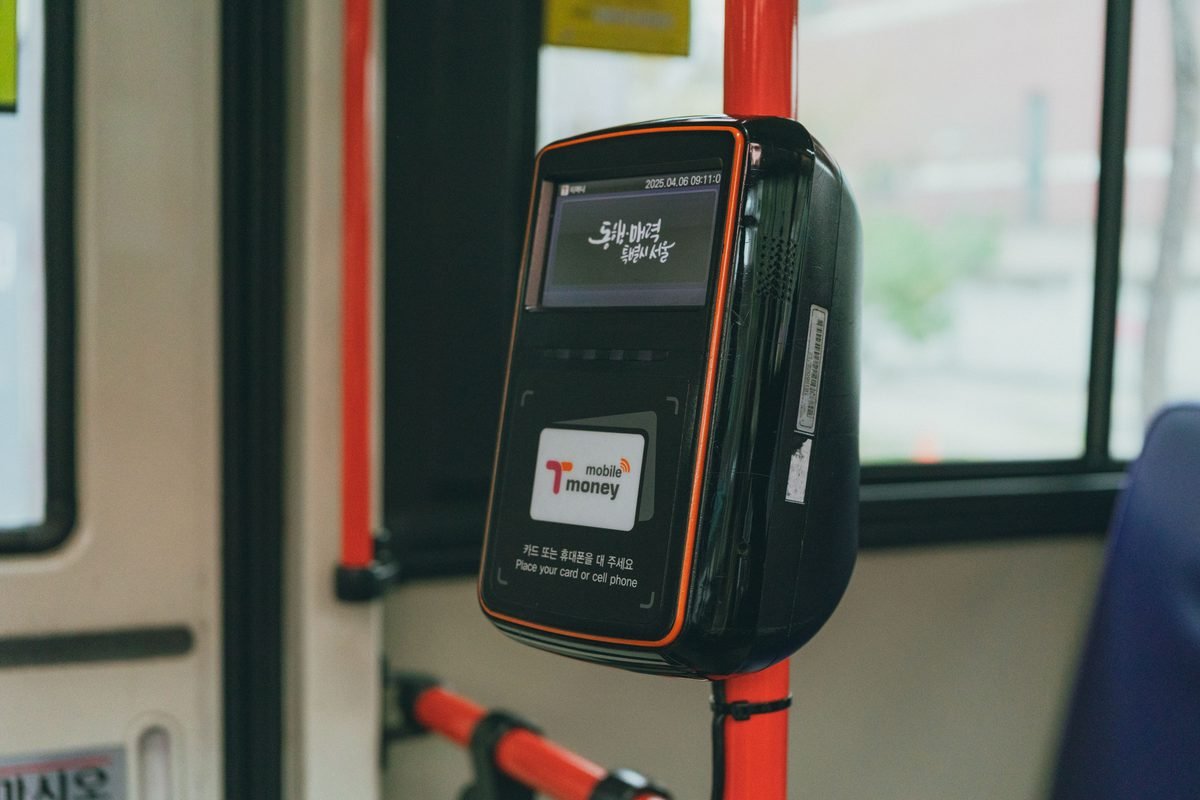
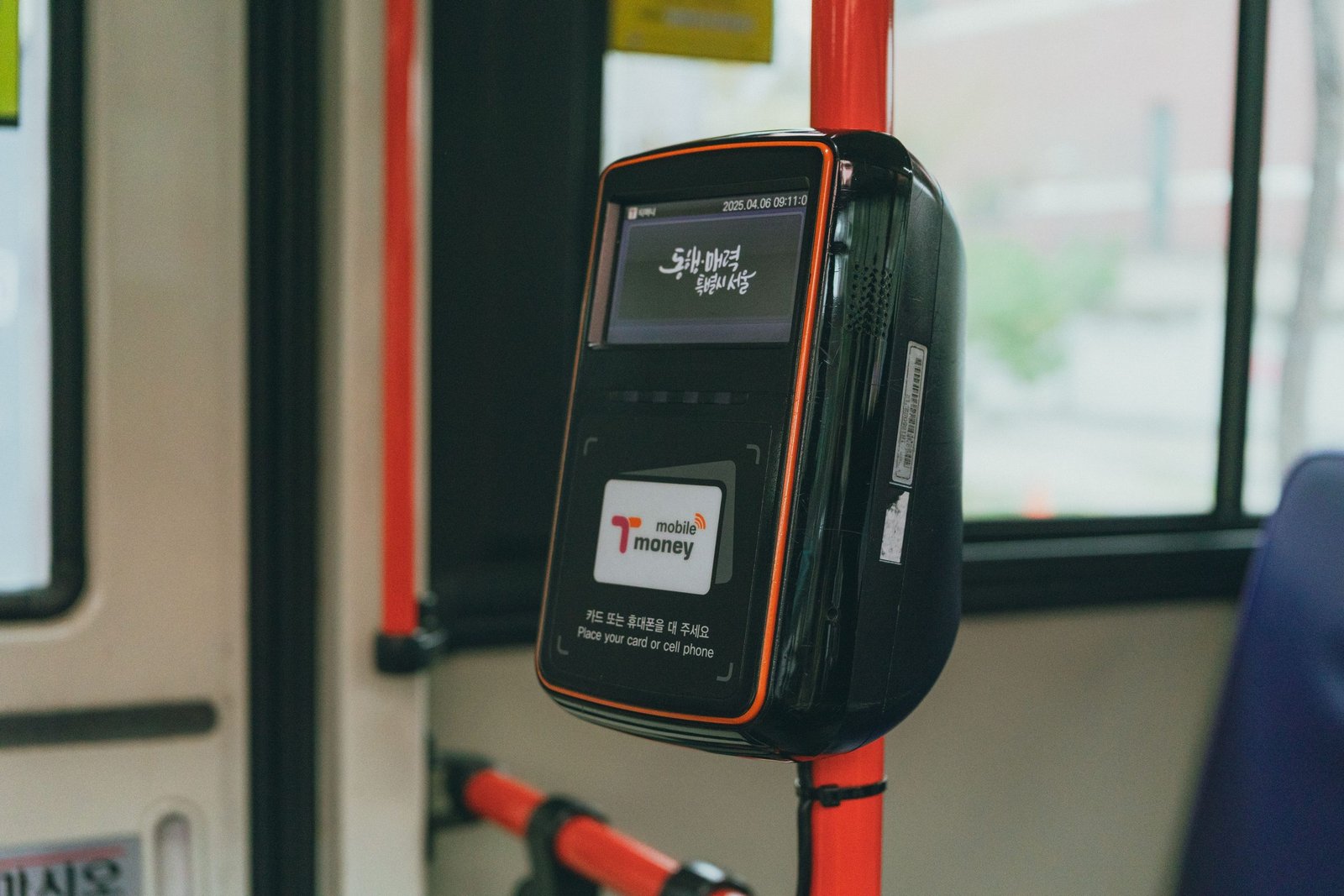
T-money is Korea’s main prepaid transit card. Seoul built its fare system around it in 2004, when it rolled out free transfers between buses and the subway, and the whole country has been tapping cards ever since. You load won onto the card, and each tap takes out the fare.
If you live in New York, this probably feels backward. Here, you can tap your phone or a contactless credit card at an OMNY reader and walk through. Seoul doesn’t work that way yet. Its gates and bus readers use a domestic card standard, not the global contactless standard your Visa or Mastercard uses. The city has said it plans to switch over gradually, with subway readers first and the full system by around 2030, but for a trip in 2026 or early 2027, plan on a Korean transit card.
The upside is that a T-money card goes almost everywhere:
- Subways in Seoul and other big cities, including Busan
- City buses, including the ones that run into Gyeonggi Province
- Most taxis, by tapping the card reader at the end of the ride
- Convenience stores and some small shops that show the T-money logo
One exception worth knowing: the AREX all-stop train to Incheon Airport takes T-money, but the AREX Express train doesn’t let you tap in at the gate. You buy a separate ticket for that one.
Where to Buy a T-money Card
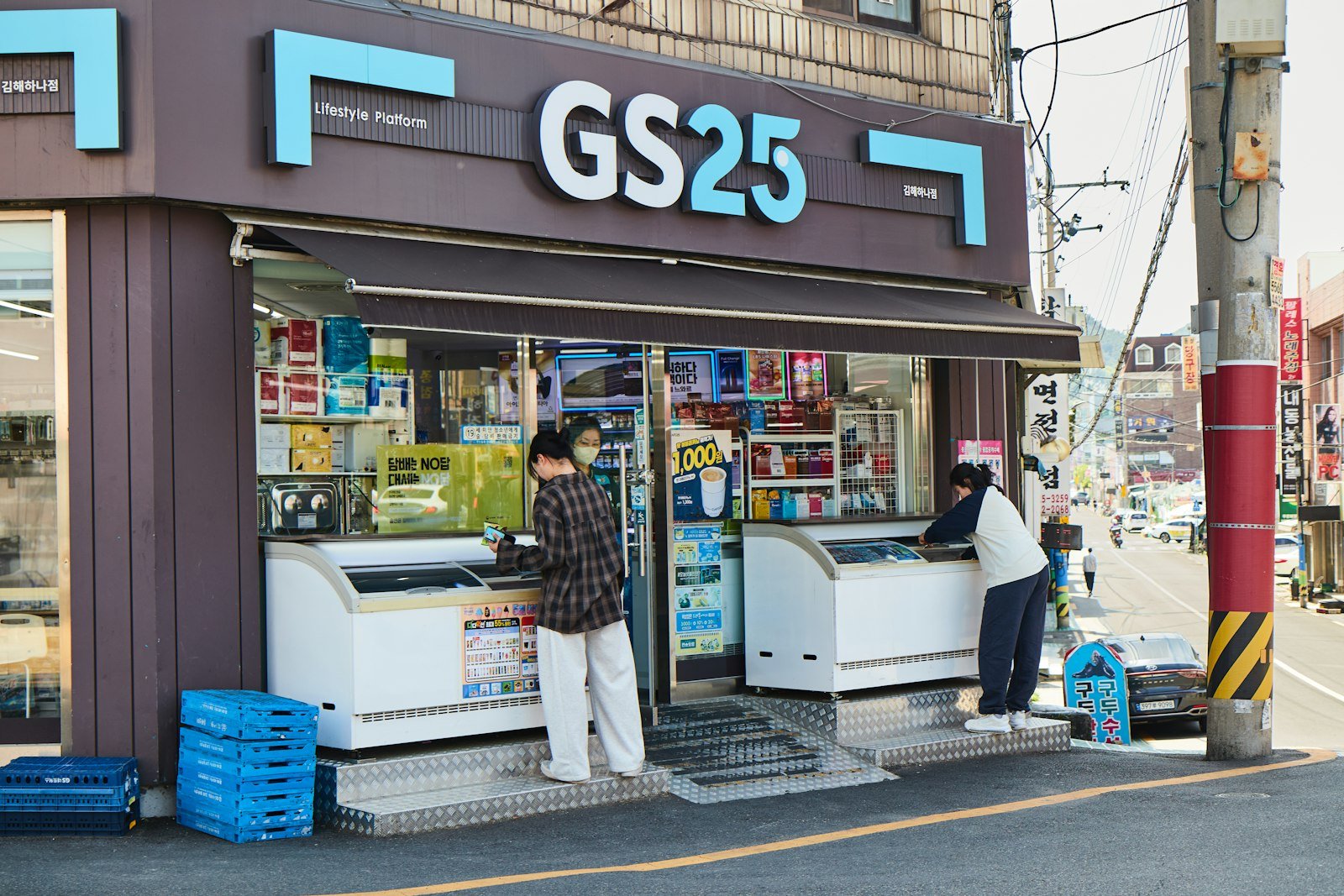
You’ll find T-money cards in three kinds of places, and you’ll pass at least one of them within minutes of landing.
Convenience stores. This is the easy option. Walk up to the counter at a CU, GS25, 7-Eleven, Emart24, or Ministop and say “T-money card.” The cashier will hand you a basic card, and you pay with cash. Some stores take a card for the purchase itself.
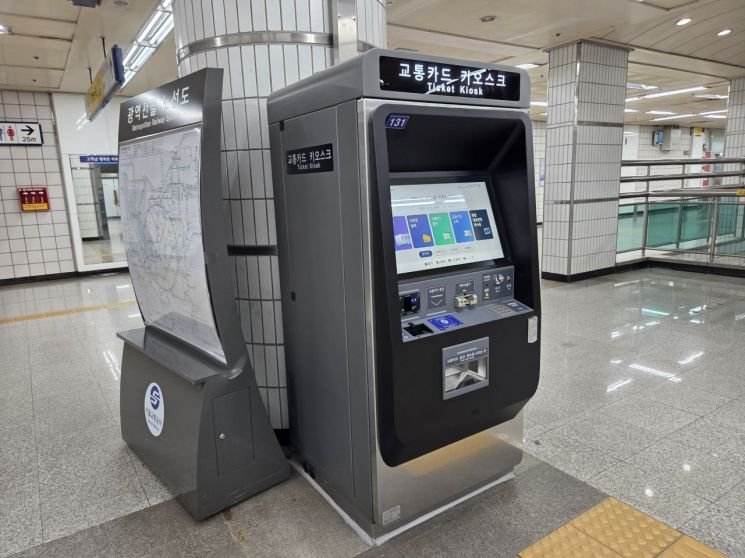
Subway station ticket machines. Most stations in Seoul have machines with an English menu that sell and reload transit cards. They’re handy late at night or when the convenience store line is long.
Incheon Airport. The convenience stores in the arrivals area and near the AREX station sell T-money cards, so you can be ready before your first train.
What it costs. Expect to pay about ₩2,500 to ₩4,000 for a plain card. Character and K-pop designs cost more, often ₩5,000 or higher. The design doesn’t change how the card works.
How many to buy. Get one card per person. Korean transit cards can’t pay for two riders at a subway gate the way some systems allow. Kids and teens can ride at discounted fares, but only after their card is registered for the discount on the T-money website, which takes a Korean-language process. For a short trip, most families just pay adult fares.
Cashbee is fine too. You might see a rival card called Cashbee. It works on the same subways, buses, and taxis. If a store hands you one, take it.
How to Charge Your T-money Card
With cash (the standard way)
At a convenience store, hand over your card and cash, and say how much you want to add. “Man won” (₩10,000) or “i-man won” (₩20,000) is all you need. The cashier taps the card and hands it back.
At a station machine, choose English, place the card on the reader, pick an amount, and feed in bills. Top-ups go in ₩1,000 steps.
How much to load? For a few days in Seoul with a mix of subway and buses, ₩20,000 to ₩30,000 is a sensible start. You can always add more, and smaller balances are easier to refund.
With a foreign credit card (it’s complicated)
Here’s what changed in 2026, and what didn’t.
New station kiosks take foreign cards, but not for regular T-money. Since March 17, 2026, about 440 new ticket machines in 273 stations on Seoul Subway Lines 1 to 8 accept foreign Visa and Mastercard cards, along with some mobile wallets. Seoul says there’s a service fee averaging about 3.7%. The catch: these machines take foreign cards for single-journey tickets and Climate Cards, not for loading a regular T-money card. So if you only carry plastic, the Climate Card is the card-friendly option at the station.
iPhone users can top up in the Mobile T-money app. In March 2026, T-money opened foreign credit card top-ups in its iOS app, starting with Mastercard, American Express, and UnionPay. Visa wasn’t on the list, and the Android app hadn’t added the feature. Setup takes an account in the app, so do it on Wi-Fi at your hotel, not at the gate.
WOWPASS can feed a T-money balance. If you already have a WOWPASS, it has T-money built in, and you can move your WOWPASS balance to the T-money side in the app for a small fee. I covered the details in my WOWPASS review.
If you’ll be paying for most things with a card, it’s worth bringing one that doesn’t charge foreign transaction fees, especially if you’ll pay that 3.7% kiosk fee on top. [AFFILIATE: no-foreign-transaction-fee credit card]
How to Use It: Tapping, Transfers, and Taxis
Subway. Tap the card on the reader at the gate going in and again going out. The fare depends on distance, starting at ₩1,550 for the first 10 kilometers, so the exit tap is where the final fare comes off.
Buses. Tap when you board at the front door, and tap again when you get off at the back door. Koreans do the exit tap out of habit, and you should too. Skipping it doesn’t usually cost you on that ride, but it breaks your free transfer.
Free transfers. Seoul’s transfer system is one of the best things about riding here, and T-money is the key to it. Tap out, then tap onto your next bus or subway within 30 minutes (60 minutes between 9 p.m. and 7 a.m.), and the second ride counts as part of the same trip. You only pay extra if the total distance runs long. One trip can include up to four transfers. Getting back on the same bus route doesn’t count.
Taxis. Most taxis in Seoul take T-money. Tap the reader next to the meter when the ride ends. Keep enough on your card, since a taxi ride can easily run ₩10,000 or more. If you’d rather book through an app, see my guide to Kakao T for foreigners.
Checking your balance. The gate or bus reader shows your balance after each tap. A convenience store cashier can also check it, and so can station machines.
T-money vs. Climate Card vs. Single Tickets
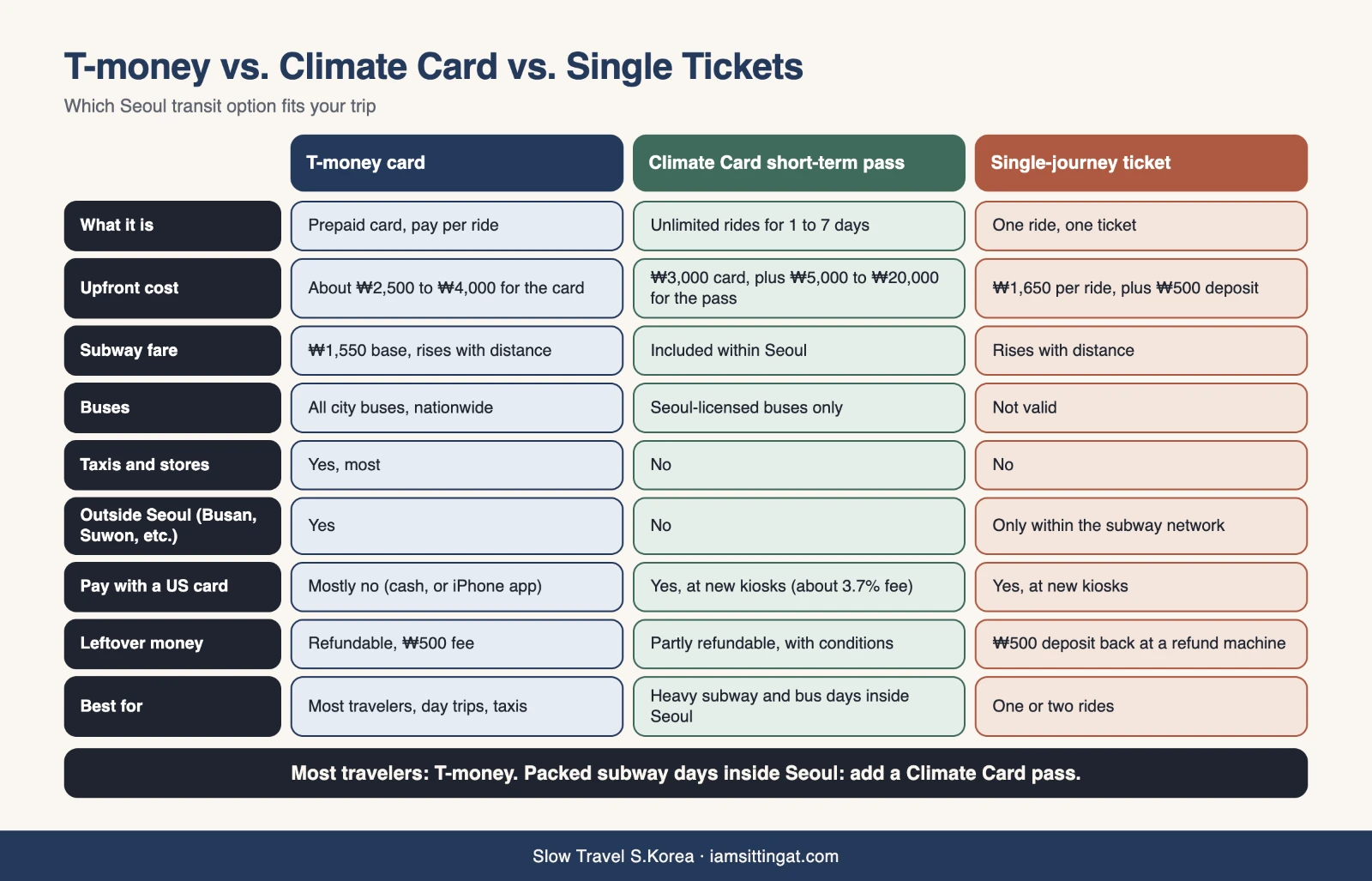
When a Climate Card Short-Term Pass Is the Better Buy
The Climate Card (기후동행카드) is Seoul’s unlimited-ride pass. The monthly version for residents ended on October 1, 2026, but the short-term passes for visitors are still sold. Here’s what they cost:
| Pass | Price | Break-even at ₩1,550 per ride |
|---|---|---|
| 1 day | ₩5,000 | About 4 rides |
| 2 days | ₩8,000 | About 6 rides |
| 3 days | ₩10,000 | About 7 rides |
| 5 days | ₩15,000 | About 10 rides |
| 7 days | ₩20,000 | About 13 rides |
Remember that free transfers already make a subway-plus-bus trip count as one fare on T-money. So count trips, not taps. Add the ₩3,000 card and, if you pay with a foreign card, the kiosk fee.
A few rules matter for visitors:
- The days run on the calendar, from the first train of the start day until the last train of the end day. If you load a one-day pass at 6 p.m., you get six hours, not 24.
- You can’t load it in advance. The pass starts the day you charge it.
- It covers Seoul only: Seoul’s subway and Seoul-licensed city and village buses. It doesn’t cover the Shinbundang Line, GTX, airport buses, or subway stations outside Seoul. If you board inside Seoul and get off outside it, you pay the fare at the exit.
- New in October 2026: you can now ride from a station in Seoul and get off at Incheon Airport Terminal 1 or 2. That’s handy on your last day. You can’t board at the airport with it, though.
- iPhone users get a physical card. The mobile version only works on Android phones.
- Refunds are hard without a Korean bank account. Seoul says foreign visitors without one have to visit T-money’s head office in person for a cash refund, and only within the pass period. Buy the length you’ll actually use.
My rough rule: if you’ll do three or more separate trips a day mostly within Seoul, the pass usually wins. If you’re doing a day trip to Suwon or taking lots of taxis, keep a T-money card. Plenty of people carry both.
T-money Card Refund: How to Get Your Money Back
Before you head to the airport, decide what to do with your leftover balance. You have three choices: spend it, refund it, or keep the card for your next trip. T-money balances stay valid for years, so if you’ll be back, keeping it is the easiest move.
If you want the cash back, the right place depends on how much is on the card:
| Where | Balance you can refund | Fee | Notes |
|---|---|---|---|
| GS25 | Under ₩20,000 | ₩500 | Full balance only |
| 7-Eleven | Up to ₩20,000 | ₩500 | Full balance only |
| CU, Ministop, Emart24 | Up to ₩30,000 | ₩500 | Full balance only |
| Subway station customer service centers (Seoul area) | Up to ₩50,000 | ₩500 | Can refund part of the balance |
| T-money’s customer center (T-money Town, near Seoul Station) | Larger balances | Varies | Bring your passport |
A few things to know about a T-money card refund:
- The card price isn’t refunded. Only the balance comes back, minus ₩500.
- Stores refund the whole balance or nothing. If you want to keep a little for the airport train, use a station customer service center, or just spend it down.
- Refunds come in won. You’ll still need to change leftover won back to dollars, and that costs you a spread.
- Bank ATM and app refunds usually need a Korean account, so they don’t help most visitors.
Honestly, the cheapest “refund” is to spend it. In your last day or two, use your T-money balance at a convenience store for snacks or a drink, then pay the difference in cash or by card.
Reality Check: What Can Go Wrong
- A lost T-money card is like lost cash. An unregistered card’s balance usually can’t be recovered, and registering one takes a Korean-language account. Keep balances modest.
- Cash is still part of the deal. Even in 2026, the simplest way to load a regular T-money card is with won. Get a little cash on arrival.
- Foreign card options have gaps. Kiosk payments carry a fee of about 3.7%, the iPhone top-up didn’t support Visa at launch, and Android users have fewer choices. Check what works with your cards before you go.
- The Climate Card doesn’t travel well. It stops at Seoul’s edge, and a trip to Suwon or a ride on the Shinbundang Line to Pangyo needs T-money anyway.
- Insufficient balance at the exit gate. If your balance runs low mid-trip, the exit gate won’t open. Use the fare adjustment machine near the gates to add money, then tap out.
- Some rules are still changing. Seoul plans to let foreign contactless cards work at gates in the next few years. Until then, check this page or the official Seoul transit site before you fly.
- You’ll want data to plan routes. Transfers and bus stops make much more sense with a map app open. [AFFILIATE: Korea eSIM]
My T-money Checklist
- ☐ Get some won at the airport or bring a little from home
- ☐ Buy one T-money card per person at an airport convenience store
- ☐ Load ₩20,000 to ₩30,000 to start
- ☐ Tap out every time, including on buses
- ☐ If you’ll ride a lot inside Seoul, compare a Climate Card short-term pass
- ☐ iPhone and a Mastercard or Amex? Set up the Mobile T-money app on hotel Wi-Fi
- ☐ Spend down or refund your balance before heading to the airport
- ☐ Download the map and taxi apps you’ll need: Korea Travel Apps for Foreigners
FAQ
Where can I buy a T-money card at Incheon Airport?
The convenience stores in the arrivals hall and near the AREX train station sell T-money cards, and you can load cash at the counter. Station ticket machines in the airport railway area also sell and reload transit cards.
Can I use my US credit card on the Seoul subway?
Not at the gates yet. Seoul’s subway and buses use a Korean card system. Since March 2026, you can use a foreign Visa or Mastercard at about 440 new station kiosks to buy single tickets or a Climate Card, with a fee of about 3.7%.
Can I charge a T-money card with a credit card?
Not at most machines or stores, which take cash for regular T-money. iPhone users can top up through the Mobile T-money app with some foreign cards, such as Mastercard and American Express. WOWPASS users can move balance from WOWPASS to T-money in the app.
How do I get a T-money card refund before I leave Korea?
Take the card to a convenience store for balances up to ₩20,000 or ₩30,000, depending on the chain, or to a subway station customer service center for up to ₩50,000. Each refund costs ₩500, and the card’s purchase price isn’t returned.
Is the Climate Card better than T-money for tourists?
It can be, if you’ll take three or more trips a day mostly inside Seoul. Short-term passes cost ₩5,000 for one day and ₩20,000 for seven. T-money is better for day trips outside Seoul, taxis, and lighter travel days.
The Bottom Line
A T-money card is the simplest thing you can sort out on your first hour in Korea, and the one that makes every other day easier. Buy one at the airport convenience store, load it with some won, and tap in and out on everything. If your days in Seoul are packed with subway rides, add a Climate Card short-term pass. Before you fly home, spend down the balance or get a quick refund at a convenience store, or just keep the card for next time.