Last updated: November 12, 2026
A blue tiger and a magpie in a traditional hat steal a lot of scenes in KPop Demon Hunters. A lot of American fans want to see where they came from. That is why the National Museum of Korea is on so many first-timer itineraries now, and why there can be a line at the door before it opens.
This guide covers the National Museum of Korea KPop Demon Hunters connection as it really is. The film is animated, so nothing was shot on location. The museum is not a film set. It is a place where you can see the real Korean art tradition the film borrowed from, for free, and take a small piece of it home. This blog is not affiliated with Netflix, Sony, or any Korean government body. Everything here comes from public sources, and I link or flag anything that can change.
Key Takeaways
- The film’s tiger and magpie come from a Korean folk painting genre. It is called jakhodo (작호도), also hojakdo or “kkachi horangi.” Korean sources tie the two film characters, Derpy and Sussie, to it.
- Admission to the permanent galleries is free right now. Special exhibitions cost extra. The government’s 2027 budget guidelines point toward paid admission starting sometime in 2027, so check before a 2027 trip.
- Hours (official site): 9:30 a.m. to 5:30 p.m. on Mon, Tue, Thu, Fri, and Sun; 9:30 a.m. to 9 p.m. on Wed and Sat. Last entry is 30 minutes before closing. Older blog posts that say 10 a.m. to 6 p.m. are out of date.
- Take Line 4 or the Gyeongui-Jungang line to Ichon Station, Exit 2. Do not drive. Parking is tight.
- No one can promise a specific tiger and magpie painting is on view. Galleries rotate, and several painting rooms are closed until January 28, 2027. Plan around the shop and the building, not one object.
- The shop’s tiger and magpie pin has a long sell-out history. Treat any specific item as “if it’s there, great.”
Is the Film Set in the National Museum of Korea? (No. Here’s What It Borrowed)
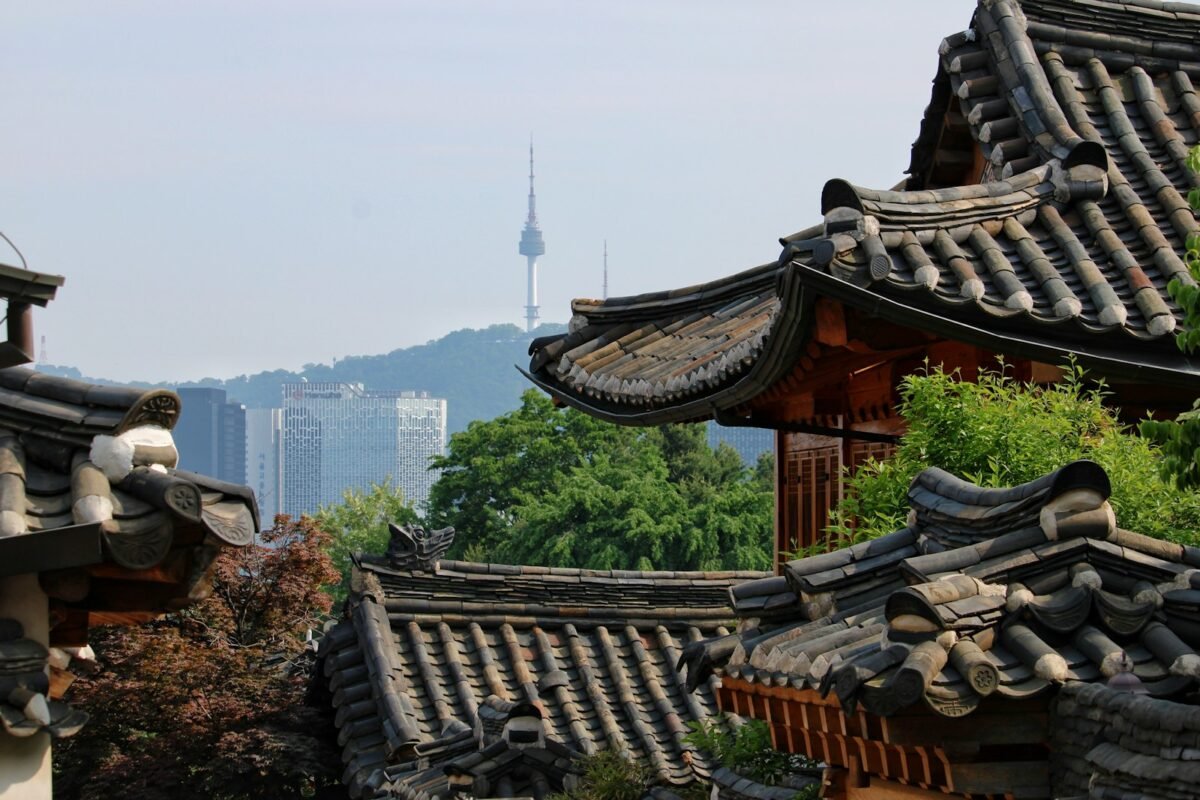
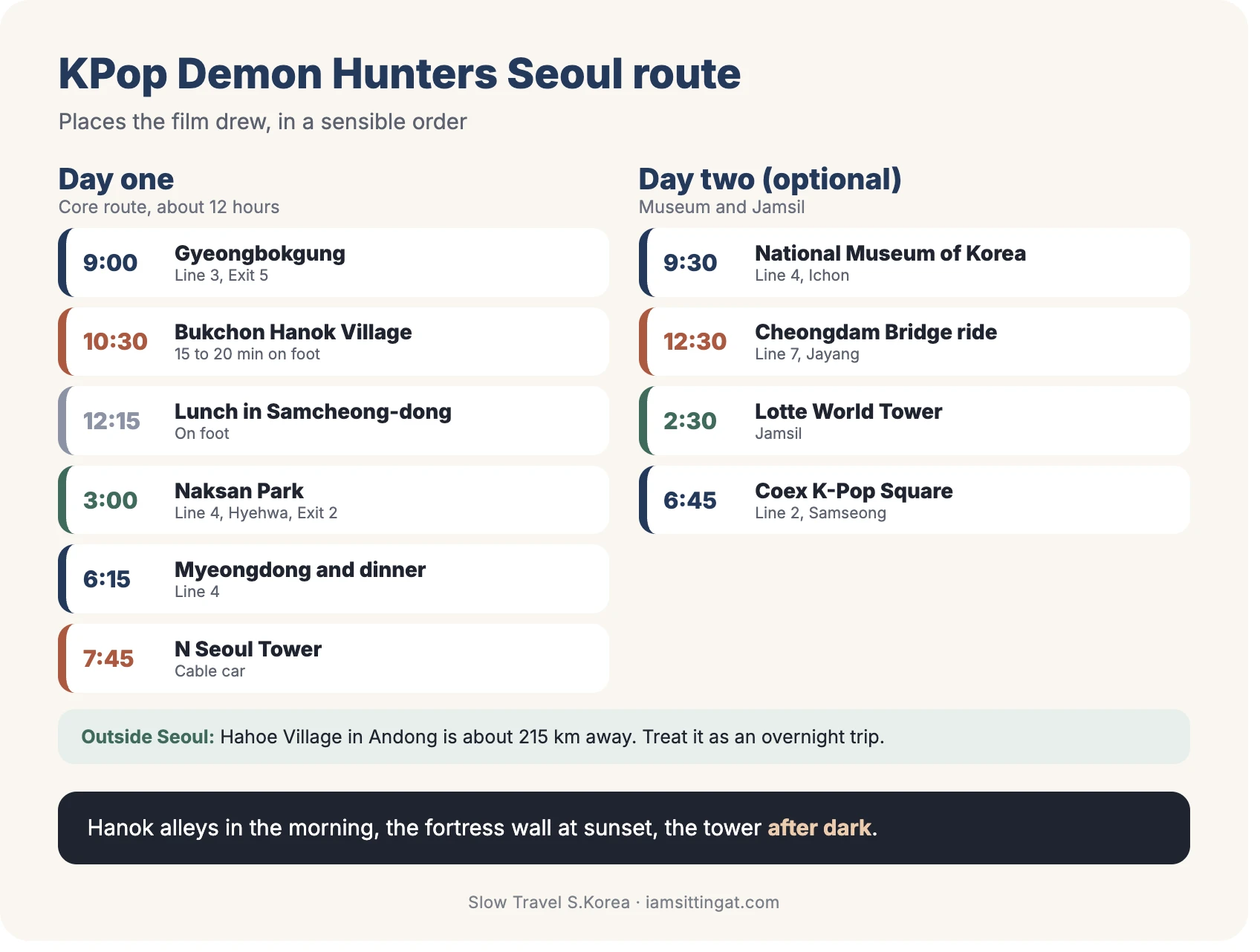
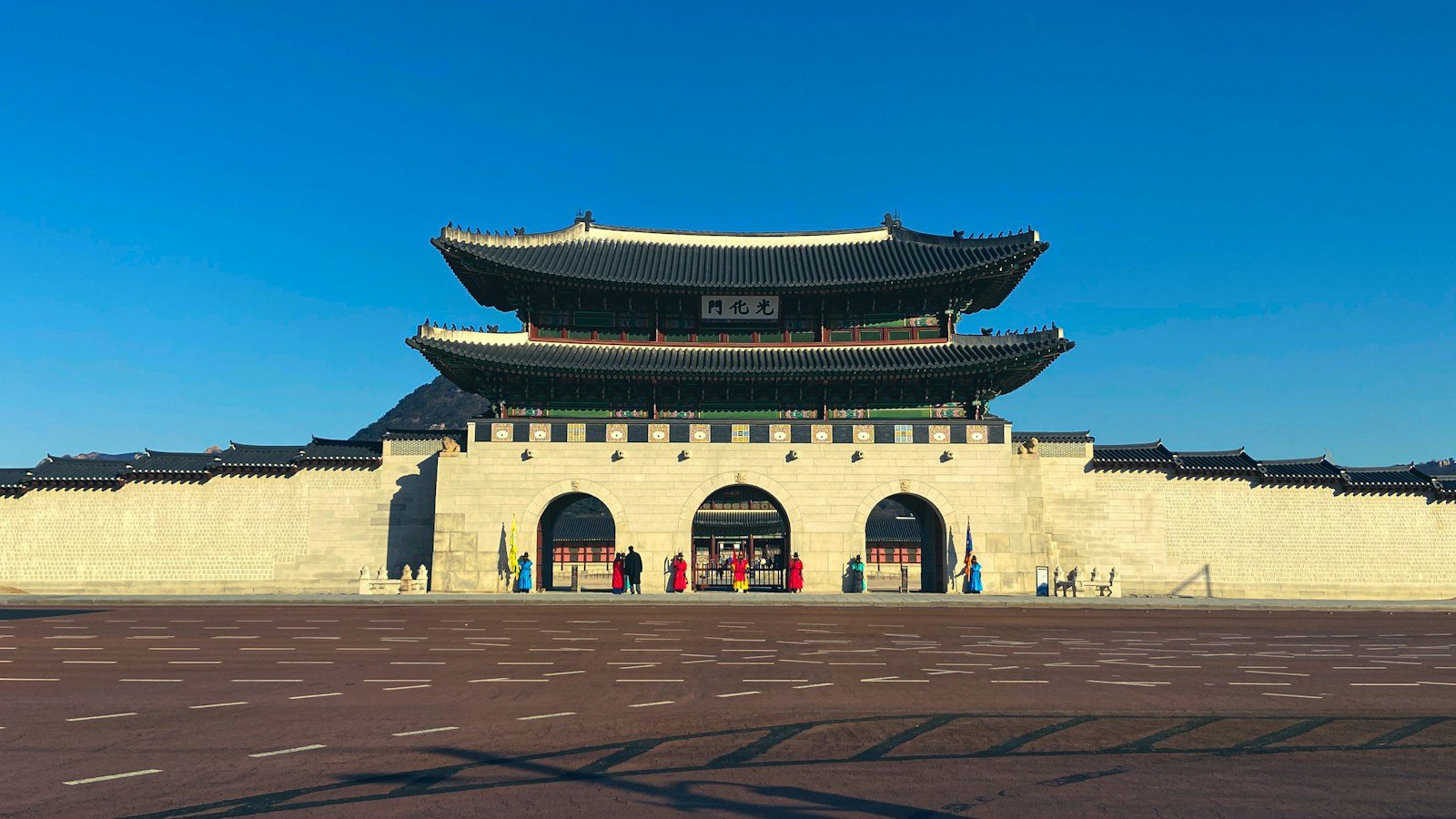
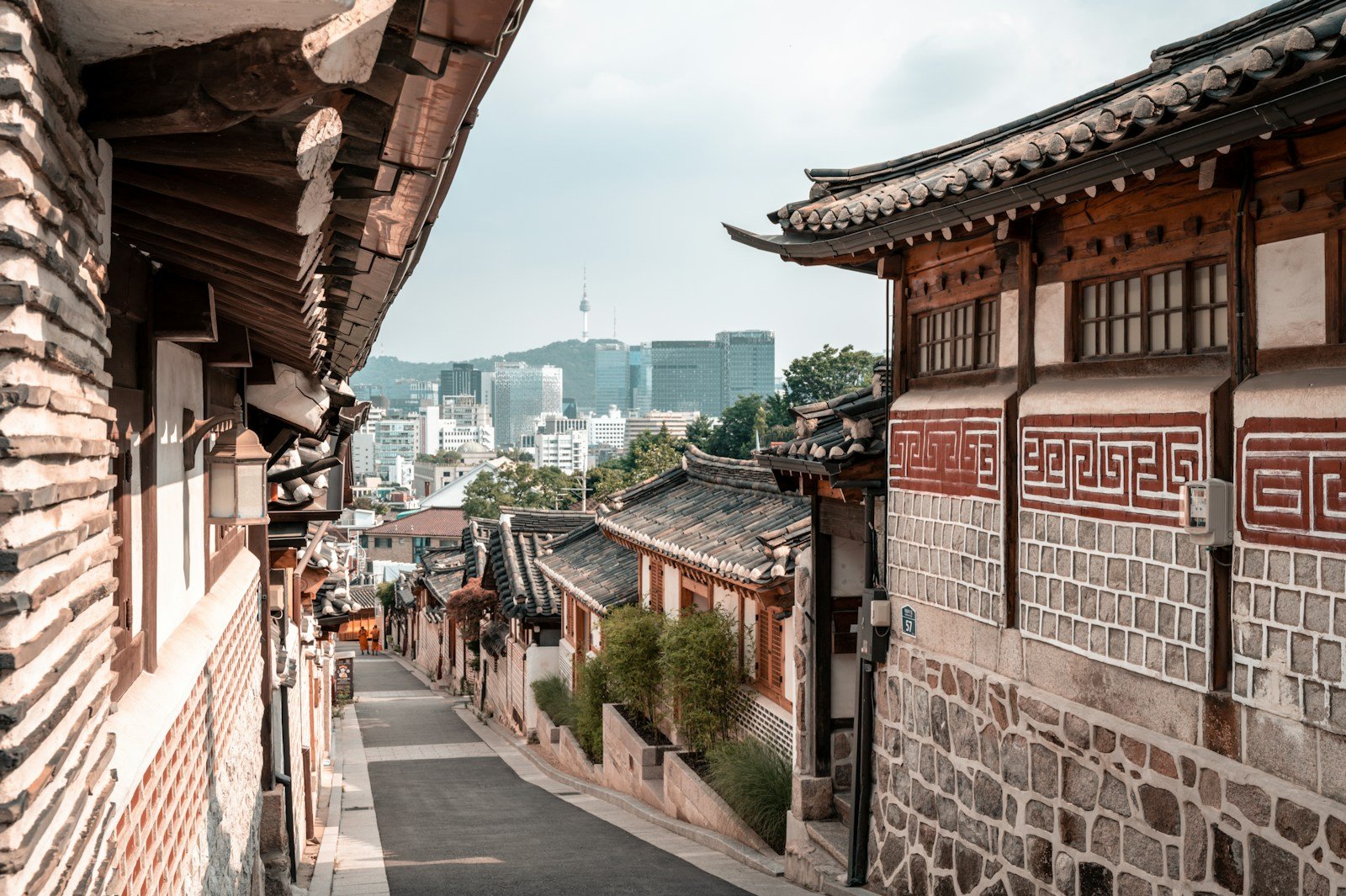
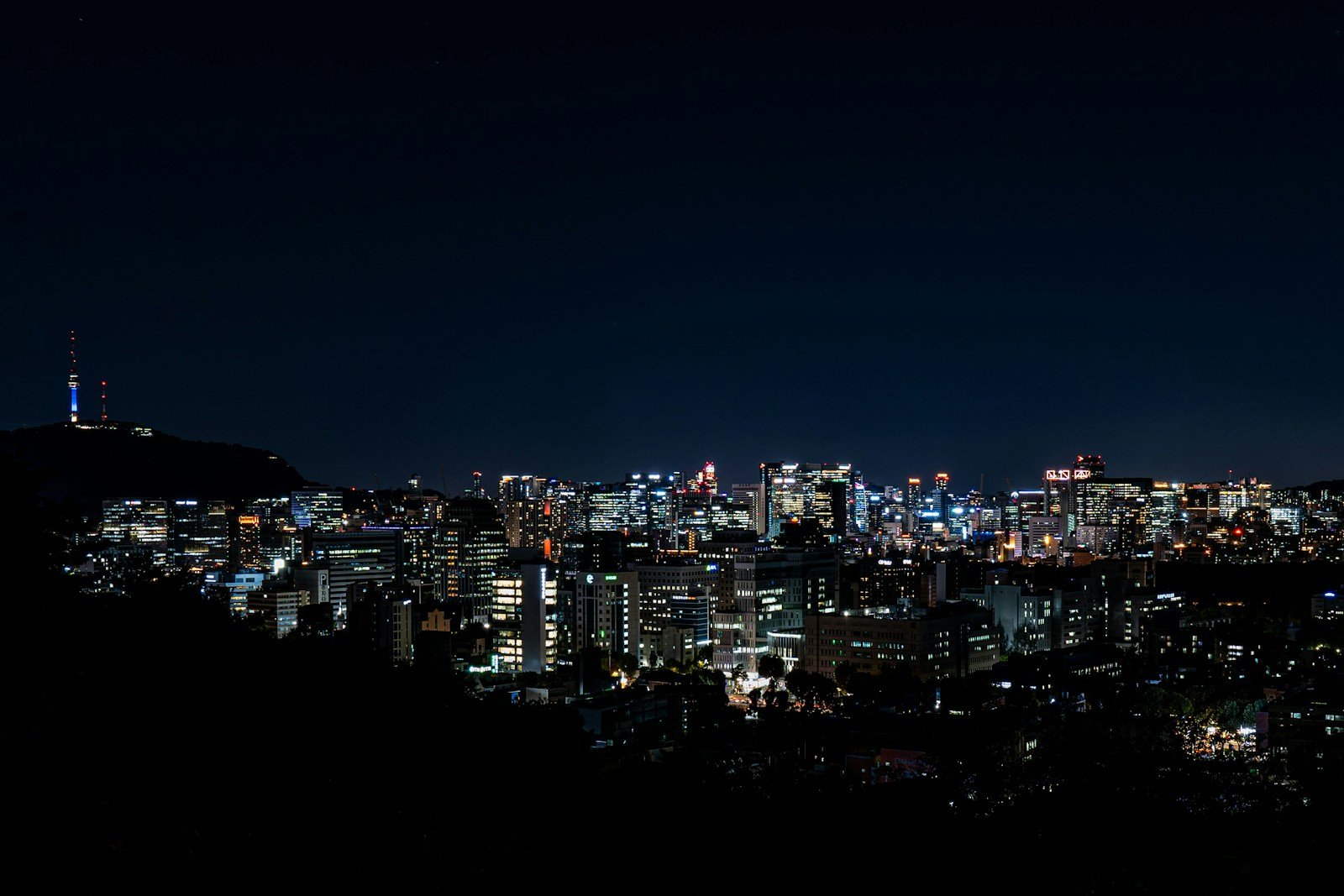
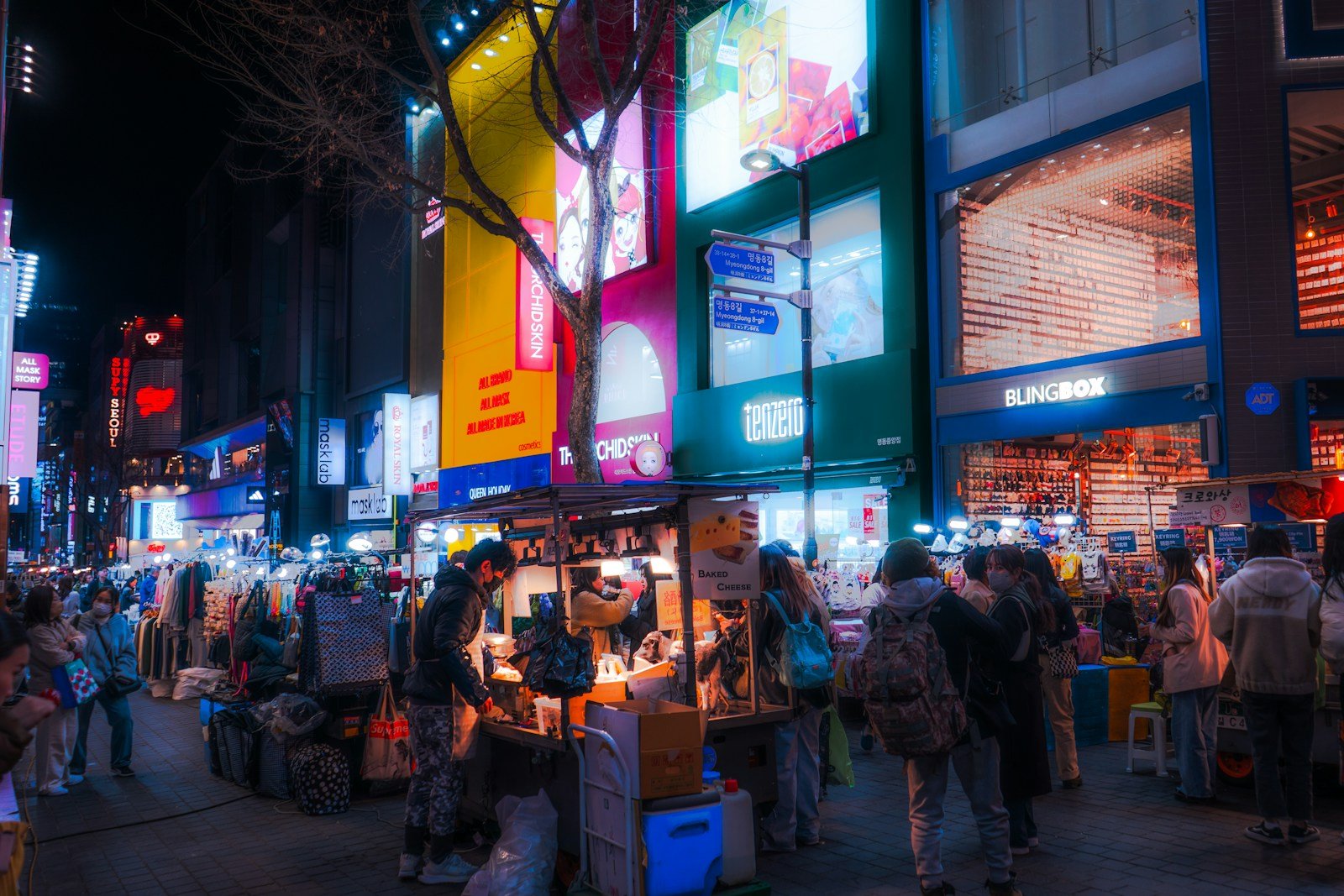
KPop Demon Hunters is an animated film. No scene was filmed at the museum, so there is no spot to stand on and recreate a shot. Seoul’s city tourism materials and Netflix’s own travel feature list real places the film drew from, including N Seoul Tower, Myeongdong, Bukchon, and Gyeongbokgung. The National Museum of Korea is on that list for one reason: the tiger and the magpie.
The numbers show why this matters for a trip. Trip.com reported flight bookings to Korea up about 25 percent year over year in the three months after the film’s release. Korea welcomed a record 18.9 million foreign visitors in 2025, and arrivals from January to May 2026 ran about 20.4 percent higher than the year before. The museum sits in the middle of that wave. Korean press reported more than 5 million visits between January and mid-October 2025, the first time in the museum’s history.
If you want the other places the film drew from, such as Bukchon, Naksan, and N Seoul Tower, my KPop Demon Hunters Seoul locations route has the overview. This guide stays with the museum.
The Tiger and Magpie Painting in Korea: What Jakhodo Means
The tiger and magpie painting in Korea is one of the best-known genres of minhwa (민화), the folk painting of the Joseon era (1392 to 1910). Korean press and museum writing describe the pairing like this: the tiger is a guardian that drives away misfortune, and the magpie is a bird that brings good news. Together they are a good-luck image. The Korean word for that kind of auspicious symbol is gilsang (길상).
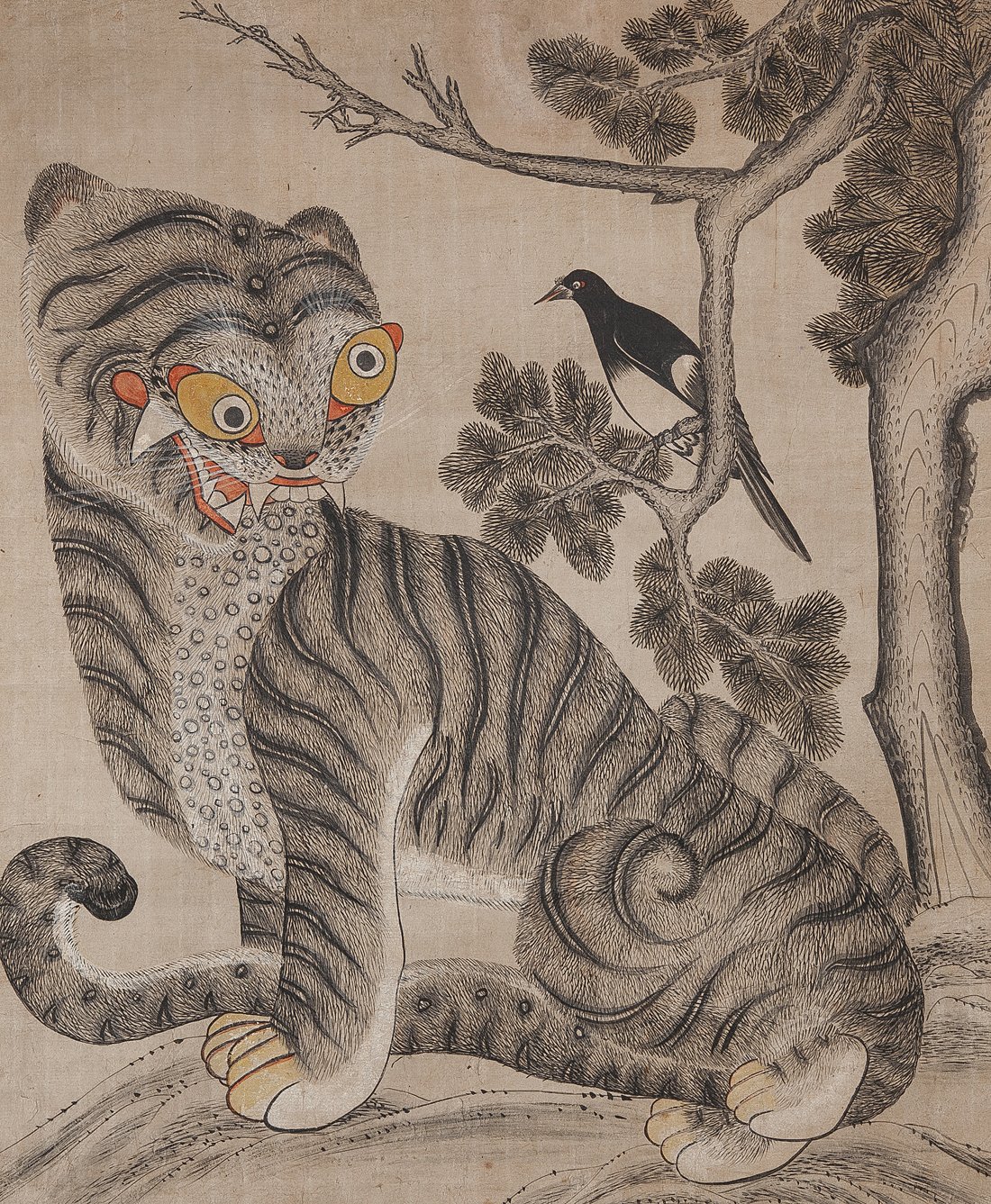
A few things make these paintings feel different from the “serious” tiger paintings you might expect:
- The tiger is often goofy. The face is round, the expression is odd, and the stripes are decorative. Korean commentators say folk painters softened the tiger on purpose.
- The magpie is small and bold. It often sits above the tiger, which some read as a joke about power and rank in Joseon society.
- A pine tree often shares the scene. The pine and the magpie are part of the usual composition.
- The names vary. Jakhodo (鵲虎圖), hojakdo (虎鵲圖), kkachi horangi, and “tiger and magpie” all point to the same family of paintings.
In short, the film took an old joke about a silly tiger and a clever bird and made them a comic duo. That is why Korean viewers recognized them right away.
What the National Museum of Korea Is (and Why It’s Busy)
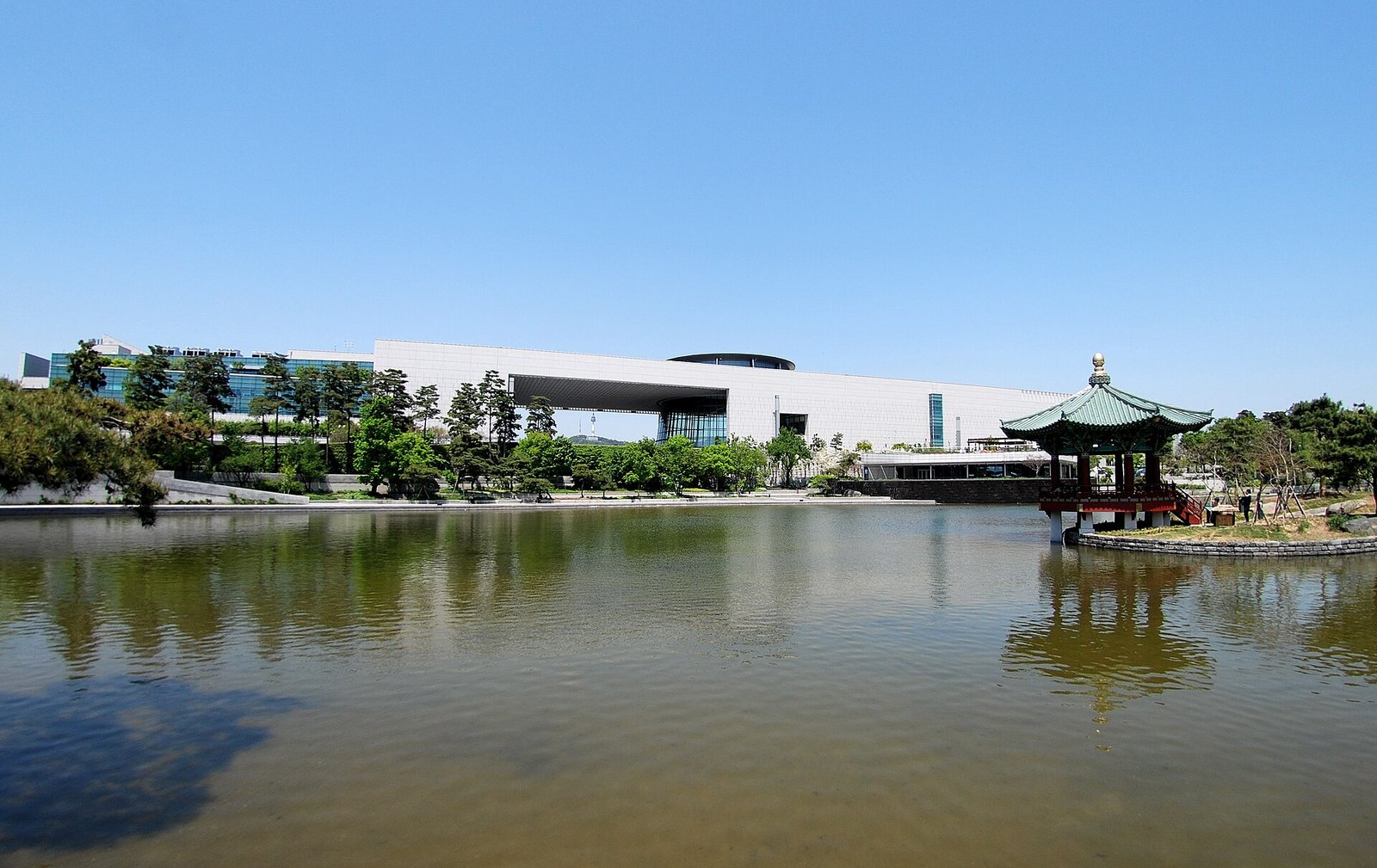
The National Museum of Korea is the country’s flagship national museum, in Yongsan-gu at 137 Seobinggo-ro. The permanent exhibition area has seven halls and 39 rooms, with 9,884 objects on display, and the museum rotates objects over time, according to its official site. It is far bigger than people expect. You will not see it in an hour, and you do not need to.
It is also very popular with Koreans. Korean press reported about 3.8 million visitors in the first half of 2026, up roughly 40 percent from a year earlier. Foreign visitors made up only about 3 to 4 percent of the total, though the foreign count is rising fast: about 165,000 in the first half of 2026, up roughly 69 percent. Expect mostly Korean families, school groups, and students, not just tourists.
Visiting Basics: Hours, Cost, and Closures
| Item | What the official sources say | What to double-check |
|---|---|---|
| Permanent galleries | Free | 2027 paid admission plan (see Reality Check) |
| Special exhibitions | Paid | Price and dates on the museum’s site |
| Mon, Tue, Thu, Fri, Sun | 9:30 a.m. to 5:30 p.m. | Last entry 5:00 p.m. |
| Wed and Sat | 9:30 a.m. to 9:00 p.m. | Last entry 8:30 p.m. |
| Regular closures | Jan 1, Seollal, Chuseok | Chuseok and Seollal dates change each year |
| Extra closures | First Monday of March, June, September, December (announced Feb 2026) | Dec 7, 2026 is one; confirm 2027 dates |
| Reservation | Not required for permanent galleries (Children’s Museum does require one) | Rules may change before the paid system starts |
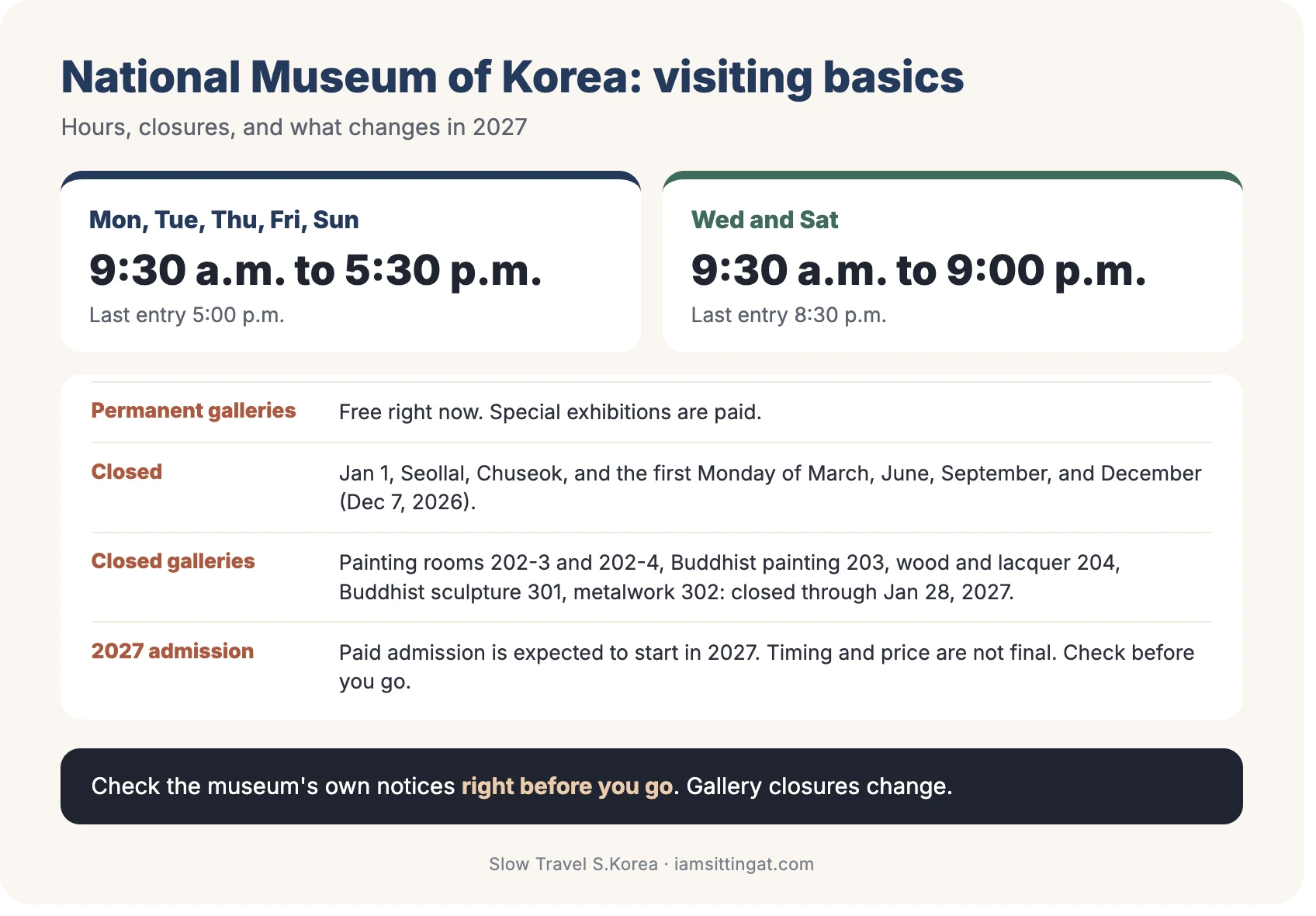
The hours changed on March 16, 2026, when the museum moved opening and closing 30 minutes earlier to ease the crowd at the door. For about three weeks in summer (July 27 to August 17), it ran 9 a.m. to 6 p.m. on regular days. The official site now lists the standard hours above, but check the day you go, especially around holidays.
How to Get to the National Museum of Korea (Ichon Station)
Take Seoul Metro Line 4 or the Gyeongui-Jungang line to Ichon Station and use Exit 2. Seoul city’s tourism media lists the walk from Exit 2 at roughly 300 meters. An underground pedestrian passage with a moving walkway, often called the “museum walkway” (박물관 나들길), links the station to the museum.
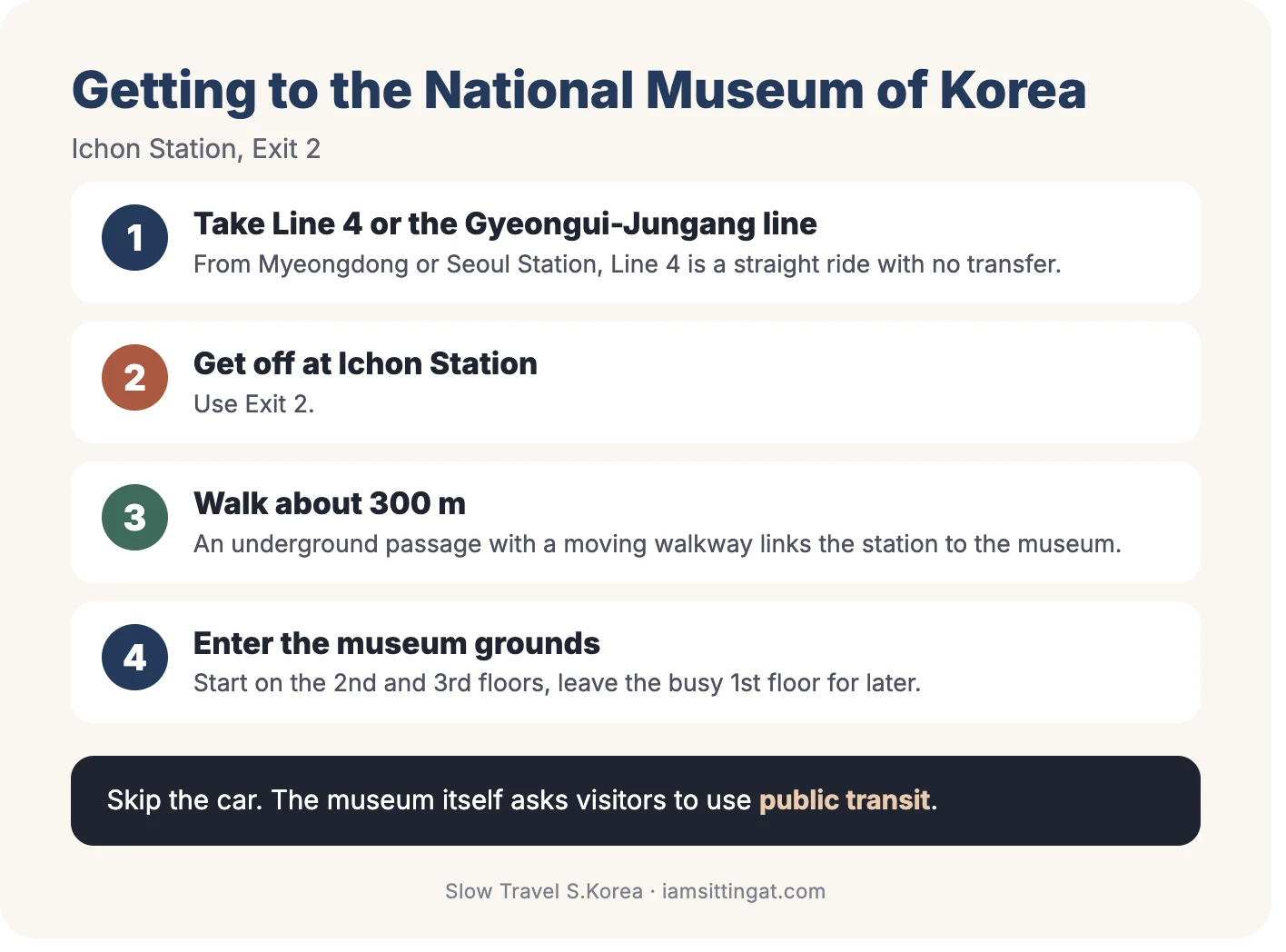
- From Myeongdong or Seoul Station: stay on Line 4. Myeongdong, Hoehyeon, Seoul Station, Sinyongsan, Samgakji, and Ichon are all on the same line, so there is no transfer.
- Payment: a T-money card works for the subway. My T-money card guide covers where to buy and reload one, and the Seoul subway guide for tourists explains exit numbers, which matter here.
- Taxi: a cab is fine if you have bags or kids. The Kakao T guide shows how to book one without a Korean number.
- Driving: the museum itself asks visitors to use public transit because parking is limited.
Bring mobile data for maps and for the Children’s Museum mobile ticket. If you have not set up a plan yet, see my best eSIM for Korea comparison.
Which Galleries to See for the Painting Style and Joseon Items
Plan by floor, not by a single object. This is the part where people get let down if they expect a guaranteed “tiger and magpie room.”
2nd floor: Calligraphy and Painting Hall (서화관). This is where Joseon painting lives. In February 2026 the museum reopened its painting and calligraphy rooms with a rotating “season highlight” format that changes three to four times a year. Korean press described the rooms as organized by purpose, including appreciation paintings, court decorative paintings, records, and portraits. The court decorative group included well-known pieces like the sun, moon, and five peaks screen. This is where you learn what Joseon painting looked like, and it is the best place to understand why a folk tiger looks so different from a court one.
2nd floor: Room of Contemplation (사유의 방). Not Joseon, but one of the most talked-about rooms in the building. Two gilt-bronze pensive bodhisattva statues from the Three Kingdoms period sit in a dark, quiet space. It is a good reset after the busier halls. Keep your voice low.
2nd floor: Oegyujanggak Uigwe Room. A room for the royal Joseon records that France took in 1866 and returned in 2011. If you like Joseon court life, it is worth a look.
3rd floor: Sculpture and Crafts Hall (조각·공예관). Goryeo celadon (Room 303) and buncheong and white porcelain (Room 304) are open. These are good for Joseon-era objects without the painting-room crowds.
Digital and media content. The museum’s site lists an augmented-reality experience that brings animals from old paintings, including a tiger painting, into the room around you, with several short sessions each hour.
Where a Tiger and Magpie Painting Might Be (and Why I Won’t Promise One)
Folk paintings are fragile, so museums rotate them. I could not confirm that a jakhodo from the museum’s collection is on display right now. If seeing one matters to you, check the museum’s website for the current gallery list before you go, or ask at the information desk when you arrive. Other Seoul museums have shown tiger and magpie paintings in special displays in the past, so keep an eye out for temporary exhibitions elsewhere in the city too.
The Museum Shop: Merchandise and Sell-Out Risk
The museum’s merchandise line is called MU:DS (뮷즈), a mashup of “museum” and “goods.” It is run by the National Museum Foundation of Korea. The tiger and magpie badge (pin) from the 2024 design contest became the face of the fan craze. Korean press reported about 90,000 sold in 2025, a record for the shop, and the foundation’s website crashed on July 11, 2025. On that same day the shop sold out of the pin within about 20 minutes of opening.
The craze is not over. In August 2026, a new royal-seal keycap set sold out within about an hour of its online release, and a tiger-and-magpie wine stopper sold out soon after launch. The foundation’s merchandise sales hit a record of about 41.3 billion won in 2025.
| Way to buy | Pros | Cons |
|---|---|---|
| In-person at the museum shop | See and touch items; no shipping | Lines on busy days; popular items may be gone; more than one shop location |
| Foundation online shop (museumshop.or.kr) | Can restock; no line | Stock is limited; international shipping and checkout for foreign cards |
| Other tiger-and-magpie goods in Insadong and other museum shops | Easy to find, lower stakes | Not the museum’s own designs; quality varies |
How to improve your odds:
- Go early on a weekday, or go on a Wednesday or Saturday evening when the shop is open late.
- Ask staff which items are in stock, since some are limited per person.
- Have a backup gift in mind. Tiger fans and norigae (traditional hanging charms) are sold in Insadong, and many national museums now carry tiger-themed items.
- Use a card that does not add foreign transaction fees. My best credit card for Korea post compares options.
The shop is not part of the film or the studio. It sells museum-designed items inspired by a folk painting genre, and any link to the film is a fan’s reading, not an official partnership. I am not claiming that the shop’s sell-outs will continue or end on any date.
[AFFILIATE: Korea travel eSIM or foreign-fee-free credit card, 자연스러운 위치에 한 번만]
How to Avoid the Crowds
The museum has said openly that crowds are a problem. Before the March change, people started lining up around 8:30 a.m. for a 10 a.m. opening. Here is what the museum and local reporting suggest:
- Go on a weekday, not a weekend or Korean holiday. The Lunar New Year holiday in February 2026 drew roughly 86,000 visitors over the break. That is a lot of people in a building like this.
- Skip school vacation weeks if you can. Summer and winter breaks are the busiest times, and field-trip season fills the halls with school groups.
- Try Wednesday or Saturday evening. The museum is open until 9 p.m. on those days, and the late hours are meant to spread people out. Entry still closes at 8:30 p.m. Curator talks have been held on Wednesday evenings.
- Start upstairs. The museum’s own crowd guidance tells visitors to begin on the 2nd and 3rd floors and leave the busy 1st floor for later.
- Bring water, skip food. The museum asks visitors not to bring food inside. Bottled water is fine.
- Use public transit. Parking is limited, and drivers have reported waiting just to enter the lot.
- Compare with other hot spots. Seoul’s AI Foundation estimates, based on 2025 Google Maps data, put Myeongdong at about 100,910 foreign visitors a day and N Seoul Tower at about 57,370. If you pair the museum with them, plan your quiet stop first and your busy stop last.
If you like quiet, my quiet neighborhoods in Seoul guide has other areas to slow down in, and the etiquette for tourists post covers manners in public places like museums.
Combine the Museum With Yongsan and N Seoul Tower
Same-area walk: Yongsan Family Park and the garden. The museum’s grounds connect to Yongsan Family Park by a path, according to Seoul city’s tourism media. The park has a pond, lawns, and a large playground. The National Hangeul Museum is also nearby, a few hundred meters along the same route. This is a gentle option after a few hours inside.
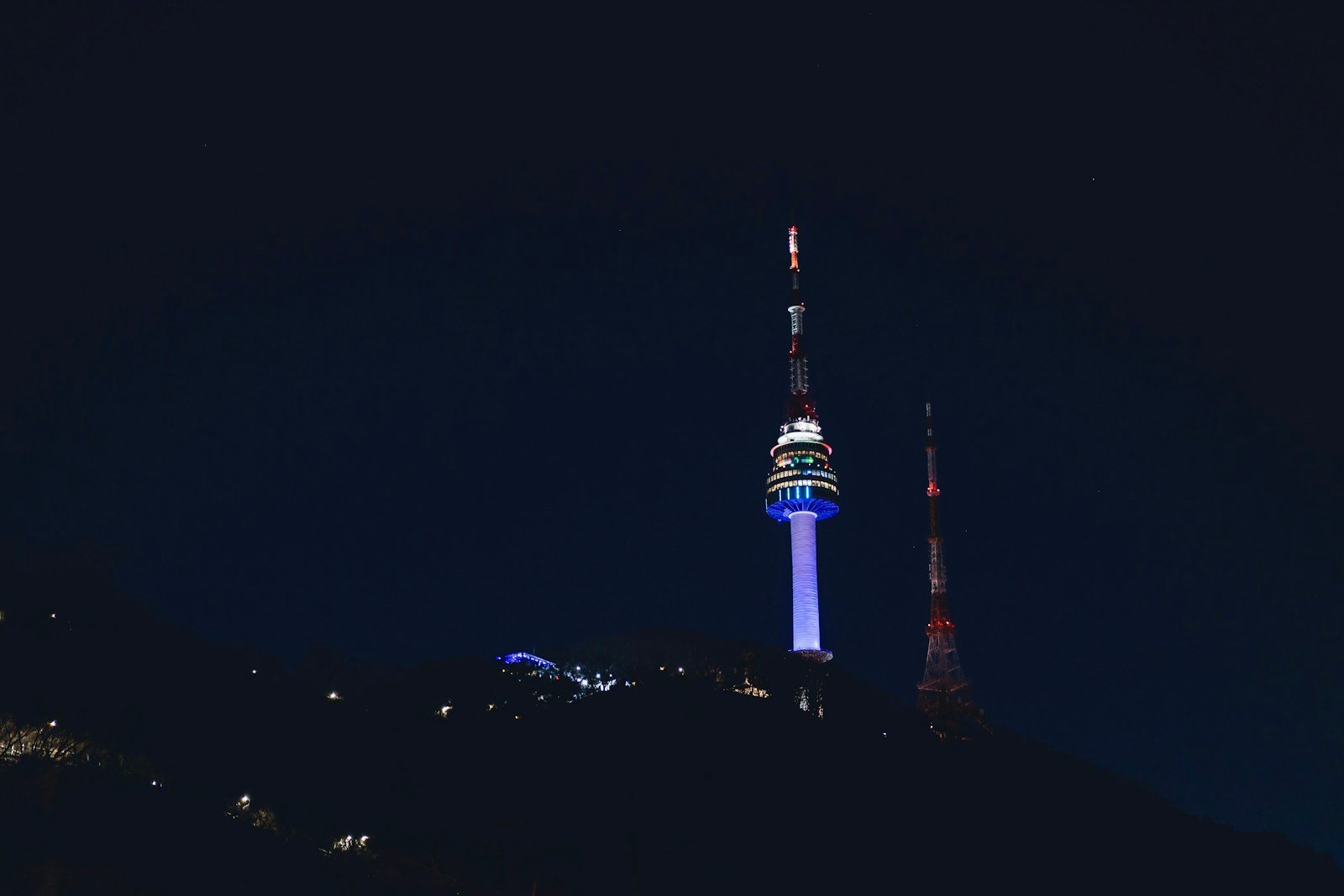
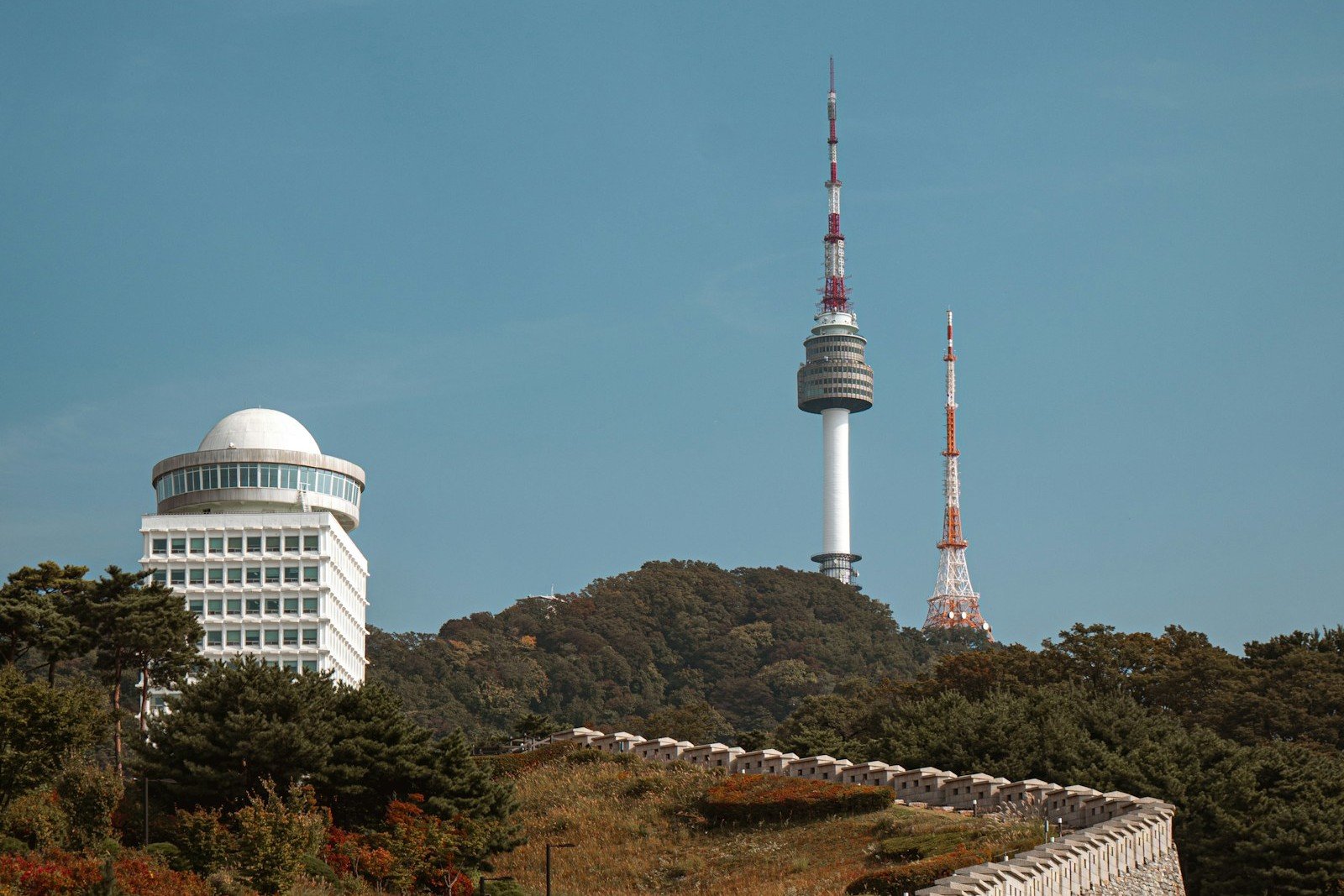
Museum to N Seoul Tower. The tower is a real place the film drew from, and it is reachable the same day.
- Spend your museum time first, ideally a late-morning or afternoon visit on a Wednesday or Saturday.
- Ride Line 4 from Ichon to Myeongdong, which needs no transfer.
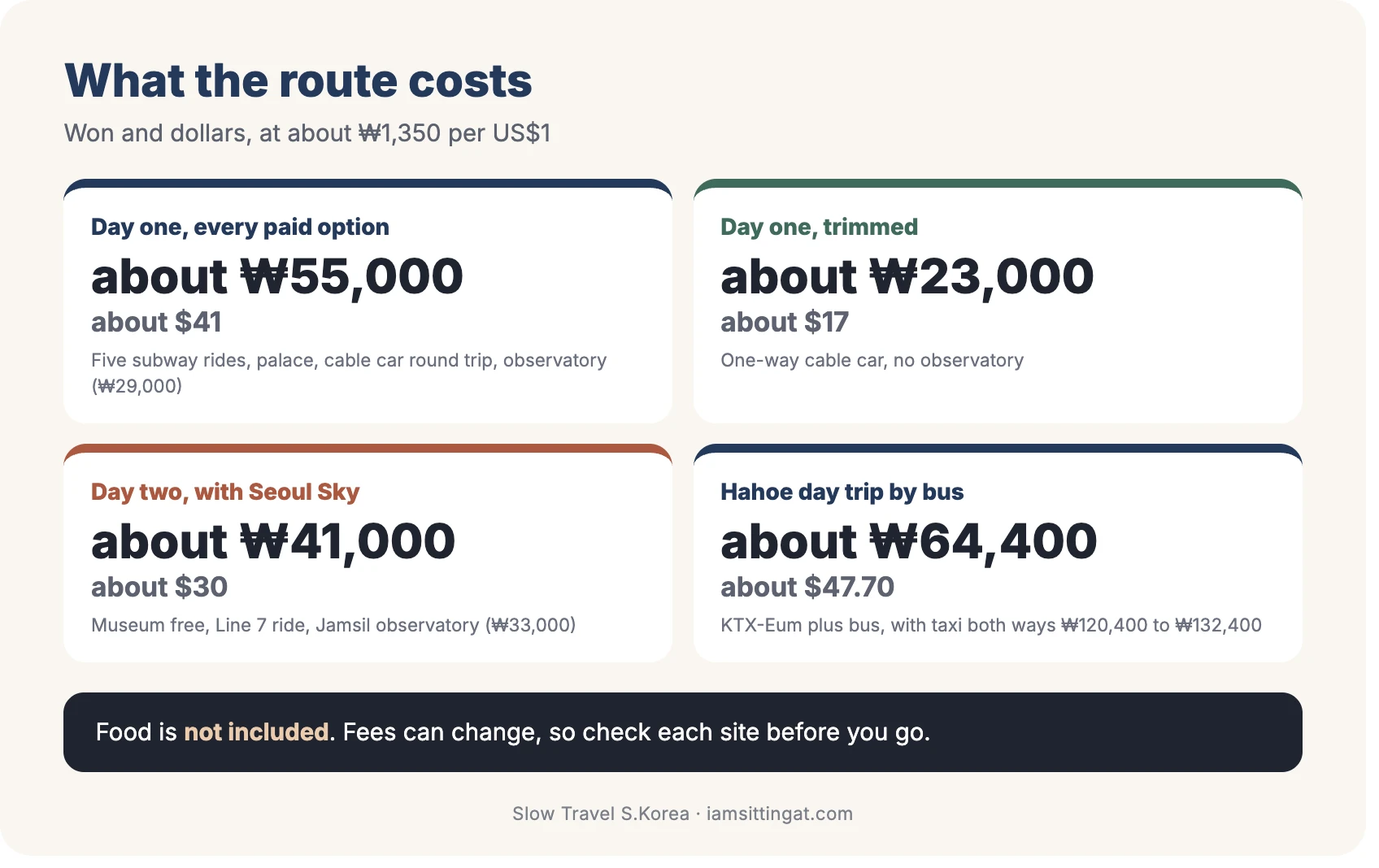
- Take the Namsan cable car or a Namsan shuttle bus up. Visit Seoul lists the cable car at 10 a.m. to 11 p.m., about 15,000 won round trip for an adult as of 2026.
- Go up the tower itself. Visit Seoul says the tower is open every day of the year. Travel guides citing the tower’s official site list the observatory at 29,000 won for an adult and closing around 10:30 p.m. on weekdays and 11 p.m. on weekends.
If you are visiting in winter, my Seoul in December guide has packing and timing tips, since Namsan is colder and windier than the city below.
To estimate the day’s costs, the Korea trip cost calculator can help. If you plan to shop in Myeongdong afterward, the tax refund calculator shows what you might get back.
What to Do With Kids
The museum is easy with children if you plan around the Children’s Museum, which is a separate, reservation-only space.
- Children’s Museum (어린이박물관): free, but you must reserve online. The official page says the exhibit is designed mainly for ages 5 to 9. As of the latest museum notice I could find, it runs five 80-minute sessions a day between 9:30 a.m. and 5:20 p.m.
- Booking window: one Korean family guide, checked in early November 2026, says reservations open 14 days before the visit at midnight Korea time, up to five tickets per booking, and babies under 36 months need a ticket too.
- No-show rule: a notice dated October 27, 2026 says unused bookings will be cancelled 20 minutes after the session starts, instead of 30, from December 15, 2026.
- Can foreign visitors book? I could not confirm whether the booking page works without a Korean phone number or ID.
- Closure: the Children’s Museum is closed on December 7, 2026, with the museum’s quarterly Monday closure.
- Outdoor time: Yongsan Family Park has a pond and a playground, so younger kids can burn off energy outside.
- Old paintings in AR: the augmented-reality content mentioned above may be fun for kids who liked the film’s animals.
For eating out nearby, how to order at a Korean restaurant explains the table tablets and call bells you will see.
Reality Check: Crowds, Closures, and What’s Changing
- It is a very big building. 7 halls and 39 rooms is too much for one visit. Pick two or three areas.
- Free admission may end in 2027. Korea’s budget ministry said in its 2027 budget guidelines that it will move toward paid admission for the museum. Korean press reported an adult price in the range of 5,000 to 10,000 won, with discounts or free entry likely for children, teens, and seniors. The ministry said the month is still under discussion, and no price had been fixed in the sources I found. For a 2026 trip, it is free. For a 2027 trip, check first.
- Several painting and craft rooms are closed. The official site lists the Buddhist painting room (203) and wood and lacquer craft room (204) closed through January 28, 2027. Calligraphy and painting rooms 202-3 and 202-4 are also closed through January 28, 2027, while 202-1 and 202-2 stay open. The 3rd-floor Buddhist sculpture room (301) and metalwork room (302) are closed on the same schedule. Celadon (303) and buncheong and white porcelain (304) are open.
- More short closures are on the museum’s notice board. The homepage lists painting gallery 202 closed November 23 to 26, 2026, and the Donation Hall partly closed November 16 to 22.
- Museum closed Monday, December 7, 2026, and likely on the first Monday of March, June, September, and December in 2027 as well.
- No guaranteed painting. Rotation means a specific piece may not be on view. See the section above.
- Shop stock is unpredictable. Popular items sell out and restock on the museum’s schedule, not yours.
- Special exhibitions cost extra. Late 2026 and early 2027 special exhibitions are paid, and the homepage lists new ones opening in late November and December.
- Lines, noise, and lots of Korean school groups. This is a working public museum, not a quiet gallery. That is part of why Koreans love it.
- Very little of the visit is “film locations.” If you want that, Bukchon, Naksan, and N Seoul Tower are more direct. Come here for the art behind the animals.
FAQ
Was KPop Demon Hunters filmed at the National Museum of Korea?
No. It is an animated film, so nothing was filmed anywhere. Seoul city materials and Netflix’s travel feature say the film drew from real places, and Korean sources say the tiger and magpie characters come from the jakhodo folk painting genre, which the museum’s shop also draws on for its tiger and magpie badge.
Is the National Museum of Korea free for foreigners?
For now, yes. Permanent galleries are free for everyone, and special exhibitions are paid. The government’s 2027 budget guidelines point to paid admission starting in 2027, but the timing and price were not final in the sources I found. Check the museum’s official site before a 2027 trip.
What are the National Museum of Korea’s hours?
Per the official site, the museum is open 9:30 a.m. to 5:30 p.m. on Monday, Tuesday, Thursday, Friday, and Sunday, and 9:30 a.m. to 9 p.m. on Wednesday and Saturday. Last entry is 30 minutes before closing. It is closed on January 1, Seollal, Chuseok, and the first Monday of March, June, September, and December, so December 7, 2026 is a closure.
How do I get to the National Museum of Korea from central Seoul?
Take Line 4 or the Gyeongui-Jungang line to Ichon Station and leave by Exit 2. From Myeongdong or Seoul Station, Line 4 goes straight there with no transfer. Public transit is the museum’s own recommendation because parking is limited.
Can I buy the tiger and magpie pin at the museum shop?
Sometimes. The pin has sold out many times since 2025, and the foundation also sells online. I could not confirm current stock for the badge, so treat it as a bonus if you find one.
The Bottom Line
The National Museum of Korea is worth visiting on its own, and the film gives you a reason to look more closely at one old, funny painting tradition. The tiger and magpie are a good-luck pair in Korean folk art, and the museum is a free, easy way to see what Joseon painting looked like, even if your exact painting is not on the wall that day.
Go on a weekday afternoon or a Wednesday or Saturday evening. Start on the second floor, do not count on one specific object, and enjoy the shop if the pin is in stock. If it is not, you still have a very good museum. For a 2027 trip, check whether admission has become paid, and check the gallery closures that run through January 28, 2027.
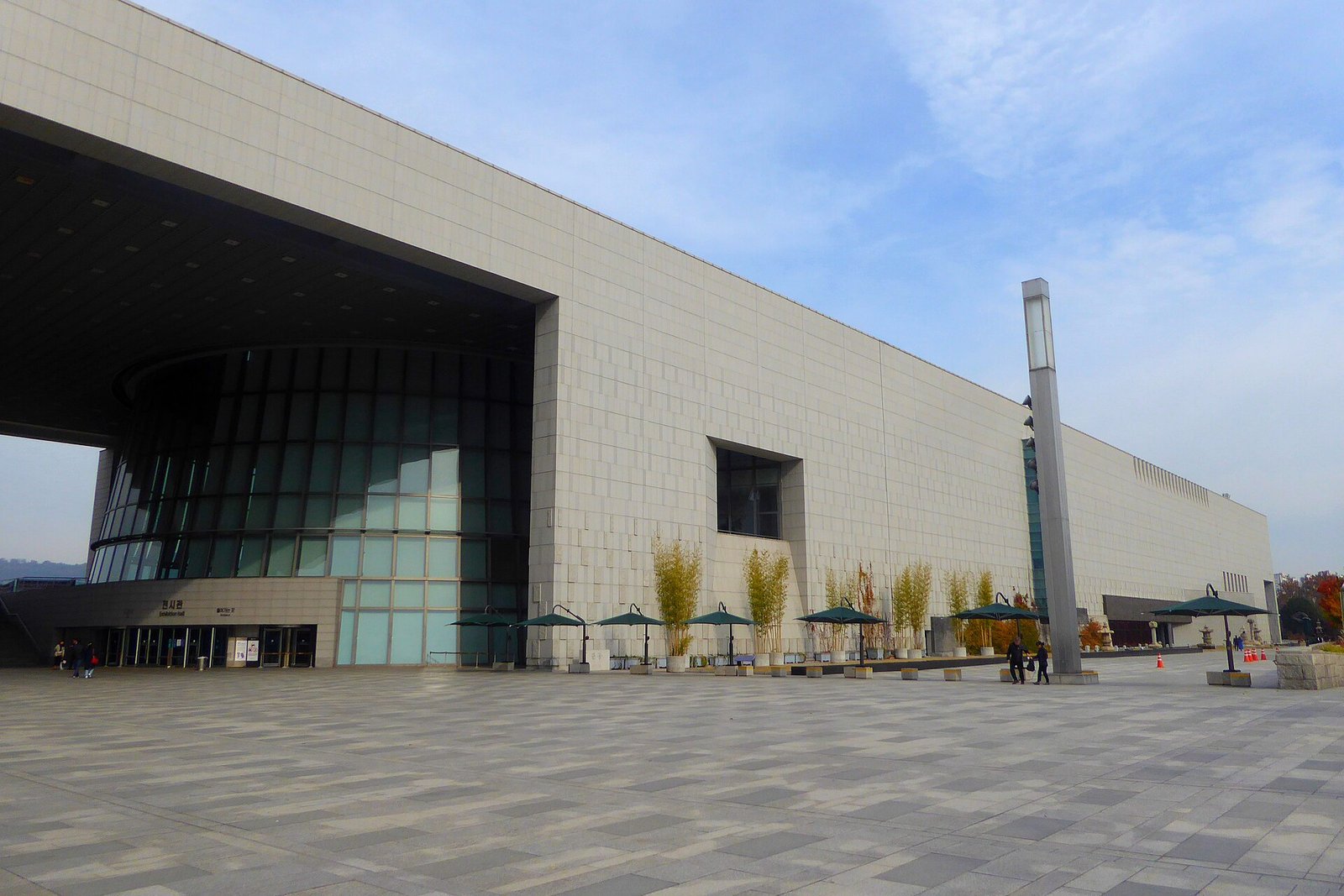
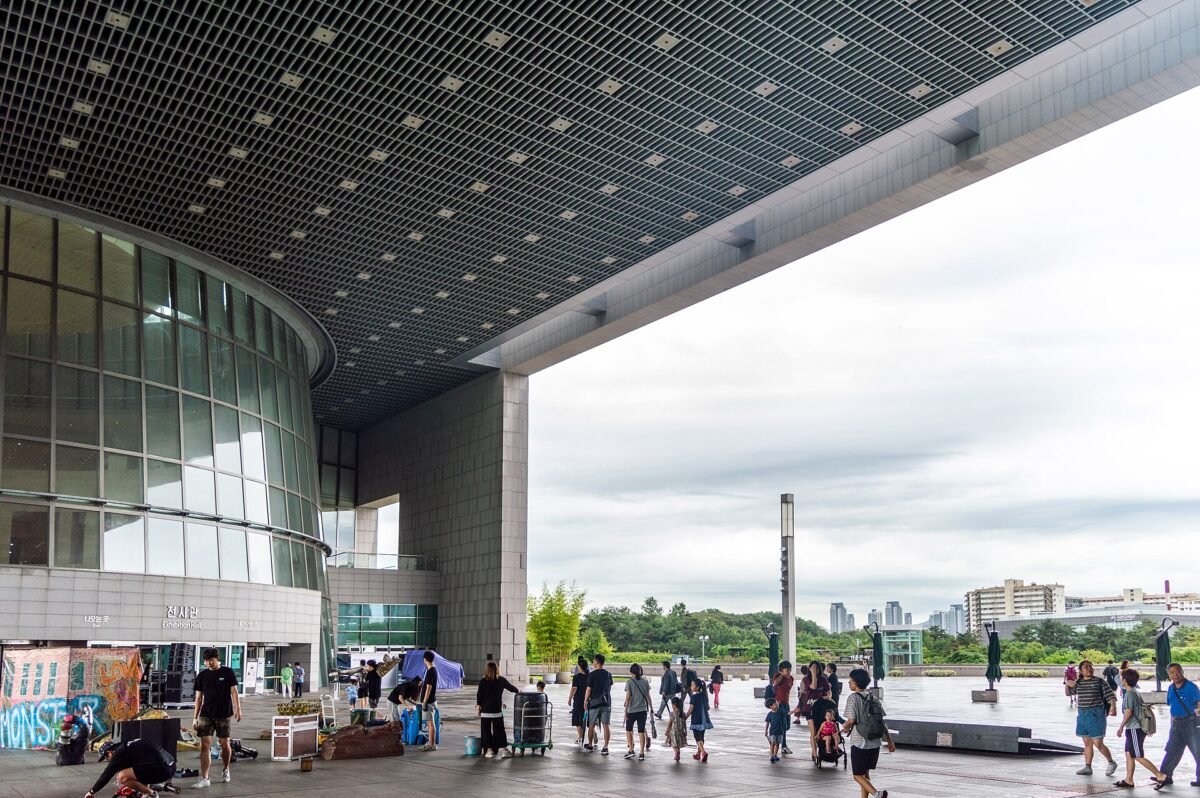
Featured image: exterior of the National Museum of Korea. Photo: Tristan Surtel / Wikimedia Commons, CC BY-SA 4.0.