Last updated: November 12, 2026
This site is not affiliated with Netflix, Sony Pictures Animation, or any government body. KPop Demon Hunters is an animated film, so nothing in it was shot on location. This post uses no film stills or character images.
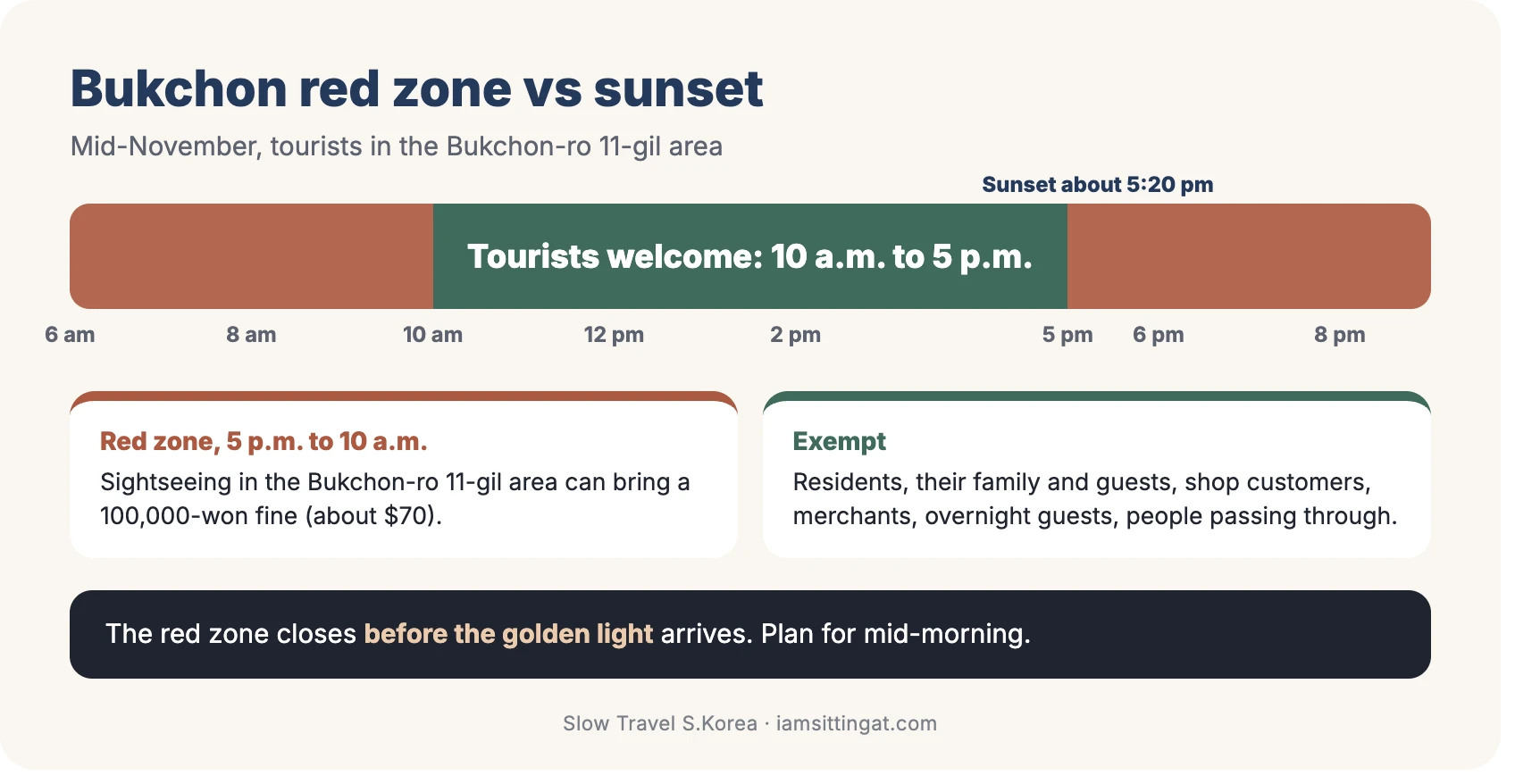
Tourists get seven hours a day in Bukchon’s busiest lane: 10 a.m. to 5 p.m. Outside that window, sightseeing there can cost you a 100,000-won fine, about $70. If you’re planning a Bukchon Hanok Village KPop Demon Hunters stop because of the rooftop duet in the film, that detail matters more than any photo spot. This Bukchon Hanok Village guide covers what the film drew, what the real alleys look like, the red-zone rules, the lanes I can verify, how to get there, and a short walking plan.
Key Takeaways
- The film is animation. Seoul city and Netflix tie the “Free” rooftop scene to Bukchon, but no real roof, house, or alley was a set. You’re visiting the neighborhood that inspired the look, not a location.
- You can’t go on the roofs. The tile roofs belong to private homes. You get roof-level views from the lanes and one hill, not from the roofs.
- The red zone has hours. In the Bukchon-ro 11-gil area, tourists may visit 10 a.m. to 5 p.m. Sightseeing outside those hours can bring a 100,000-won fine, enforced since March 1, 2025.
- Best time: a weekday between 10 a.m. and noon. In winter, sunset is around 5:20 p.m., so the red zone closes before the golden light arrives.
- Cheap to visit. The village is free. Gyeongbokgung is 3,000 won, and free through November 15, 2026.
- Get there: Anguk Station (Line 3), Exit 2, then a 10-minute uphill walk.
Bukchon Hanok Village at a Glance (November 2026)
| Item | What to know |
|---|---|
| Where | Between Gyeongbokgung and Changdeokgung palaces, Jongno-gu, Seoul |
| Entry | Free, but no set hours; the red zone limits tourists to 10 a.m.–5 p.m. |
| Fine | 100,000 won for sightseeing in the red zone outside those hours |
| Nearest station | Anguk (Line 3), Exit 2, about 10 minutes uphill |
| Time needed | 1 hour for the main lane; 2–3 hours with Samcheong-dong |
| Hardest part | Hills, and the 5 p.m. cutoff in winter |
Bukchon Hanok Village KPop Demon Hunters: What the Film Drew and What You’ll Find
In the film, two characters sing a duet called “Free” on a hanok roof at night. Seoul city’s film-location material and Netflix both point to Bukchon for that scene, and Korean media describe the roof as reminiscent of the village rather than a copy of a specific house. The same song also uses a moonlit stone wall that is tied to Naksan Park, which I cover in my Naksan Park and N Seoul Tower guide.
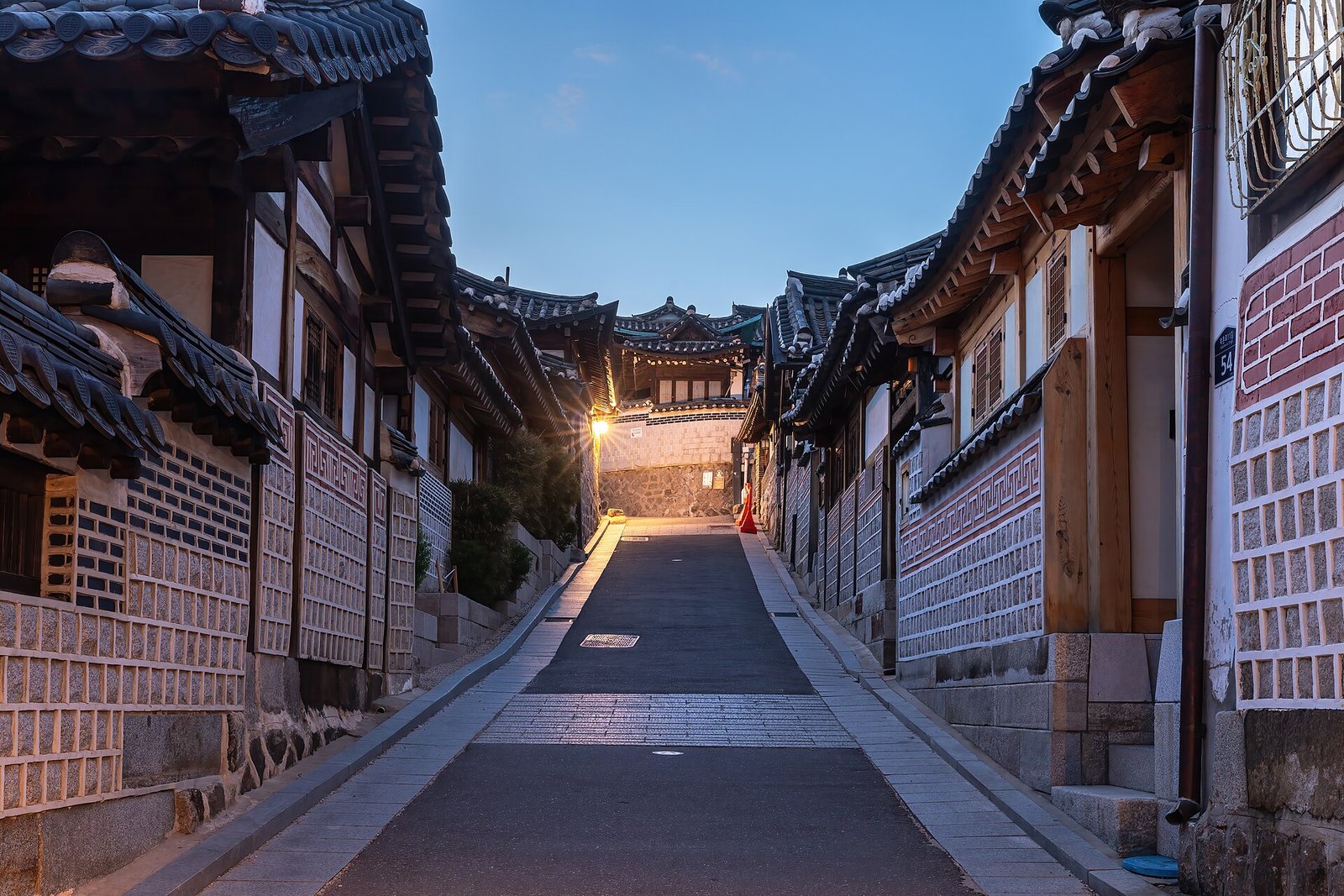
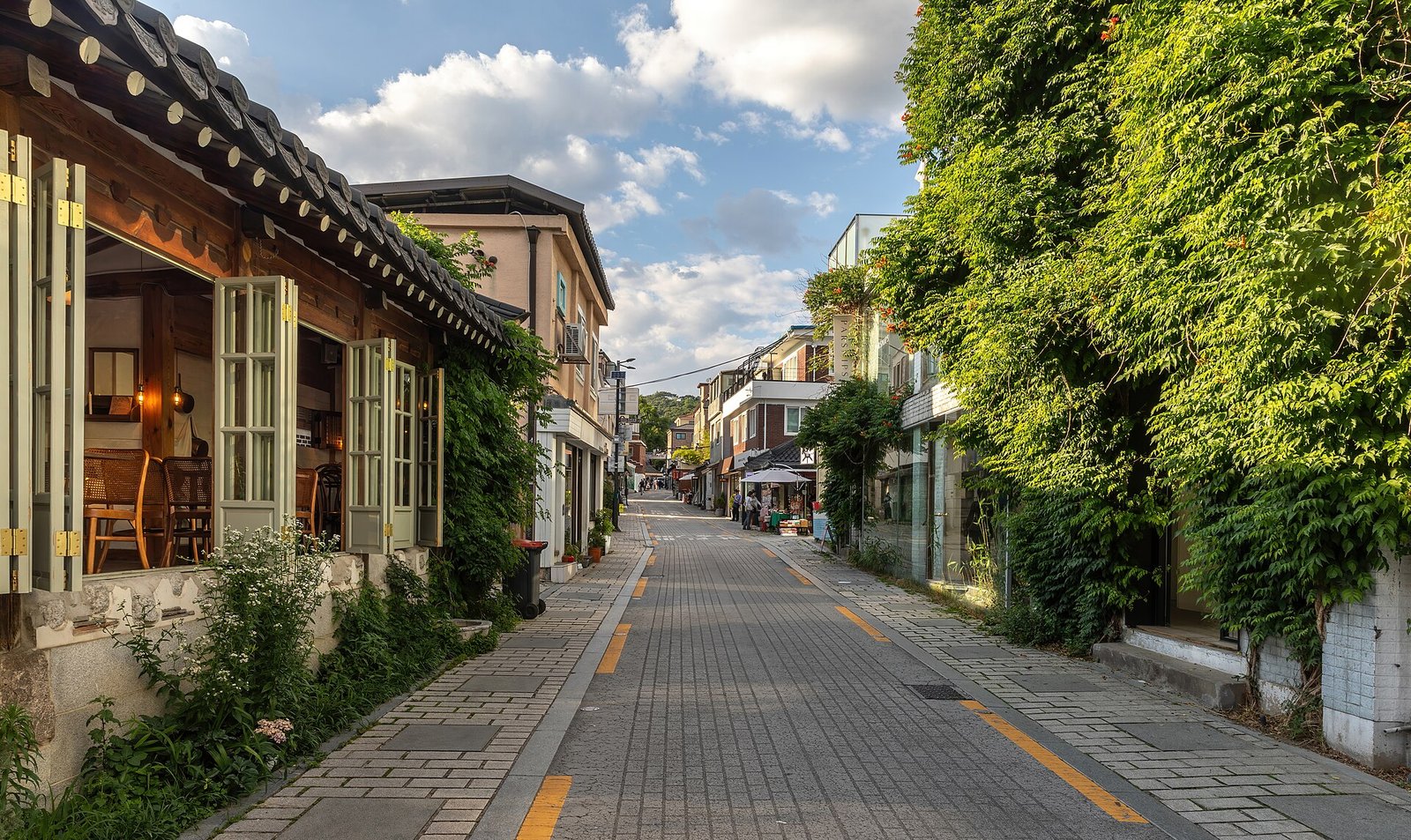
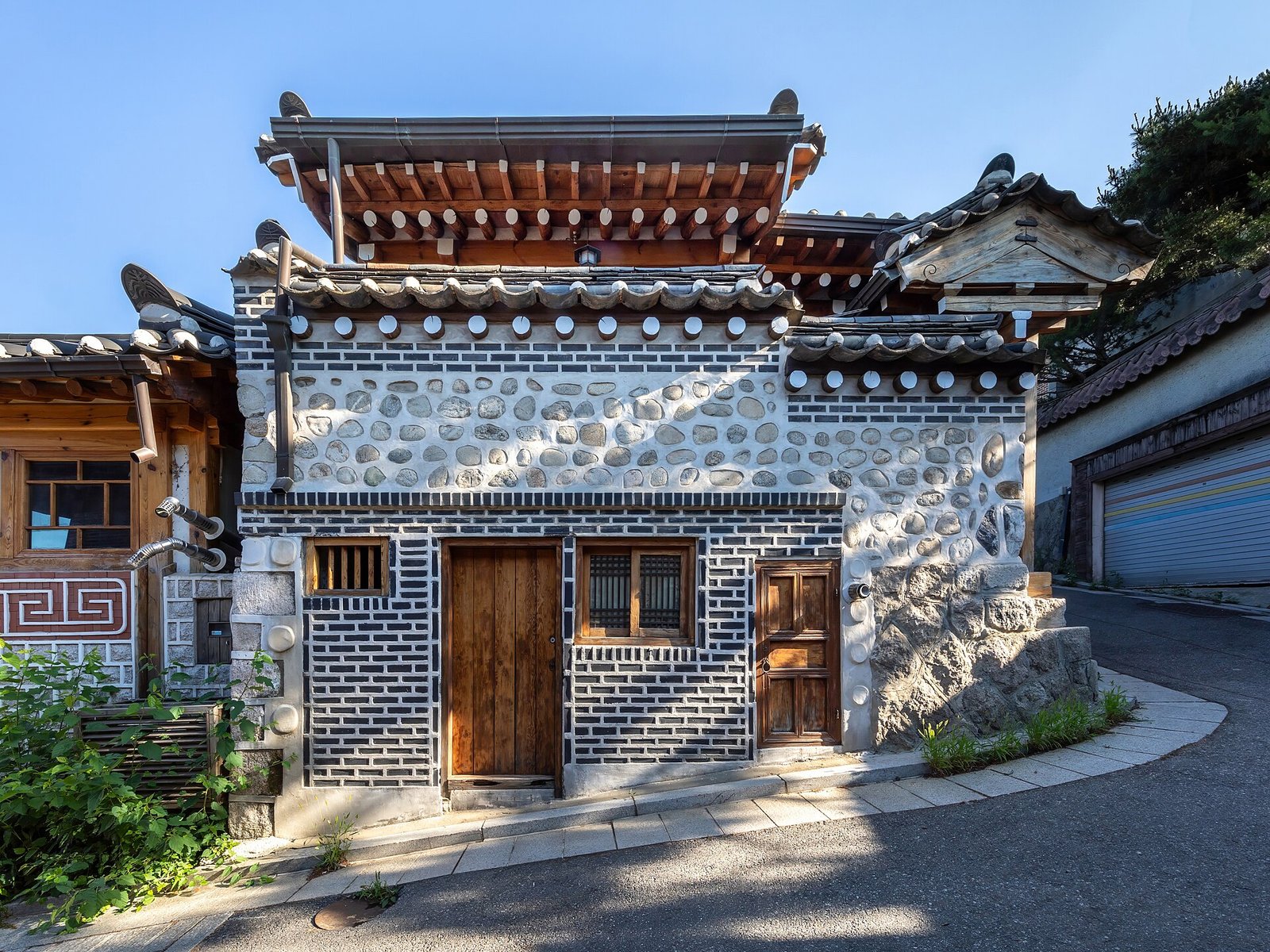
What the film borrowed is the look: low gray-tile roofs stacked on a hillside, wooden gates, narrow stone lanes, and the Seoul skyline behind. That part is real. The rooftop itself isn’t. There’s no scene location to find, no prop, and no marker. If you’re mapping every place in the film, my KPop Demon Hunters Seoul locations route puts Bukchon in order with the rest.
Why You Can’t Go on the Roofs
Most of the hanok in the busiest part of Bukchon are private homes, and a few are guesthouses. The roofs are theirs. Hanok roofs are clay tiles laid over a wooden frame, not a surface built to be walked on. I’m not aware of any official rooftop access in the village.
What you can do instead:
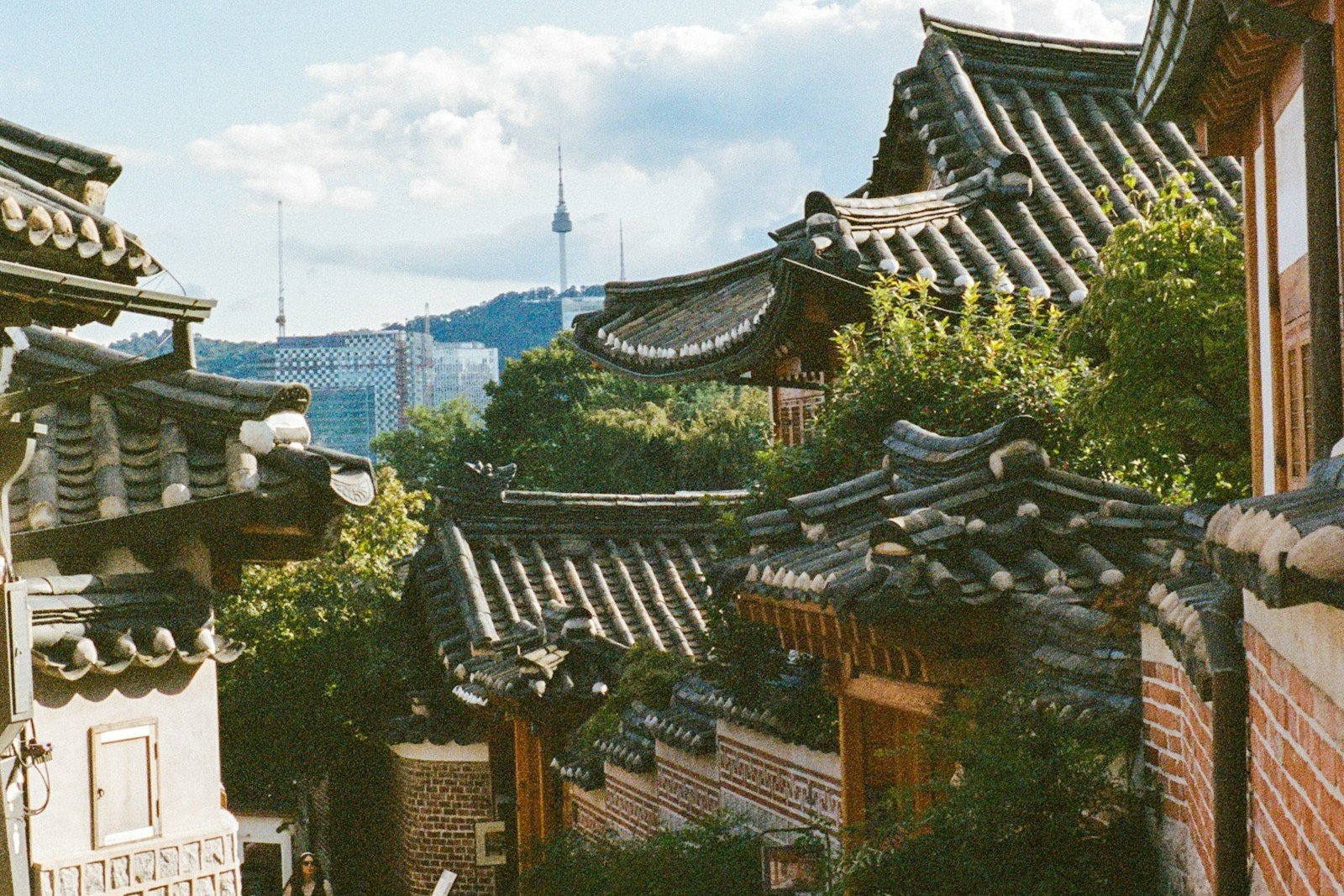
- Look over the roofs from the Gahoe-dong 31 hill. Seoul city’s photo guide says the junction between the sixth and seventh Bukchon views gives a line of tile roofs with Namsan and N Seoul Tower behind them.
- Go inside a public hanok. Bukchon Cultural Center lets you step into a hanok courtyard and main hall, in socks.
- Skip the trespass shot. Don’t lean over a wall, open a gate, or hold a phone above a fence. Residents do see it, and it’s the behavior that led to the rules below.
The Red Zone: Rules and Exact Visiting Hours
Jongno District named Bukchon a special management area on July 1, 2024, then split it into red, orange, and yellow zones by how much residents were disturbed. The red zone is the Bukchon-ro 11-gil area, about 34,000 square meters. Here are the official hours and rules, as published by the district and reported through August 2026.
| Rule | Detail |
|---|---|
| Tourist hours | 10 a.m. to 5 p.m., daily |
| Restricted | 5 p.m. to 10 a.m. the next morning |
| Fine | 100,000 won, same for foreigners |
| Enforcement started | March 1, 2025, after a trial that began November 1, 2024 |
| Who enforces | “Bukchon Sheriffs,” who explain the rule, warn first, and fine if you don’t leave |
| Payment | On the spot or before you leave Korea |
| Exempt | Registered residents, their family and acquaintances, shop customers, merchants, overnight guests, people simply passing through, non-tourist vehicles |
| Orange and yellow zones | No visiting-hour limits, but closer monitoring |
Two details trip people up. First, “tourism activity” includes taking photos or video and lingering to look around, so being a shop customer or hotel guest doesn’t license you to photograph the lane at 8 p.m. Second, the red-zone map is on Smart Seoul Map, so check it if you’re near a boundary. The district’s contact for questions is the Jongno-gu Tourism Division, +82-2-2148-1853. Charter buses are also restricted on Bukchon-ro, with enforcement scheduled from January 2026, so tour buses are barred from the main road.
Best Time and Light for Bukchon Hanok Village
The window is short, so use it well.
- Time of day. On a weekday, the hours right after 10 a.m. are the calmest I’d plan for. Older guides that say “go before 9 a.m. to beat the crowds” are out of date for the red zone, since tourists can’t enter before 10.
- Light. Seoul’s sunset is about 5:20 p.m. in mid-November and about 5:15 p.m. in December. In summer it’s after 7 p.m. Either way, the red zone closes before sunset, so golden-hour shots there are largely off the table. Plan for mid-morning and early-afternoon light, and treat blue-hour and night photos as something to take from outside the red zone.
- Season. Autumn color and winter snow both work well on tile roofs. Snow also means slippery slopes, so see the Reality Check below. If you’re visiting in winter, my Seoul in December guide covers what to wear.
The Best Lanes and Viewpoints (Only the Ones I Can Verify)
Seoul city and the Korea Tourism Organization list eight signed viewpoints called the Bukchon 8 Views (북촌8경). Small markers stand along the route. These are the ones I’d name:
| View | What it is | Why go |
|---|---|---|
| 1 | Changdeokgung panorama | Palace roofs from the Bukchon side |
| 2 | Wonseo-dong craft lane | Quiet, near workshops |
| 3 | Gahoe-dong 11 area | The classic lane of low tile roofs |
| 4 | Gahoe-dong 31 hill (the “observatory”) | Roofs rolling downhill |
| 5–6 | Gahoe-dong lane, uphill and downhill | The Bukchon-ro 11-gil lane most photos show |
| 7 | Gahoe-dong 31 | A small, quiet side lane |
| 8 | Samcheong-dong stone steps | A view toward Gyeongbokgung and Inwangsan |
Numbering varies a little between sources, so follow the street signs and Naver Map, not my table alone. Views 3 to 7 cluster in the Bukchon-ro 11-gil area, which is the red zone, so keep to the 10 a.m.–5 p.m. window there. Views 1, 2, and 8 are outside that lane, though I’d still check the red-zone map before you plan evening visits.
My pick for a single stop: the junction between views 6 and 7 on the Gahoe-dong 31 hill. It’s the roofs-plus-Namsan view that people associate with the film’s skyline, and it’s a ten-minute walk from Anguk.
How to Get to Bukchon Hanok Village: Anguk, Gyeongbokgung, and Samcheong-dong
- Anguk Station, Exit 2. Take Line 3 to Anguk, leave by Exit 2, and walk about 10 minutes uphill. This is the easiest route. Some sites list Exit 3 or Exit 1, so rely on Naver Map. Seoul Subway Guide for Tourists
- From Gyeongbokgung. Take Line 3 one stop to Anguk, or walk east from the palace along the wall toward Samcheong-dong and Bukchon in about 15 to 20 minutes, per travel sites. The walk is flat for a while, then it climbs.
- From Samcheong-dong. Walk uphill from the Samcheong-dong cafe street toward the stone steps (view 8) and drop into Gahoe-dong from the north. It’s the downhill direction on the way back.
Use T-money for the subway. If you’d rather not climb, a taxi from Kakao T can drop you near the Bukchon Cultural Center, though the lanes themselves are pedestrian-only. If your phone has no data, sort out an eSIM before landing. [AFFILIATE: Korea eSIM] Best eSIM for Korea
What’s Nearby
| Place | Hours and cost | Note |
|---|---|---|
| Gyeongbokgung | 3,000 won; free through Nov. 15, 2026; closed Tuesdays; 9 a.m.–5 p.m. in November, last entry 4 p.m. | About 15–20 minutes on foot |
| Changdeokgung | 3,000 won; free through Nov. 15 (Huwon garden excluded); closed Mondays; Nov.–Jan. 9 a.m.–5:30 p.m., last entry 4:30 p.m. | Huwon garden needs a separate ticket and booking |
| Bukchon Cultural Center | Free; closed Mondays; opens 9 a.m.; Wednesdays have extended hours to 8 p.m. (as of July 2025) | A 40-minute hanok commentary program has been offered |
| Insadong | Shops and galleries on the south side | About 10–15 minutes on foot |
| Samcheong-dong | Cafes and galleries on the western slope | Good for lunch; check each cafe’s hours |
Etiquette and Fines
Bukchon is a neighborhood where people sleep, work, and raise kids. The rules are simple:
- Keep your voice low, especially in the red zone.
- Don’t open gates, enter yards, or photograph through windows.
- Don’t sit on doorsteps or block a lane for a shot.
- Take your trash with you.
- Never step on or lean over a wall.
- If a Bukchon Sheriff speaks to you, listen. A warning comes first, and the 100,000-won fine only applies if you stay.
My Korean etiquette guide for tourists has more on how to behave in historic neighborhoods.
Hanbok Rental Tips
Hanbok shops cluster around Anguk Station, the Bukchon entrance, and the streets near Gyeongbokgung. A few things to know:
- Price. One travel guide lists about 10,000 to 15,000 won for a two-hour rental and 15,000 to 32,000 won for four hours, and an online booking page lists roughly $7 for an hour and $17 to $24 for a full day. Prices vary by style. [AFFILIATE: Hanbok rental booking Seoul]
- Free palace entry is under review. Wearing hanbok currently gets you into the four main palaces for free, but Korea’s heritage agency said on October 8, 2026 that it is reviewing the policy, including what counts as hanbok. It still applies today. Check before you build a day around it.
- What counts. A top and bottom are expected. Throwing a coat over modern clothes doesn’t count.
- Shoes. You’ll climb hills. Pick comfortable ones.
- Winter. A hanbok isn’t warm. Bring heat packs and a long coat.
How to Avoid Crowds
- Arrive at 10 a.m. on a weekday. You can’t enter the red zone earlier anyway.
- Walk the lanes from the top of the hill down toward Samcheong-dong.
- Visit the Bukchon Cultural Center first, since it opens at 9 a.m.
- Skip weekend afternoons. Korean travel sites say the palace free-admission period ending November 15 brings heavier weekend crowds.
- Don’t plan an evening visit inside the red zone. The village is not an after-dark stop.
A 2 to 3 Hour Walking Plan
Here’s the route I’d hand to anyone using this Bukchon Hanok Village guide for a first visit.
| Time | Stop | Notes |
|---|---|---|
| 9:30 a.m. | Anguk Station Exit 2 | Coffee nearby while you wait for 10 a.m. |
| 9:45 a.m. | Bukchon Cultural Center | Open from 9 a.m.; take off shoes |
| 10:15 a.m. | Gahoe-dong 11 and the Bukchon-ro 11-gil lane | Views 3–6 |
| 11:00 a.m. | Gahoe-dong 31 hill | The roofs-and-Namsan junction |
| 11:30 a.m. | Samcheong-dong stone steps (view 8) | Downhill, toward the cafes |
| 12:00 p.m. | Lunch in Samcheong-dong | Optional: Gyeongbokgung afterward |
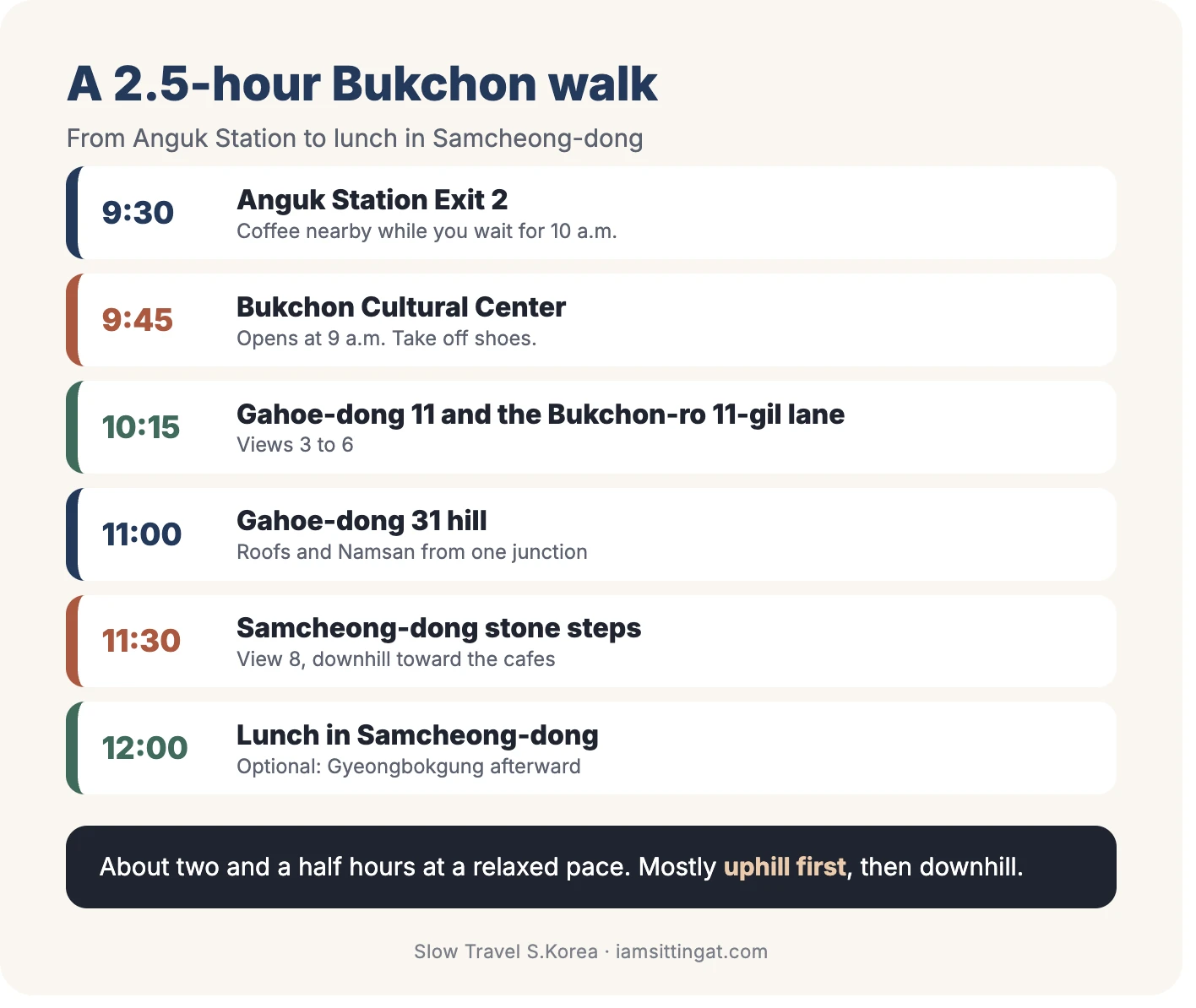
That’s about two and a half hours at a relaxed pace.
What It Costs
| Item | Cost |
|---|---|
| Bukchon Hanok Village | Free |
| Bukchon Cultural Center | Free |
| Gyeongbokgung | 3,000 won (about $2); free through Nov. 15, 2026 |
| Changdeokgung | 3,000 won; Huwon garden extra |
| Hanbok rental | Roughly $7–$24, depending on length and style |
| Lunch or cafe in Samcheong-dong | Varies by place |
| Subway | Under 2,000 won per ride |
For a full trip budget, use my Korea trip cost calculator. If you’re paying by card, see the best credit card for Korea, and if you want a refund on shopping, try the tax refund calculator.
Reality Check
- It’s crowded. Even with hours, mid-day weekends are busy. Expect people in every photo.
- It’s steep. Strollers, wheelchairs, and bad knees struggle. Choose the Bukchon Cultural Center and lower streets. KPop Demon Hunters Seoul with kids
- There’s no movie set. A Bukchon Hanok Village KPop Demon Hunters itinerary won’t turn up the rooftop, a plaque, or a themed attraction, so set expectations before you climb the hill.
- The red zone closes before sunset. In winter you can’t photograph the lanes in warm evening light.
- Rules may change. Merchants say the hours hurt their sales and want longer summer hours. The district says it may review flexible operation. Check the current notice before you go.
- The exemption signs aren’t clear. Reports say on-site guidance about exempt groups is limited, so don’t assume you’re exempt.
- The palace perks could change. A palace fee increase once planned for January 2027 is undecided, and free entry for hanbok wearers is under review. Gyeongbokgung’s free admission ends on November 15, and it’s closed Tuesdays.
- Cafes and food are easier outside the red zone. For something to eat, see my KPop Demon Hunters food guide.
FAQ
Is Bukchon the real rooftop location in KPop Demon Hunters?
Not exactly. The film is animated, so nothing was shot there. Seoul city and Netflix link the “Free” rooftop scene to Bukchon, and Korean media call the roof reminiscent of the village. There’s no single real roof to find.
What are the Bukchon Hanok Village hours for tourists?
In the Bukchon-ro 11-gil red zone, tourists may visit 10 a.m. to 5 p.m. Sightseeing there between 5 p.m. and 10 a.m. can bring a 100,000-won fine. Other parts of the village have no visiting-hour limit.
Can I go on a hanok roof?
No. The roofs belong to private homes, and I know of no official rooftop access. You can see the roofs from the Gahoe-dong 31 hill and from lanes across the village.
Do I need a hanbok to visit Bukchon?
No. The village is free and you don’t need hanbok. Hanbok currently gets you into Seoul’s four main palaces for free, but that policy is under review.
How long should I spend in Bukchon Hanok Village?
One hour covers the main lane. Plan two to three hours if you add the Bukchon Cultural Center and Samcheong-dong.
The Bottom Line
Treat Bukchon as the neighborhood that inspired the film’s look, not a set you can enter. Go on a weekday, arrive at 10 a.m., and leave the lanes by 5 p.m. The hours are the price of admission, and it’s a small price for streets where people really live. Walk the Gahoe-dong 31 hill for the roofs, take the stone steps down to Samcheong-dong, and pair it with a palace if you can. When you’re done, see the rest of the film’s places in my KPop Demon Hunters Seoul locations route or continue to the National Museum of Korea guide.
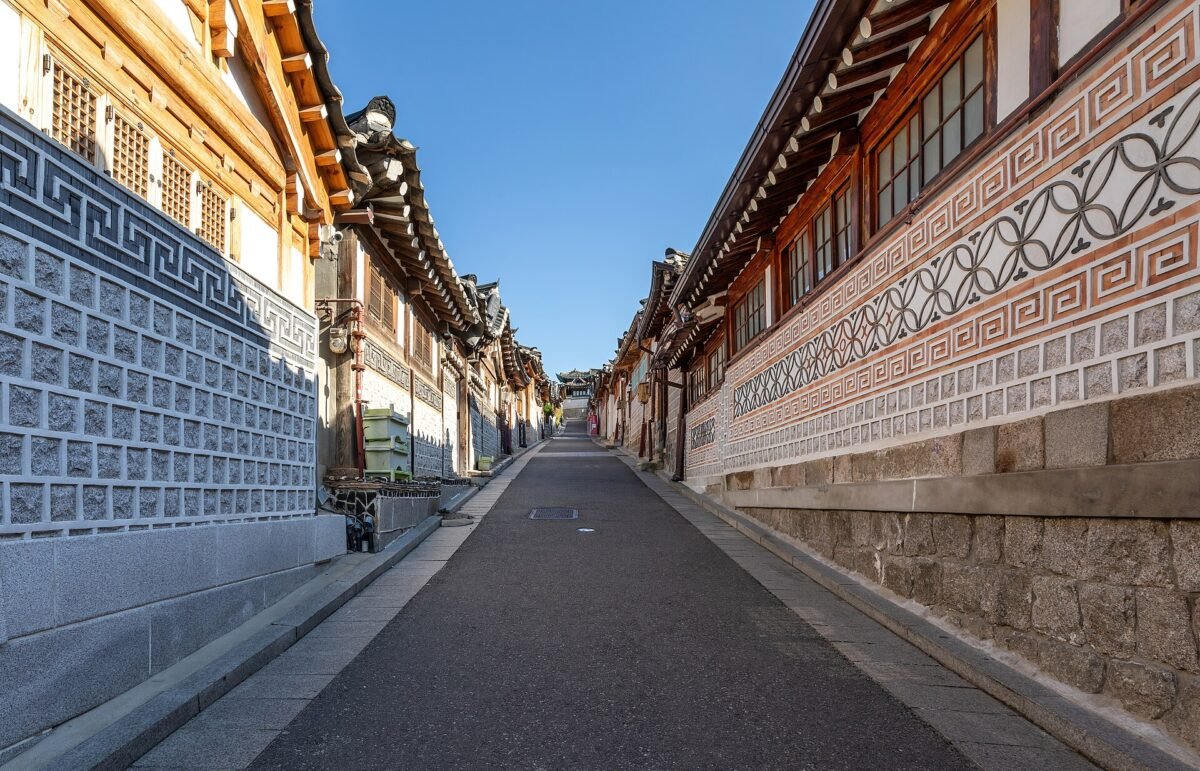
Featured image: Bukchon-ro 11-gil. Photo: Basile Morin / Wikimedia Commons, CC BY-SA 4.0.